Who Conducts an HOA Reserve Study?
Get proposals from vetted reserve study professionals - with 30-year funding plans, powered by modern technology, and compared side by side for free.
Once your board agrees to commission a reserve study, the next question is obvious:
Who actually does this work, and how do we pick the right firm?
An HOA reserve study is not a simple spreadsheet exercise. It requires:
- Technical understanding of building systems and common elements
- Financial modeling skills to project long term cash flows
- Familiarity with industry standards and state requirements
In most communities, reserve studies are prepared by independent reserve study professionals or engineering firms who specialise in community associations. This article explains who they are, what credentials matter, and how to evaluate providers.
The Main Types of Reserve Study Providers
Associations typically work with one of three provider types.
1. Dedicated reserve study firms
These companies focus primarily on reserve studies for HOAs and condominiums. Their teams usually include people with backgrounds in construction, engineering or architecture and strong familiarity with community association finances.
Advantages:
- Deep experience with common components in HOAs and condos
- Processes built around CAI National Reserve Study Standards and similar frameworks
- Access to cost databases tailored to community association work
This is the most common option for typical associations.
2. Engineering and consulting firms
Civil or structural engineering firms and building envelope specialists sometimes provide reserve studies as part of a broader consulting practice. This can be particularly useful for:
- Complex buildings with structural or façade issues
- High rise condominiums
- Communities subject to enhanced safety or inspection rules
Here you are paying for additional technical depth, which can be worth it when risk is high.
3. Management companies and accountants
Some management companies and accounting firms offer simplified reserve analyses or partner with outside specialists. Whether this is appropriate depends on:
- Who is actually doing the physical and financial analysis
- Whether they follow recognised reserve study standards
- Whether they have the technical backing to support their conclusions
If a management company "includes" a reserve analysis, ask detailed questions about scope and credentials.
What Is a Reserve Specialist?
A reserve specialist is a professional who conducts reserve studies for community associations — analyzing the physical condition and remaining useful life of common-area components, estimating future replacement costs, and developing a long-term funding plan.
The term "reserve specialist" most commonly refers to someone who holds the Reserve Specialist (RS) designation from the Community Associations Institute (CAI) or the Professional Reserve Analyst (PRA) designation from the Association of Professional Reserve Analysts (APRA). These are the two most widely recognized credentials in the reserve study industry.
How to verify RS or PRA credentials: CAI maintains a searchable directory of credentialed professionals where boards can confirm that a specific individual holds a current RS designation. APRA publishes a similar member directory for PRA holders. Before signing a contract, verify that the individual who will actually conduct your study — not just the firm — currently holds the credential and is in good standing.
What a reserve specialist typically provides:
- On-site inspection of all major common-area components (roofs, pavement, pools, mechanical systems, building envelope, etc.)
- Component inventory with current condition assessment and remaining useful life estimates
- Replacement cost projections adjusted for inflation and regional construction costs
- A 20- or 30-year funding plan with recommended annual reserve contributions
- Multiple funding scenarios (full funding, threshold funding, baseline funding)
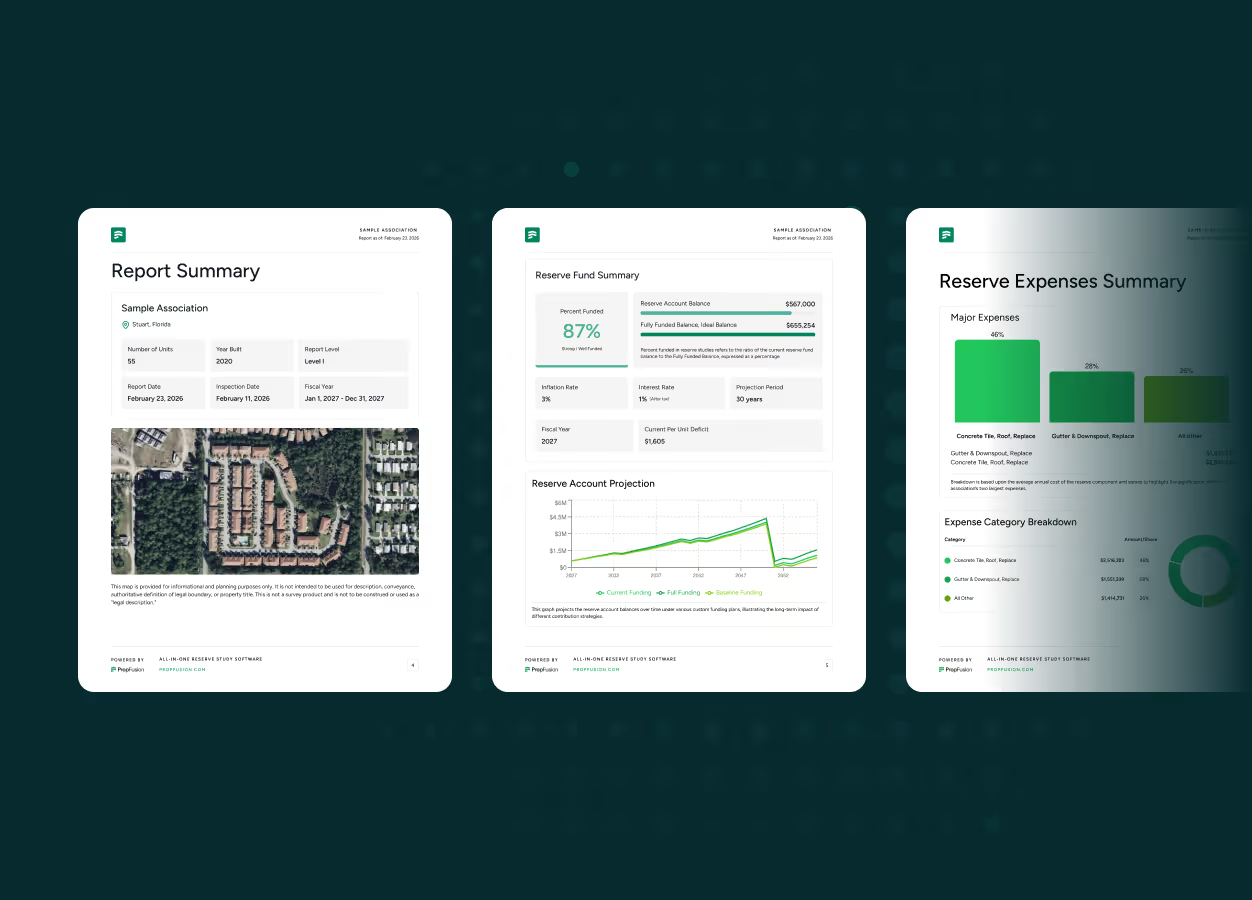
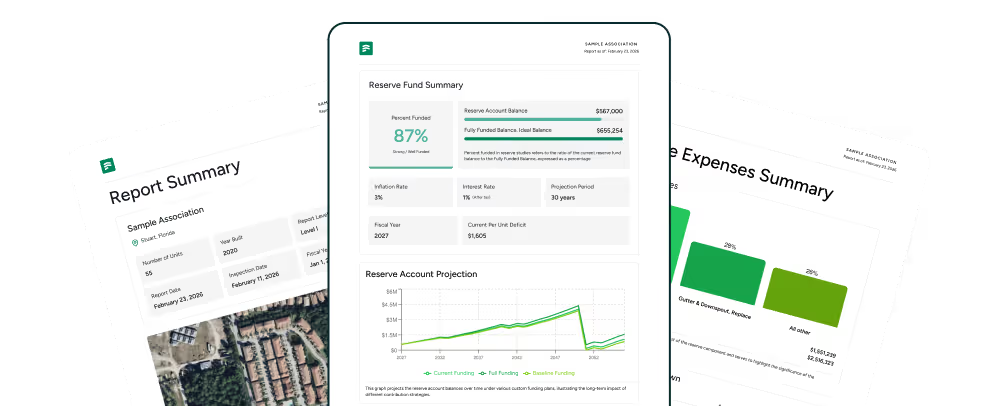
- A board-ready report that meets National Reserve Study Standards
Reserve specialist vs. engineer: While licensed engineers can also perform reserve studies (and are required for structural assessments like Florida’s SIRS), a dedicated reserve specialist focuses exclusively on reserve planning — often producing more detailed funding analysis and component-level financial projections than a general engineering firm would.
PropFusion works with reserve study specialists across all 50 states. Whether you need a full Level 1 study with a site visit or a Level 3 update, we help your board find qualified professionals who hold RS or PRA designations.
RS designation requirements: To earn the Reserve Specialist credential, a professional must demonstrate substantial experience preparing reserve studies for community associations, provide client references, complete CAI’s professional development program, and commit to following the National Reserve Study Standards. The designation requires periodic renewal through continuing education. The PRA credential follows a similar model, requiring peer review of completed work and compliance with APRA’s Standards of Practice.
Key Qualifications To Look For
Not every jurisdiction requires specific licenses for reserve study work, but there are clear industry benchmarks.
National credentials
Two widely recognised designations are:
- Reserve Specialist (RS) from Community Associations Institute, which requires documented experience preparing reserve studies, references from clients, and adherence to CAI’s professional standards.
- Professional Reserve Analyst (PRA) from the Association of Professional Reserve Analysts, which requires experience, peer review and compliance with APRA’s Standards of Practice.
Boards do not have to insist on these letters, but they are strong signals that:
- The provider understands recognised standards
- The firm has meaningful experience with reserve planning for associations
Experience with communities like yours
Look for:
- A track record with properties similar in size and building type
- References from other HOAs or condos in your region
- Sample reports that clearly explain assumptions in plain language
High rise waterfront condos and small townhome communities have very different risk profiles. You want someone who has seen your type of building before.
Alignment with CAI and APRA standards
Ask directly:
- Whether the provider follows CAI’s National Reserve Study Standards in their work.
- Whether their methodology is consistent with APRA’s Standards of Practice for reserve studies.
That alignment matters when you discuss funding objectives, Fully Funded Balance, Percent Funded and types of reserve studies.
What About State Law Requirements?
Some states do more than encourage reserve planning; they specify who may prepare a study or how independent the provider must be.
Examples include:
- Requirements that the study be performed by a person with particular professional credentials
- Independence rules, where the preparer cannot be an officer or director of the association
- Minimum standards for the scope of inspection and financial analysis
Your state’s statutes and case law will shape how narrow or broad your choices are. Use a dedicated resource such as Reserve Study Requirements by State and, where appropriate, confirm details with association counsel.
How To Evaluate Reserve Study Proposals
Once you have a shortlist of providers, focus on more than just price.
Scope and level of service
Make sure each proposal spells out:
- Whether it is a full baseline study, an update with site visit or an update without site visit
- The length of the projection period, typically 20 to 30 years
- How many funding scenarios will be modeled
- Whether board or owner presentations are included
If you are not sure which level of study you need, review The 3 Types of Reserve Studies (Levels I to III) first.
If cost is a major concern for your board, see our guide on How Much Does an HOA Reserve Study Cost to understand typical pricing ranges.
Methodology and assumptions
Ask each provider:
- How they estimate remaining useful life
- How they build replacement cost estimates
- How they treat inflation, interest and contingencies
Communication and report quality
A technically excellent study is only useful if your board can understand it.
Ask for:
- Recent sample reports
- Confirmation that the final report will include an executive summary and clear charts
- Willingness to attend at least one board meeting to walk through findings
To get the most value out of that report once it arrives, see How To Read and Use Your Reserve Study.
Should Board Members Ever Do This Themselves?
Occasionally, boards consider writing their own "reserve study" or asking a handy volunteer to prepare one.
That approach is risky:
- Volunteers rarely have the combination of construction, engineering and financial expertise needed for accurate long term planning.
- Self prepared analyses are unlikely to carry much weight with lenders, buyers or courts.
- In states that require independent studies, a board generated document will not meet the legal test.
Boards can and should participate actively in the process by supplying data, reviewing assumptions and aligning funding decisions with community priorities. The actual technical work is best left to professionals.
For a preparation checklist covering what boards and managers should gather before the site visit, use Reserve Study Preparation Checklist for Boards and Managers.
Bringing It Back To The Big Picture
The question "Who conducts a reserve study?" is really about trust. You are asking an outside expert to:
- Translate your physical assets into numbers
- Project decades of spending
- Recommend funding paths that owners will have to live with
The safest route is to:
- Choose a firm that works with CAI and APRA standards
- Prioritise experience with communities like yours
- Treat the relationship as an ongoing partnership rather than a one off transaction
If your board wants help finding providers, PropFusion helps you find reserve study companies in your state and make it easier to request a proposal with the right study type specified.
Frequently Asked Questions
What is a reserve specialist?
A reserve specialist is a credentialed professional who prepares reserve studies for homeowners associations and condominium communities. The term most commonly refers to someone holding the Reserve Specialist (RS) designation from the Community Associations Institute (CAI) or the Professional Reserve Analyst (PRA) designation from the Association of Professional Reserve Analysts (APRA). Reserve specialists combine technical knowledge of building systems with financial modeling skills to inspect common-area components, estimate their remaining useful life and replacement costs, and develop long-term funding plans that help boards set appropriate assessment levels and avoid special assessments.
What credentials should a reserve study specialist have?
The two most recognized credentials for reserve study specialists are the Reserve Specialist (RS) designation from the Community Associations Institute (CAI) and the Professional Reserve Analyst (PRA) designation from the Association of Professional Reserve Analysts (APRA). Both require demonstrated experience in preparing reserve studies, adherence to national standards, and continuing education. Some states also require or prefer that the reserve specialist be a licensed engineer or architect, particularly for structural assessments. When evaluating proposals, ask whether the individual conducting your study holds one of these designations and how many studies they have completed for communities similar to yours.
Who typically conducts an HOA reserve study?
In most cases, reserve studies are prepared by independent reserve study firms or engineering/consulting firms that specialise in community associations. These providers combine technical knowledge of building systems, financial modelling skills, and familiarity with standards such as CAI's National Reserve Study Standards. Management companies and accounting firms may also offer reserve analyses, but they often partner with outside specialists for the technical work.
What qualifications or credentials should we look for in a reserve study provider?
Two widely recognised designations are Reserve Specialist (RS) from Community Associations Institute and Professional Reserve Analyst (PRA) from the Association of Professional Reserve Analysts. These credentials indicate documented experience, peer or client references, and adherence to recognised standards of practice. Beyond letters after the name, you should also look for experience with communities similar to yours, references from local HOAs/condos, and sample reports that clearly explain assumptions in plain language.
When is it worth hiring an engineering or consulting firm instead of a standard reserve study company?
An engineering or building-envelope firm is most valuable when your community has higher technical risk: high-rise buildings, complex structures, façade or structural concerns, or when you are subject to enhanced safety or inspection rules. In those cases, you are paying for deeper engineering expertise, which can materially reduce risk. For typical low-rise communities without unusual conditions, a specialised reserve study firm is usually sufficient and more cost-effective.
Can our board, a handy volunteer, or our management company prepare the reserve study themselves?
Boards and volunteers should not be doing the technical reserve study themselves. Volunteers rarely have the combination of construction, engineering and long-term financial planning expertise needed for credible results, and self-prepared analyses carry little weight with lenders, buyers or courts. In some states, they may also fail legal "independence" or credential requirements. Management companies can play a useful role in gathering data, coordinating site visits and helping interpret results, but if they "include" a reserve analysis you should ask who is actually doing the physical and financial analysis and whether they follow recognised reserve study standards.
How should we compare reserve study proposals beyond just the price?
Start by checking scope: is it a full baseline study or an update (with or without a site visit)? How long is the projection period (typically 20–30 years)? How many funding scenarios are included, and does the fee cover board presentations?
Then assess methodology: how do they estimate remaining useful life, build replacement cost estimates, and treat inflation, interest and contingencies? Finally, review report quality: ask for recent sample reports, confirm that there will be an executive summary and clear charts, and ensure the preparer is willing to attend at least one board meeting to walk your board through the findings.
Get proposals from vetted reserve study professionals - with 30-year funding plans, powered by modern technology, and compared side by side for free.
Take the guesswork out of your reserve study
PropFusion matches your association with vetted reserve study professionals - powered by industry-leading software. Compare multiple proposals for free to get started.