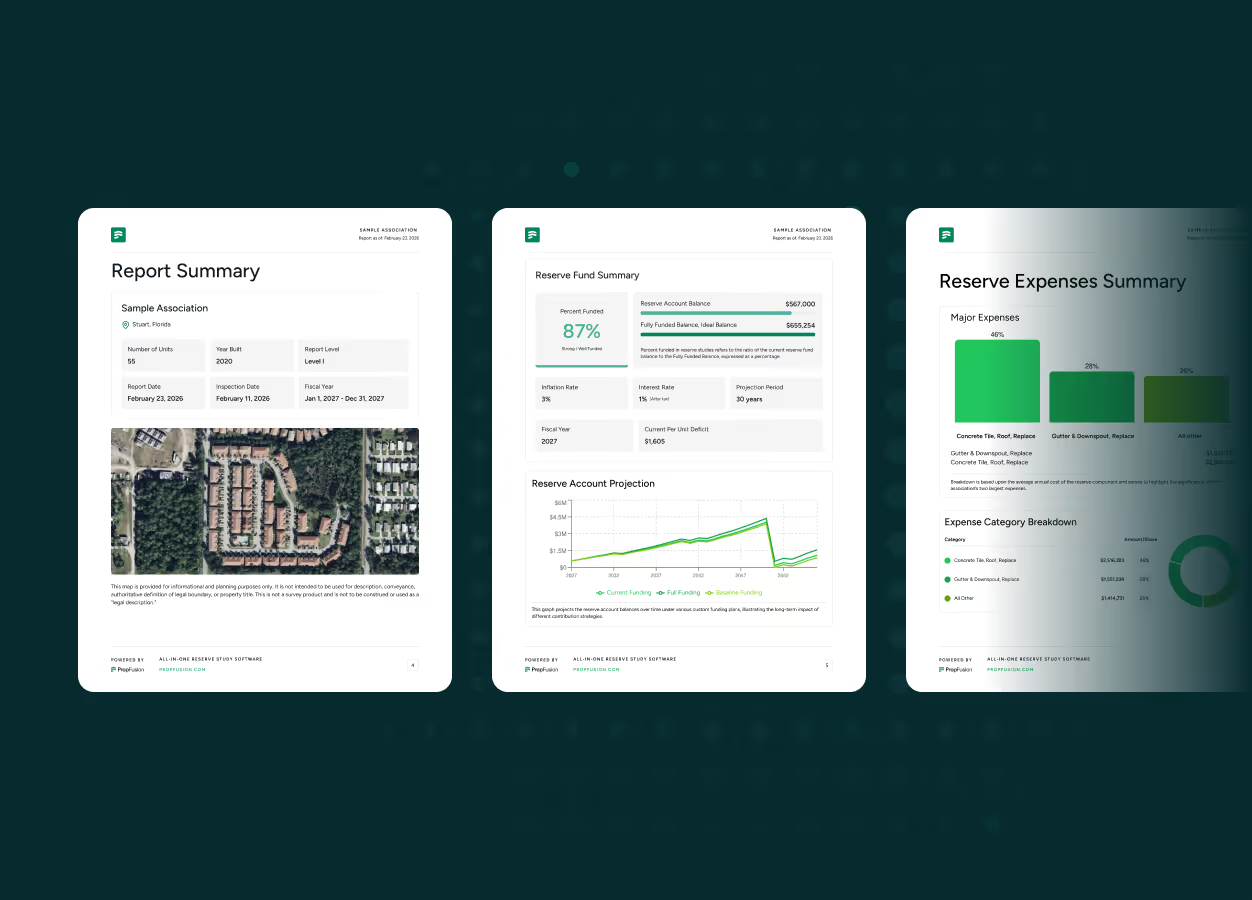
How To Read and Use Your Reserve Study
Get proposals from vetted reserve study professionals - with 30-year funding plans, powered by modern technology, and compared side by side for free.
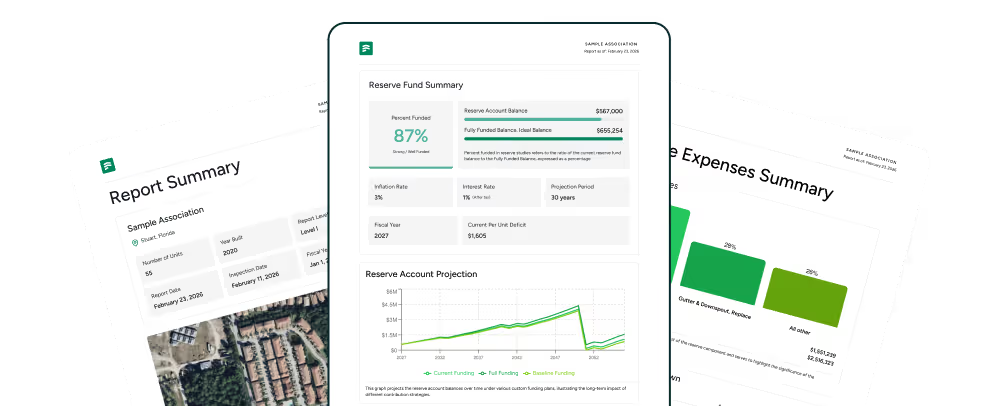
Most boards receive an 80 page reserve study, flip through the charts and then put it in a drawer. That defeats the point of doing the study in the first place.
This guide shows you how to:
- Read the reserve study without getting lost in jargon
- Understand the key numbers and graphs
- Turn the report into specific decisions about dues, projects and communication
Confirm what kind of study you have
Before you dive into charts, check the front of the report for three items:
- Date of the study and the funding year it applies to
- Level of service: full study, update with site visit or update without site visit
- Provider and any credentials such as RS or PRA
Knowing the level and age of the study tells you how much confidence to place in the component list and cost assumptions. If the report is several years old, you should already be thinking about an update. For help understanding study levels, see The 3 Types of Reserve Studies (Levels I to III).
Start with the executive summary
The executive summary is the high level story of your reserves. Focus on four questions:
- What is our current Percent Funded and reserve balance?
- Are we projected to be stronger or weaker over the next 5 to 10 years?
- What funding objective did the consultant use: Full, Threshold or Baseline?
- What specific contribution amount is recommended for the coming year?
Percent Funded and Fully Funded Balance are the key health indicators. If you are not clear on those concepts, read What Does Fully Funded Reserves Mean.
Make sure every board member understands this summary before you get lost in tables.
Understand the component list
The component list is the backbone of the study. It usually includes:
- Component name and description
- Quantity and unit (square feet, linear feet, each)
- Useful life and remaining life
- Current replacement cost
Scan this list with three questions in mind:
- Does it include all major common elements the association is responsible for?
- Are there any obvious duplicates or missing items?
- Does anything look wildly off in terms of quantity or cost?
You do not need to second guess every number, but you should understand what the list covers. When big projects appear, such as roofs or paving, note their remaining life and projected year. Those are the events that will drive assessments and owner expectations.
Read the funding plan charts
The funding plan is where all the assumptions come together. Most reports show:
- A graph of reserve balance over time
- A graph or table of annual contributions
- A table that combines projected expenses, balances and Percent Funded
Here is how to interpret them.
Reserve balance chart
Look for:
- Years where the balance dips sharply because of major projects
- How close the line comes to zero or to any threshold your board set
- The overall trend of Percent Funded
If you are hugging the bottom of the chart, you are in Baseline territory. If you consistently float near the Fully Funded Balance line, you are closer to Full Funding. To compare objectives, use HOA Reserve Funding: Full vs Threshold vs Baseline (link to "HOA Reserve Funding: Full vs Threshold vs Baseline" article).
Contribution table
Find the line that shows recommended annual or monthly contributions. Ask:
- How does this compare to what owners are paying now?
- Are there planned step increases that you need to start communicating early?
- Does the plan depend on aggressive increases that might not be politically realistic?
Your job as a board is to translate this path into actual budgets and communication.
5. Turn the report into budget decisions
A reserve study is not a theoretical document. It should drive concrete actions in your annual budget cycle.
Use the study to decide:
- Next year’s reserve contribution: adopt the recommended number or agree a clear alternative path.
- Assessment changes: if reserves are underfunded, you may need gradual increases, a one time catch up or a combination.
- Special assessments or loans: if a major project is imminent and reserves are far short, you need a plan now, not when bids come in.
If your Percent Funded is low and the projection shows high risk of depletion, read Underfunded Reserves: Risks and Recovery Plans for ideas on recovery strategies.
6. Use the study to plan projects and communicate
Beyond numbers, the study is a planning and communication tool.
Project planning
- Use the schedule of upcoming projects to build a 3 to 5 year capital plan.
- Coordinate with your manager or engineer to refine timing and scope.
- Start preliminary planning and bid requests early for large items such as roofs, siding and asphalt.
Owner communication
- Share high level findings with owners: current Percent Funded, major upcoming projects and why assessments may need to change.
- Use simple visuals from the report in newsletters or annual meeting slides.
- Emphasise that the study is an independent, professional assessment, not just the board’s opinion.
When owners see that numbers come from a formal study, resistance to realistic funding often drops.
7. Build an annual workflow around the study
You will get the most value from a reserve study if you embed it into a simple yearly routine:
- At budget time, review the latest study and projections.
- Decide contributions and any assessment changes using the scenarios in the report.
- Update owners at the annual meeting with one or two clear charts.
- Document in board minutes which funding objective you are following and why.
- Schedule your next update based on your chosen cycle and state requirements.
For guidance on choosing that cycle, see How Often Should an HOA Reserve Study Be Done (link to "How Often Should an HOA Reserve Study Be Done" article). For context on cost, use How Much Does an HOA Reserve Study Cost (link to "How Much Does an HOA Reserve Study Cost" article).
Final thought
A reserve study is not just a compliance document. It is your roadmap for keeping the community safe, attractive and financially stable. When you know how to read the summary, the component list and the funding plan, you can move from reacting to problems to proactively managing them.
Related Reading
- How Much Does a Reserve Study Cost? — Typical pricing by community size and study level.
- HOA Reserves Rule of Thumb — How much should your association have in reserves?
- What Does Deferred Maintenance Mean? — Why postponing repairs costs more in the long run.
- Reserve Study Preparation Checklist — Everything to gather before your next reserve study.
Get proposals from vetted reserve study professionals - with 30-year funding plans, powered by modern technology, and compared side by side for free.
Take the guesswork out of your reserve study
PropFusion matches your association with vetted reserve study professionals - powered by industry-leading software. Compare multiple proposals for free to get started.