Underfunded Reserves: Recovery Plans For HOAs
Get proposals from vetted reserve study professionals - with 30-year funding plans, powered by modern technology, and compared side by side for free.
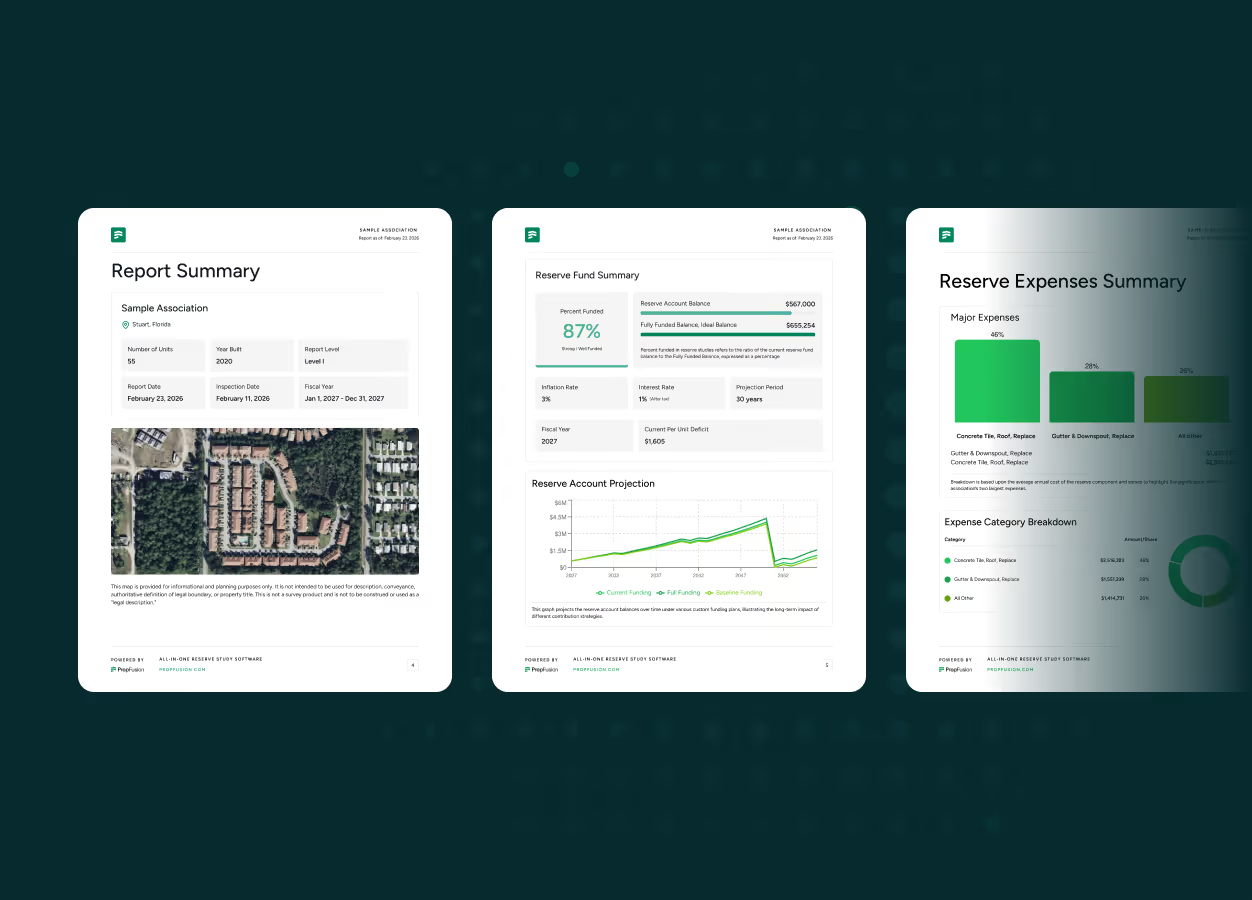
Many boards quietly know their reserves are not where they should be. The study shows a low Percent Funded. The balance dips close to zero in a few years. Big projects are coming and the cash will not be there.
This is what underfunded reserves look like in practice.
The good news is that you can recover. It takes time, clear decisions and a plan you can explain to owners, but there is a way back.
What Does "Underfunded Reserves" Really Mean?
Underfunded reserves are not just "less money than we would like."
In professional terms, your reserve study calculates:
- Fully Funded Balance – the ideal reserve balance at a point in time
- Percent Funded – your actual or projected balance divided by that ideal
When Percent Funded is high, reserves are strong. When it is low, you have higher risk of special assessments, deferred maintenance and uncomfortable conversations with owners.
In many communities, a Percent Funded level below roughly 30 to 40 percent is treated as weak or high risk. Use HOA Reserves Rule of Thumb: How Much to Keep for a deeper explanation and benchmarks (links to those articles).
Underfunding shows up in other ways too:
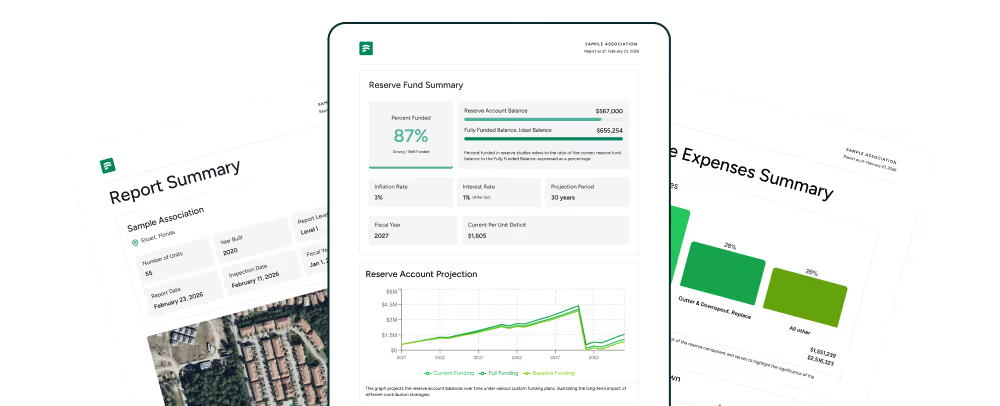
- The projection line in your report dips close to zero
- Upcoming projects are far larger than your current reserve balance
- Your funding plan assumes unrealistic assessment increases later
Step 1: Get a Current, Credible Reserve Study
You cannot fix what you cannot see.
Your first step is to commission a current, professional study. That usually means:
- A full baseline study if you have never had one or it is badly outdated
- An update with site visit if your component list is mostly accurate but conditions and costs have changed
Once you have a credible study, you can see:
- Your current Percent Funded
- When major projects are scheduled
- How quickly reserves will run out under current contributions
That is the starting point for any recovery plan.
Step 2: Choose a Clear Funding Objective
Trying to fix underfunded reserves without a target is like trying to diet without a goal weight.
Your reserve professional can model different funding objectives:
- Full Funding – aiming to move toward 100 percent of Fully Funded Balance
- Threshold Funding – staying above a defined floor or Percent Funded band
- Baseline Funding – simply avoiding a zero balance
For a community that is currently weak, Full Funding tomorrow is often unrealistic. A more practical approach is to:
- Set a Threshold Funding objective for the medium term
- Use Baseline Funding only as a short term stabiliser if you are very far behind
Step 3: Build A Multi Year Recovery Plan
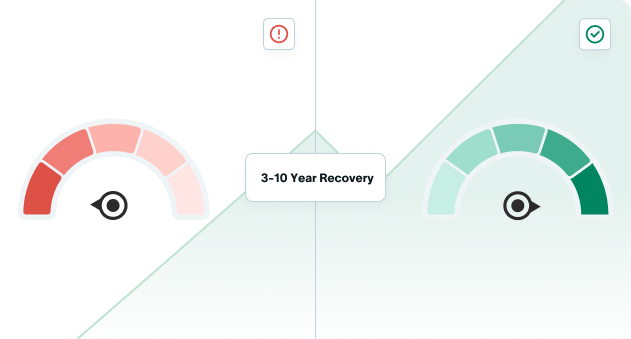
Recovering from underfunded reserves is usually a 3 to 10 year process, not something that happens in one budget cycle. The plan often includes several elements.
Gradual assessment increases
Small, predictable increases each year are easier for owners to accept than a sudden jump. Use your study to:
- Map out the contributions needed for your chosen funding objective
- Decide how fast you can realistically move toward that path
- Communicate the plan clearly: what will increase, when and why
One time catch up measures
In some cases, gradual increases alone are not enough. You may need:
- A one time special assessment earmarked for reserves
- A loan to cover a near term project, combined with higher contributions to repay it
Special assessments and loans are never popular, but they are sometimes the only way to stop a bad situation from getting worse.
Project timing and scope
Your study shows when major projects are expected. If reserves are weak, work with your consultant and manager to:
- Confirm which projects are truly urgent
- Combine or phase work where it makes sense
- Explore cost saving options that do not create bigger problems later
The goal is not to defer everything. It is to sequence projects so you do not break the funding plan.
Step 4: Use Percent Funded As Your Recovery Gauge
Percent Funded gives you a simple way to track progress.
With your reserve professional, decide:
- Where you are today
- A realistic Percent Funded target for 3, 5 and 10 years out
For example, a community might aim to:
- Move from 25 percent funded to 40 percent in three years
- Reach 50 to 60 percent over the next five to seven years
Each annual update of the reserve study will show whether you are staying on that trajectory. For help reading those updates, use How To Read and Use Your Reserve Study.
Step 5: Communicate With Owners In Plain Language
Owners tolerate unpopular decisions better when they understand the problem.
When reserves are underfunded:
- Show simple charts from the study: current balance, projected balance and upcoming projects.
- Explain Percent Funded and what your current level means in terms of risk.
- Outline the recovery plan: how assessments will change, what it will pay for and what happens if you do nothing.
Many boards find it helpful to share excerpts from the reserve study itself or invite the reserve professional to the annual meeting to explain the findings.
Step 6: Keep The Plan Alive
The biggest mistake underfunded communities make is to treat the recovery plan as a one time resolution. Instead:
- Review the reserve study every year during budget season
- Commission updates on the schedule you have agreed with your consultant
- Adjust contributions if actual costs, inflation or laws change faster than expected
Long term capital planning is never finished. The goal is to keep making small, informed adjustments instead of lurching from one crisis to the next.
Final Takeaway
Underfunded reserves are a warning, not a death sentence for your community. With a current reserve study, a clear funding objective, a realistic multi year plan and honest communication, boards can move from a fragile position to a stable one.
Related Reading
- The 3 Types of Reserve Studies (Levels I-III) — Understanding which study level fits your recovery stage.
- How Much Do HOA Reserve Studies Cost? — Budget for your next study as part of the recovery plan.
- Florida Reserve Study Requirements — Florida's SIRS legislation sets strict reserve funding rules.
- California Reserve Study Requirements — California law mandates reserve studies every three years.
Get proposals from vetted reserve study professionals - with 30-year funding plans, powered by modern technology, and compared side by side for free.
Take the guesswork out of your reserve study
PropFusion matches your association with vetted reserve study professionals - powered by industry-leading software. Compare multiple proposals for free to get started.