Questions New Jersey Boards Should Ask Before Hiring A Reserve Specialist

Get proposals from vetted reserve study professionals - with 30-year funding plans, powered by modern technology, and compared side by side for free.
Why vetting your New Jersey reserve provider matters
New Jersey’s Structural Integrity and Reserves Law requires most community associations to complete a capital reserve study and a 30 year funding plan that meets detailed statutory standards.
The law also requires that the study be prepared or reviewed by a credentialed reserve specialist or a New Jersey licensed engineer or architect, following Community Associations Institute (CAI) National Reserve Study Standards or similar national standards.
On top of that, amendments adopted in 2025 require every study to include at least one zero dollar funding plan where the reserve balance can reach zero but never falls below it, plus optional plans with higher minimum balances or escalating contributions.
If you pick the wrong provider, you risk a study that does not comply with New Jersey law, does not give you usable 30 year numbers and does not stand up to lender or owner scrutiny.
This article gives boards and association managers a practical list of questions to ask capital reserve specialists and engineers before you sign an agreement. You can turn it into a one page RFP checklist and attach it to every proposal request.
For statutory background, see the New Jersey Reserve Study Law & Requirements guide. For a general primer on how reserve studies work, see What Is An HOA Reserve Study.
Questions about credentials and New Jersey experience
Start with who will actually sign your study.
Key questions
- Which individual will be responsible for the study and will their name and license or credential appear on the final report.
- Are you a New Jersey licensed professional engineer (PE), a New Jersey licensed architect, or a Reserve Specialist credentialed by CAI.
- How many New Jersey associations have you worked with since S2760 and S3992 were adopted, and what types of communities were they.
- Do you stay current with guidance from the New Jersey Department of Community Affairs (DCA) and major law firms about how the reserve law is being interpreted.
- Can you provide two or three New Jersey client references, preferably with buildings similar to ours.
You want someone who can talk comfortably about New Jersey specific requirements, not just generic reserve study practices.
Questions about scope and methodology
New Jersey law expects a capital reserve study that is consistent with CAI National Reserve Study Standards or similar national standards.
Ask your provider
- How do you decide which common area capital assets belong in the study and how do you treat borderline items such as limited common elements, private roads or shared building systems.
- Will you conduct a site visit and visual inspection, or is this an update that relies on prior field work. If it is an update, how do you decide when a new field inspection is necessary.
- How do you develop remaining useful life and cost estimates. Do you use regional cost data, vendor quotes or your own project history.
- How often do you recommend physical updates, and will your report line up with New Jersey’s requirement that studies be reviewed and updated at least every five years.
- How do you handle components that are part of structural integrity inspection programs, such as garages, facades and primary load bearing systems.
The answers should show that the provider understands both CAI standards and how New Jersey now links capital reserves to structural integrity obligations.
Questions about 30 year funding plans and the zero dollar requirement
Under N.J.S.A. 45:22A-44.3 and its amendments, every capital reserve study must include at least one 30 year funding plan designed so that the reserve fund can reach zero dollars but is never projected to go negative. Additional plans may set higher minimum balances or use escalating contributions.
Ask
- Will you provide at least one baseline funding plan where the balance can reach zero dollars but never falls below zero, as required by the amended law.
- Will you also provide alternative plans that keep a positive minimum balance or use higher contributions in early years, so the board can choose between "minimum legal" and "stronger safety margin" options.
- How do you incorporate loan or special assessment assumptions. Do you treat them as exceptions when a component fails early, or do you plan for them as part of the funding strategy. New Jersey guidance expects loans and special assessments to be backup options rather than the core plan.
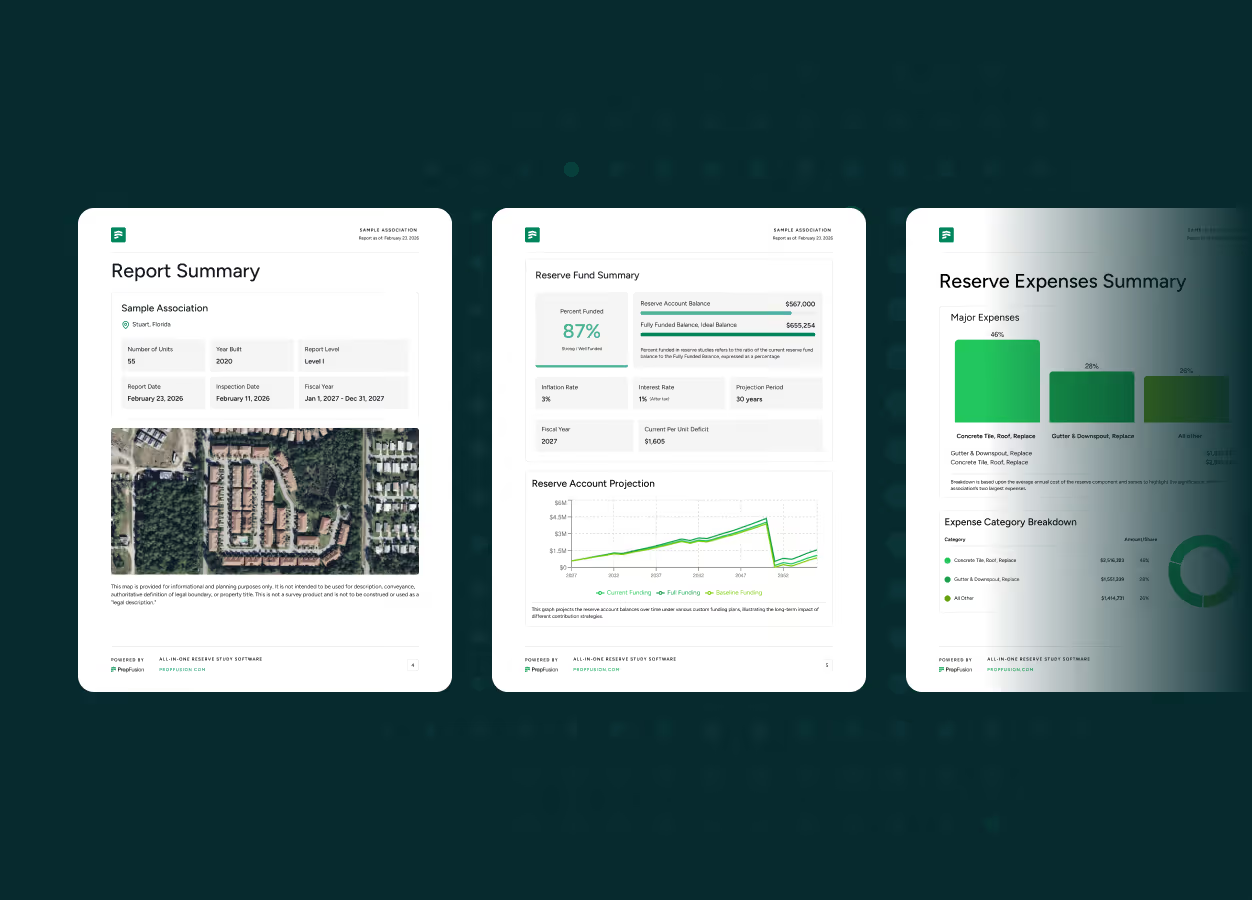
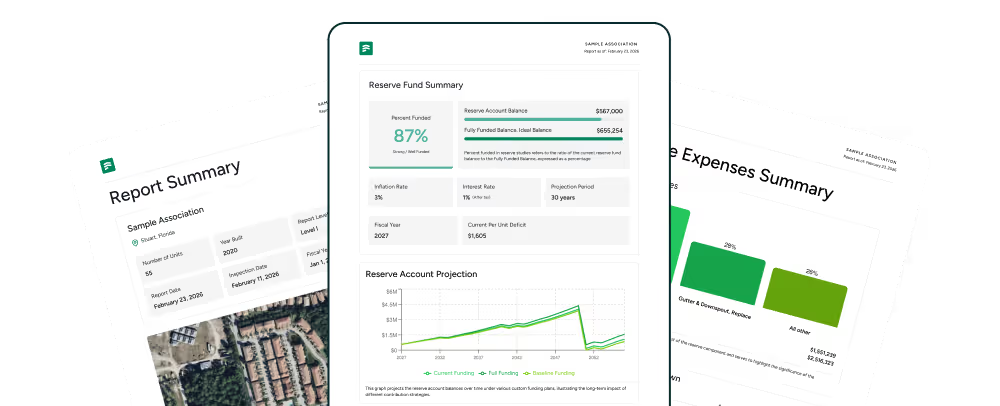
- Can you show sample charts that compare different funding paths over 30 years, so we can see how assessment levels, balances and risk move.
Your provider should be comfortable explaining how their funding plans line up with New Jersey’s adequacy definition and how they would document that for your records.
Questions about underfunded reserves and 85 percent funding options
Many New Jersey associations are discovering that their existing reserves are well below what the new baseline funding plans require. Amendments in S3992 introduced an option for many associations to fund at 85 percent of a chosen plan for a limited period, with strict disclosure conditions.
Ask
- How will your study handle a community that is currently underfunded. Will you provide scenarios that show practical paths to reach baseline funding over several years.
- Can you model both full funding and temporary 85 percent funding scenarios, including any planned special assessments or loans, and still keep us within New Jersey’s legal framework.
- How will you help the board explain these options to owners in clear language, including percent funded benchmarks and the trade off between lower assessments today and higher catch up costs later.
Questions about coordination with structural inspections
New Jersey’s Structural Integrity Bill created inspection obligations for certain residential buildings with primary load bearing systems, separate from but connected to reserve funding.
Ask
- Do you regularly coordinate with structural engineers who perform inspections under the Structural Integrity Bill, and how do you integrate their findings into your component list and funding plan.
- If structural inspections identify deficiencies or accelerated deterioration, will you propose updated reserve scenarios that reflect the new data.
- How do you document assumptions about structural components so that an engineer reviewing the study can see what you based your projections on.
A good reserve specialist in New Jersey will treat capital reserves and structural inspections as two parts of the same long term risk picture.
Questions about deliverables, data and software
New Jersey law does not dictate format, but it does expect a study that can be updated at least every five years and used as the engine for your 30 year funding plan.
Ask
- What exactly do we receive: a PDF report only, or a combination of PDF, spreadsheets and access to online tools.
- Can you provide machine readable data so our manager or board can load the component list and funding scenarios into a platform like PropFusion instead of retyping everything.
- How easy is it to update the study. When components are replaced or projects are re-scoped, will you adjust the model or give us guidance on how to reflect those changes between formal five year updates.
- Will your deliverables clearly label which scenario is the baseline zero dollar plan and which are optional stronger plans, so there is no confusion if a regulator, lender or buyer asks.
PropFusion is designed to serve as the operating system for your reserve plan. Your provider’s data should fit cleanly into that workflow.
FAQs: Hiring a New Jersey reserve specialist or engineer
Do we have to use a New Jersey licensed engineer or architect, or can a reserve specialist from another state do the work?
New Jersey law allows capital reserve studies to be prepared in accordance with CAI National Reserve Study Standards by a reserve specialist credentialed by CAI or by an engineer or architect licensed in New Jersey. Many law firm summaries advise using professionals who are both credentialed and familiar with the new statutes.
How often should we change providers?
The statute requires a review or update at least every five years, not a new provider every five years.
Some boards stay with the same firm for continuity, while others competitively bid every second or third cycle. The key is that your provider understands both the law and your property.
Is a low fee always a red flag?
Not necessarily, but if a proposal is far cheaper than others you should ask what is missing. Very low fees can mean limited site work, fewer funding scenarios or a report that is generic rather than tailored to New Jersey’s zero dollar plan and 85 percent options.
Can our board prepare its own capital reserve study?
DCA’s Construction Code Communicator explains that while boards are involved in gathering information, the study itself must be prepared or reviewed by a qualified reserve specialist, engineer or architect, and that board prepared studies without professional review are not acceptable under the statute.
Get proposals from vetted reserve study professionals - with 30-year funding plans, powered by modern technology, and compared side by side for free.
Take the guesswork out of your reserve study
PropFusion matches your association with vetted reserve study professionals - powered by industry-leading software. Compare multiple proposals for free to get started.