Questions To Ask A California Reserve Study Provider

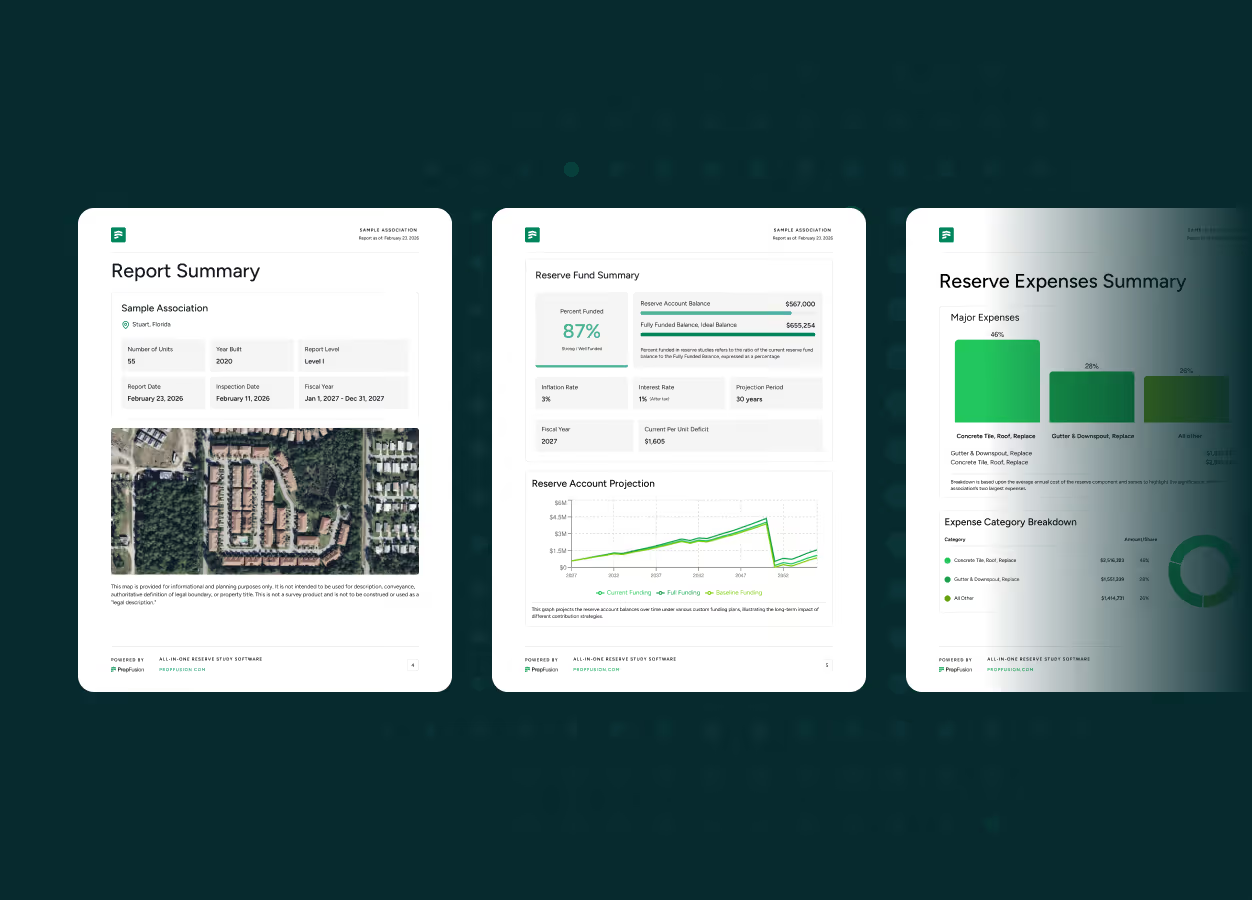
Get proposals from vetted reserve study professionals - with 30-year funding plans, powered by modern technology, and compared side by side for free.
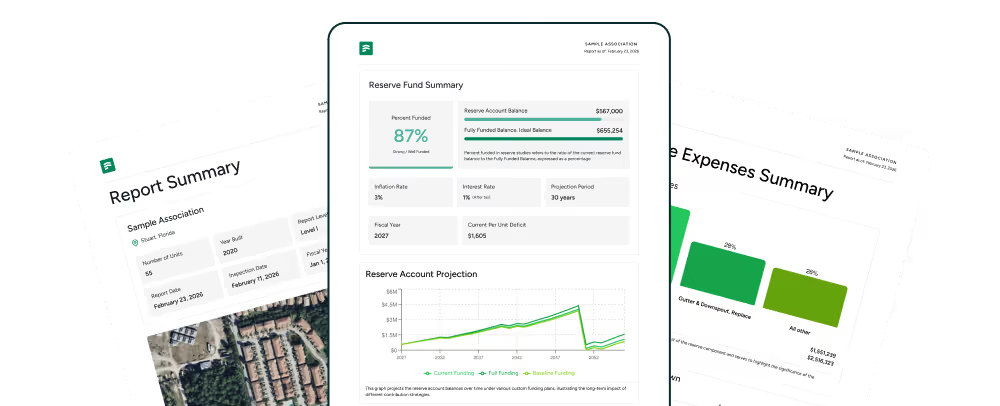
California law requires most common interest developments to prepare a reserve study with a site inspection at least every three years and to adopt a reserve funding plan that is reviewed annually.
The California Department of Real Estate has published detailed reserve study guidelines and the Community Associations Institute has National Reserve Study Standards that describe how professional studies should be performed.
On paper, every proposal looks similar. In practice, there is a big difference between a firm that is fluent in California law and national standards and one that produces a quick spreadsheet.
This article gives you practical questions to use as an RFP checklist before you hire a reserve study provider in California. Once you know what to ask, you can request bids from multiple California reserve study companies in one place on the PropFusion marketplace.
Why The Right Questions Matter
Under the Davis Stirling Act, the Board remains responsible for adopting a reserve funding plan and disclosing reserve information to owners, even if a consultant prepares the study. (Davis-Stirling)
The DRE guidelines make the same point. They were written to help boards understand what a sound reserve study looks like, not to shift responsibility away from directors. (dre.ca.gov)
If you choose a weak provider, you still own the liability for bad assumptions and incomplete component lists. Good questions reduce that risk.
Checklist 1: Credentials And Experience
Start by confirming that the firm and the individual preparer meet basic professional standards. CAI and other organizations offer credentials such as Reserve Specialist and Professional Reserve Analyst and publish standards for reserve work.
Use these questions:
- What professional credentials do your preparers hold and are they current.
- How many reserve studies have you completed for California HOAs and condos in the last year.
- What percentage of your firm’s work is reserve studies rather than other services. (Reserve Advisors)
- Do you prepare studies in accordance with CAI National Reserve Study Standards. (CAI)
- Are the people who inspect our property employees or subcontractors.
- What types of buildings do you have the most experience with, such as high rise coastal condos, garden style communities or townhomes.
You are looking for a firm that treats reserve work as a core business, not an occasional add on.
Checklist 2: California Law And Balcony Requirements
Reserve studies for California communities need to reflect state statutes and local risk, not generic national assumptions.
Ask:
- How familiar are you with Davis Stirling reserve sections such as Civil Code 5550 and 5560.
- How do you make sure our reserve study supports the disclosures we must include in the Annual Budget Report.
- How do you handle SB 326 balcony and exterior elevated element findings in the component list and funding plan for condominium associations.
- Do you review our governing documents and maintenance responsibilities before finalizing the component list.
A strong provider should be able to speak clearly about Civil Code requirements and current balcony rules, not just general building issues.
Checklist 3: Methods And National Reserve Study Standards
National Reserve Study Standards from CAI define common terminology and minimum expectations for reserve studies. (CAI)
Use questions like:
- Do you follow CAI National Reserve Study Standards when preparing our study and funding plan.
- How do you decide which components belong in reserves instead of the operating budget. (Association Reserves)
- How do you calculate percent funded and how will you explain that to our Board. (FCAP)
- What assumptions do you typically use for inflation, interest and remaining useful life and can you customise them for our association.
- How often do you recommend full studies with site inspections versus updates without site visits for communities like ours. (zumBrunnen)
The goal is to confirm that the firm does not improvise its own model but aligns with widely accepted standards.
Checklist 4: Site Work And Data Accuracy
Reserve studies depend on the quality of the field work. Industry guidance stresses the importance of a thorough site inspection and collaboration with the Board and manager. (dre.ca.gov)
Clarify expectations with questions such as:
- Who will perform the site inspection and what is their background.
- How much time do you expect to spend on site and how many visits will you make.
- How do you verify dimensions, quantities and conditions for major components.
- What information do you need from us before the site visit, such as drawings, prior reports and project history.
- How do you handle components that are concealed or partially visible, such as plumbing lines or balcony waterproofing.
You want a firm that sees the inspection as real field work, not a quick drive through.
Checklist 5: Funding Plans And Communication
Davis Stirling requires a reserve funding plan that includes a schedule of assessment changes needed to fund it, and it must be adopted in an open Board meeting. (Davis-Stirling)
Good funding plans combine technical accuracy with clear communication.
Ask:
- How many funding plan scenarios will you provide as part of the base fee.
- How will you show the trade off between contribution levels, percent funded and risk of special assessments.
- How will you help the Board explain the recommended plan to owners.
- Will you attend a Board meeting, in person or virtually, to present the study and answer questions and is that included in the fee.
- How do you document the assumptions behind the funding plan so future Boards can understand them.
You are looking for clear, visual communication, not just a dense set of tables.
Checklist 6: Scope, Price And Deliverables
Industry articles highlight the importance of understanding what is included in the fee and what costs more.
Before you sign, ask:
- What is included in your base price and what services cost extra.
- How many revisions to the draft study are included before additional fees apply.
- What format will we receive, such as PDF, native spreadsheets and any online access.
- How long will it take from site visit to draft and from draft to final report.
- Do you carry professional liability insurance and at what limits.
- How long do you keep our data and how do you handle future updates.
You should finish the conversation with a clear picture of price, timeline and format, not just a single number.
For a deeper look at statutory timing and requirements, review our California reserve study requirements law guide.
Related Reading
- California Reserve Study Law & Requirements — Full statutory guide to Davis-Stirling reserve study obligations.
- Funding Balcony Inspections and Repairs in California — How SB 326 balcony requirements affect your reserve study.
- HOA Reserves Rule of Thumb — How much should your association have in reserves?
- The 3 Types of Reserve Studies — Understand Level I, II, and III studies before requesting bids.
FAQs
Does California law require a “licensed” reserve study provider
California statutes do not require a specific license such as engineer or architect for all reserve studies, but many communities choose firms whose staff hold CAI Reserve Specialist or similar credentials and who understand Civil Code requirements. (Find Hoa Law)
Should our Board write the reserve study itself to save money
The DRE and industry guidance recommend using qualified reserve professionals. Boards that attempt to write their own studies risk missing components, mis-estimating costs and failing to meet disclosure expectations. (dre.ca.gov)
How often should we re-evaluate our reserve study provider
It is common to review providers every few cycles. For example, you might consider new proposals when you plan a full study with site inspection, or when your building profile has changed significantly due to major projects or new statutory requirements. (zumBrunnen)
Get proposals from vetted reserve study professionals - with 30-year funding plans, powered by modern technology, and compared side by side for free.
Take the guesswork out of your reserve study
PropFusion matches your association with vetted reserve study professionals - powered by industry-leading software. Compare multiple proposals for free to get started.