From SB 326 to Your Budget: How California HOAs Turn Reserve Studies into Action
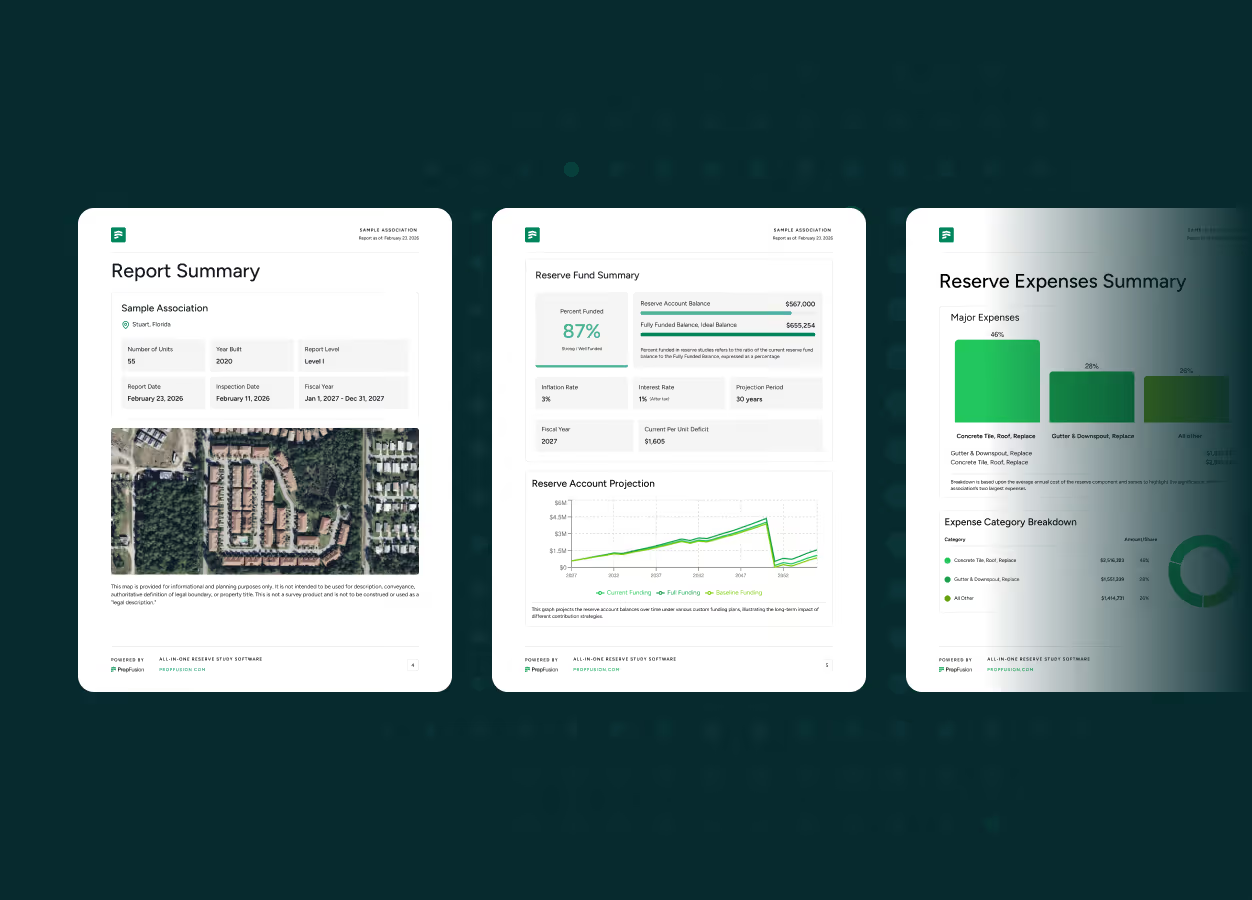
Get proposals from vetted reserve study professionals - with 30-year funding plans, powered by modern technology, and compared side by side for free.
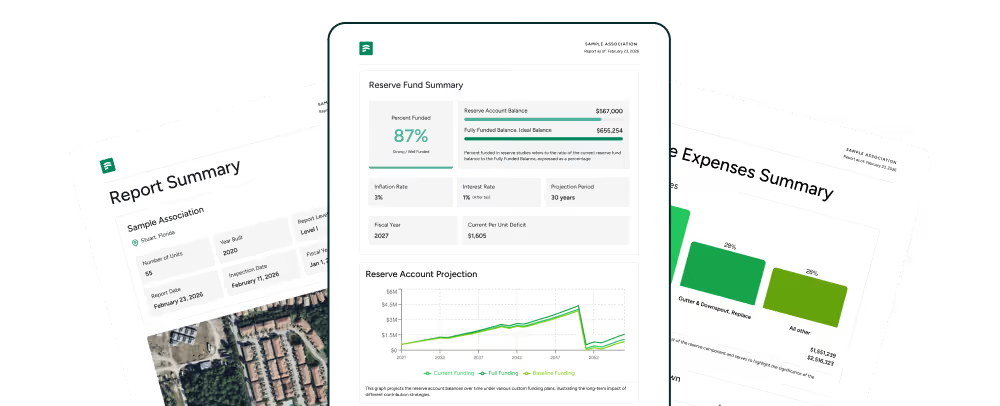
In California, reserve studies are no longer just “nice planning documents” you commission every few years and forget. Between the Davis–Stirling Act’s reserve requirements and SB 326’s mandate for structural inspections of exterior elevated elements (like balconies and walkways) in certain condo buildings, boards are expected to connect what engineers and reserve professionals find directly to how they build their budgets and set dues.
The challenge is simple: the reports keep getting more technical, while owners’ patience for big fee increases keeps getting thinner. Many boards are sitting on high-stakes information in their SB 326 and reserve study reports but are unsure how to translate it into a concrete, defensible financial plan.
This article walks through how California HOAs can move “from SB 326 to your budget” – using inspection findings and reserve studies together to drive smart funding decisions, reduce special assessments, and protect building safety.
If you need a clear breakdown of California’s reserve study expectations under Davis–Stirling, start with our California reserve study law guide.
Step 1: Understand how SB 326 and reserve studies fit together
SB 326 focuses on safety inspections of “exterior elevated elements” for certain condo associations – think balconies, decks, walkways, and stair landings supported by wood or wood-based framing above ground level. The law requires periodic inspections by licensed structural engineers or architects and written reports with findings and repair recommendations.
Your reserve study, on the other hand, is designed to estimate long-term repair and replacement costs for all major common components, not just elevated elements, and to map out a 20–30 year funding plan under Civil Code §5550 and related sections.
Those two processes overlap in a crucial way:
- SB 326 tells you whether critical structural elements are safe today and what repairs are needed.
- Your reserve study tells you how to pay for those repairs (and everything else) over time without blowing up your budget.
If your reserve study is not absorbing SB 326 inspection results, you are flying blind financially. If your budget is not responding to what those reports show, you are taking on risk you probably do not understand.
Step 2: Pull your SB 326 report and reserve study into the same conversation
Too often, the SB 326 inspection report and the reserve study sit in separate folders, handled by different professionals at different times of year. The board discusses each in isolation and then wonders why the numbers never line up.
A better approach is to schedule a joint working session where you:
- Review the latest SB 326 report and identify required and recommended repairs, along with any timelines the engineer has flagged.
- Open your current reserve study and find where those same elements (balconies, decks, elevated walkways, associated waterproofing) appear in the component list and funding schedule.
- Note any gaps where the reserve study assumes a different remaining life, cost, or scope than what the SB 326 engineer is now saying.
The goal is not to nitpick every line item. It is to make sure your safety-critical SB 326 findings and your long-range reserve plan are telling the same story.
Step 3: Ask your reserve professional to integrate SB 326 findings
Once you see the gaps, your reserve professional needs to update the study to reflect reality on the ground. That usually means three things:
- Adjusting component lives and timing - If SB 326 inspections show that certain balconies or elevated walkways need repair or replacement sooner than the old study assumed, your reserve schedule needs to pull those projects forward.
- Updating costs based on real repair scopes - The engineer’s report will often define scopes of work that are more detailed – and sometimes more expensive – than the generic line item you had before. Those scopes should drive the cost assumptions in your reserve study.
- Creating scenarios that reflect safety-driven work - You may need a “safety-first” scenario in your reserve projections that prioritizes SB 326-related work and shows what kind of contributions or assessments are needed to get that done on time.
If your current provider cannot or will not do this kind of integration work, that is a sign you need a different partner for your next cycle. You should not be left to manually reconcile safety reports and funding plans on your own.
Step 4: Translate the updated study into a multi-year funding plan
Once your reserve study reflects current SB 326 findings and other capital needs, the next question is simple: how do we turn this into a budget that owners can live with?
Rather than treating the “fully funded” contribution number as something you must hit in a single year, think in terms of a 3–5 year path. Work with your reserve professional to model:
- A baseline scenario: contributions stay at current levels (you will see where the reserves fall short).
- A phased scenario: contributions ramp up gradually to cover SB 326-driven work and other major projects before they hit.
- A mixed scenario: a combination of permanent contribution increases and a targeted, one-time special assessment for a specific structural project.
For each scenario, look at:
- Which years your reserve balance dips the lowest.
- Whether you can fund SB 326-related repairs on the timeline recommended by your engineer.
- How large any assessments would need to be if you underfund contributions now.
The point is not to find a “perfect” plan. It is to pick a path that balances safety, fairness, and owner impact – and that you can actually explain.
Step 5: Build your budget narrative around safety, fairness, and California law
You will not get very far if your budget message boils down to “dues are going up because we said so.”
Instead, frame the conversation around three themes:
Safety
Explain that SB 326 inspections are specifically about catching structural issues in elevated elements before something fails. Connecting reserve increases to concrete safety work (balcony repairs, waterproofing, structural remediation) changes the tone of the discussion.
Fairness
Show how chronic underfunding leads to large, sudden special assessments that hit whoever happens to own a unit at that moment. A more predictable funding plan spreads costs fairly over current and future owners.
California expectations
Remind owners that both SB 326 and California’s reserve requirements under Davis–Stirling are not optional. The state expects HOAs to take structural safety and long-term planning seriously. You are not “overreacting”; you are catching up to where the law and the industry have moved.
Step 6: Use your professionals in front of owners, not just behind the scenes
California HOAs often make their own lives harder by keeping the reserve professional and SB 326 engineer in the background. Owners then treat the board as if it invented the numbers.
A better pattern is:
- Ask your SB 326 engineer to present a short, owner-friendly summary of findings and recommended timelines.
- Have your reserve professional show how those findings and other capital needs translate into the funding plan and budget.
- Let owners ask questions directly of the people who did the technical work.
Boards that do this tend to see less opposition and more grudging acceptance. Owners may not like higher dues, but they are much more likely to accept them when they see how they tie back to professional evaluations and California law, rather than vague “we need more money” statements.
Step 7: Revisit the plan every cycle, not just every three years
California HOAs are required to review and update their reserves on a regular cadence under Davis–Stirling, and SB 326 inspections repeat on defined intervals as well. That means your “SB 326 to budget” process is not a one-time event; it is an ongoing cycle.
Each year, as you build the budget, ask:
- Have we completed any structural or SB 326-driven projects, and were the actual costs close to what was in the study?
- Have any new issues emerged that might accelerate future work?
- Are our reserve contributions still tracking the path we agreed on, or did we fall short?
If the answer to any of those is “no” or “not really,” you need to adjust your plan, not just roll last year’s numbers forward.
Over time, the communities that do this well are not the ones with the fanciest spreadsheets. They are the ones that treat SB 326 reports and reserve studies as active steering tools – and adjust course before problems become crises.
Pulling it all together
Turning SB 326 and your reserve study into a practical, defensible budget is not easy, but it is absolutely possible. The boards that succeed tend to follow the same pattern:
- They treat SB 326 inspection reports and reserve studies as parts of the same picture.
- They push their reserve professionals to integrate structural findings, not ignore them.
- They use multi-year scenarios to phase in contributions and avoid panic-driven decisions.
They frame dues increases around safety, fairness, and California’s legal expectations.
FAQ
How does SB 326 change the way California HOAs should use reserve studies?
SB 326 adds a safety-focused layer to what reserve studies were already trying to do. The law requires structural inspections of certain elevated elements in condo buildings, with specific findings and timelines. Those findings need to flow directly into your reserve study, which then becomes the financial roadmap for paying for that work. In practice, SB 326 makes it even more important that your reserve study is current, accurate, and integrated with real inspection data.
Do all California HOAs have to comply with SB 326?
No. SB 326 applies to certain condominium associations with “exterior elevated elements” supported by wood or wood-based framing that are more than a certain height above the ground. Other types of HOAs may not be directly covered by SB 326 but are still subject to California’s reserve requirements under Davis–Stirling. Even if your community is not technically covered by SB 326, the logic behind it – proactively inspecting and planning for structural elements – is worth applying in your reserve planning.
Should we hire the same firm for SB 326 inspections and reserve studies?
It is not mandatory to use the same firm, and SB 326 requires that inspections be performed by specific licensed professionals (such as structural engineers or architects). However, you should ensure that whoever prepares your reserve study can understand and incorporate the SB 326 engineer’s findings. In some cases, firms collaborate; in others, your reserve professional simply uses the SB 326 report as a core input. The key is coordination, not necessarily having one company do everything.
How quickly do we need to adjust our budget after an SB 326 inspection finds problems?
The answer depends on the severity and timelines in the engineer’s report. Life-safety issues may require immediate work, which can force short-term assessments or emergency reserves. Less urgent repairs can often be planned and funded over several years. Either way, you should not wait until the next full study cycle to react. Ask your reserve professional to update your projections to reflect the SB 326 findings and help you design a funding path that meets the recommended timelines.
Get proposals from vetted reserve study professionals - with 30-year funding plans, powered by modern technology, and compared side by side for free.
Take the guesswork out of your reserve study
PropFusion matches your association with vetted reserve study professionals - powered by industry-leading software. Compare multiple proposals for free to get started.