How California HOAs Use Reserve Studies to Avoid Owner Shock
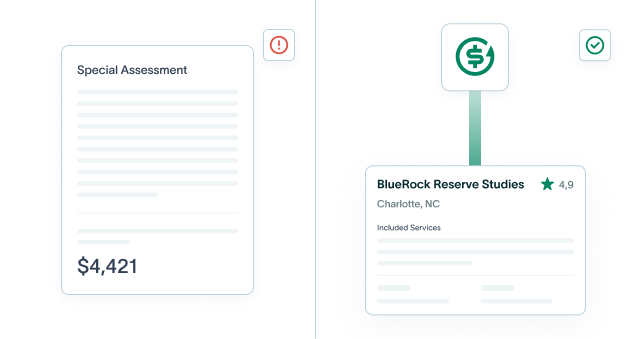
Get proposals from vetted reserve study professionals - with 30-year funding plans, powered by modern technology, and compared side by side for free.
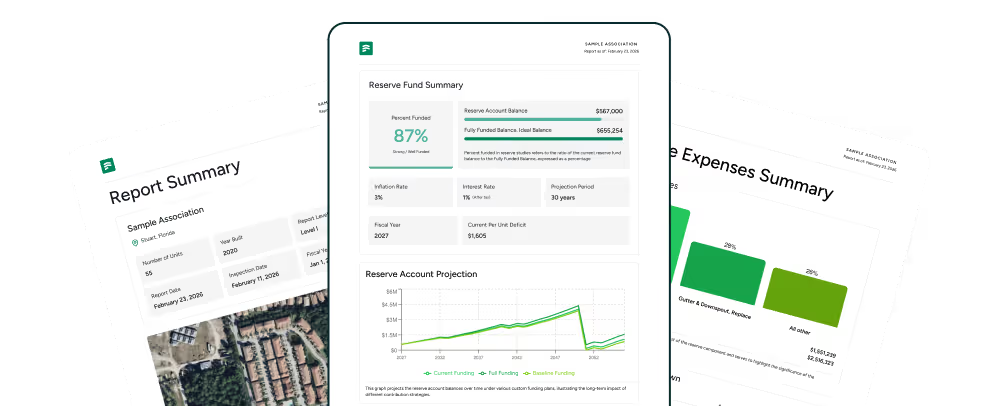
In California, reserve studies sit right at the center of your long-term financial planning. Under the Davis–Stirling Act, boards are expected to commission a full reserve study with a visual inspection at least every three years, review it annually, and adopt a reserve funding plan that shows how you will pay for upcoming capital projects.
In theory, that should mean fewer surprises. In practice, many HOAs still end up blindsided by large special assessments for roofs, balconies, garages, and other major components. The information was there in the reserve study – it just never made it all the way into the budget.
This article walks through how California HOAs can use reserve studies to choose steady, predictable funding over last-minute special assessments and avoid shocking owners with sudden, five-figure bills.
Why special assessments are so painful in California
Special assessments feel like ambushes to owners. They usually arrive with little warning, are due quickly, and often relate to problems that have been "brewing" for years – water intrusion, failed waterproofing, deteriorated balconies, or roofs at the end of their life.
For boards, special assessments also create risk:
- They raise questions about whether the board planned responsibly.
- They can damage property values if buyers become wary of future surprises.
- They can undermine trust, especially if owners never saw the problem coming.
In a state where the law already expects you to plan ahead with regular reserve studies and a funding plan, relying on frequent special assessments is not just unpopular – it is a sign that your reserves are not being used the way they were intended.
What your reserve study is actually telling you
A California reserve study does more than list components and costs. At its core, it answers three questions:
- What do we own?
- When will it wear out?
- How much do we need to set aside each year to avoid surprises?
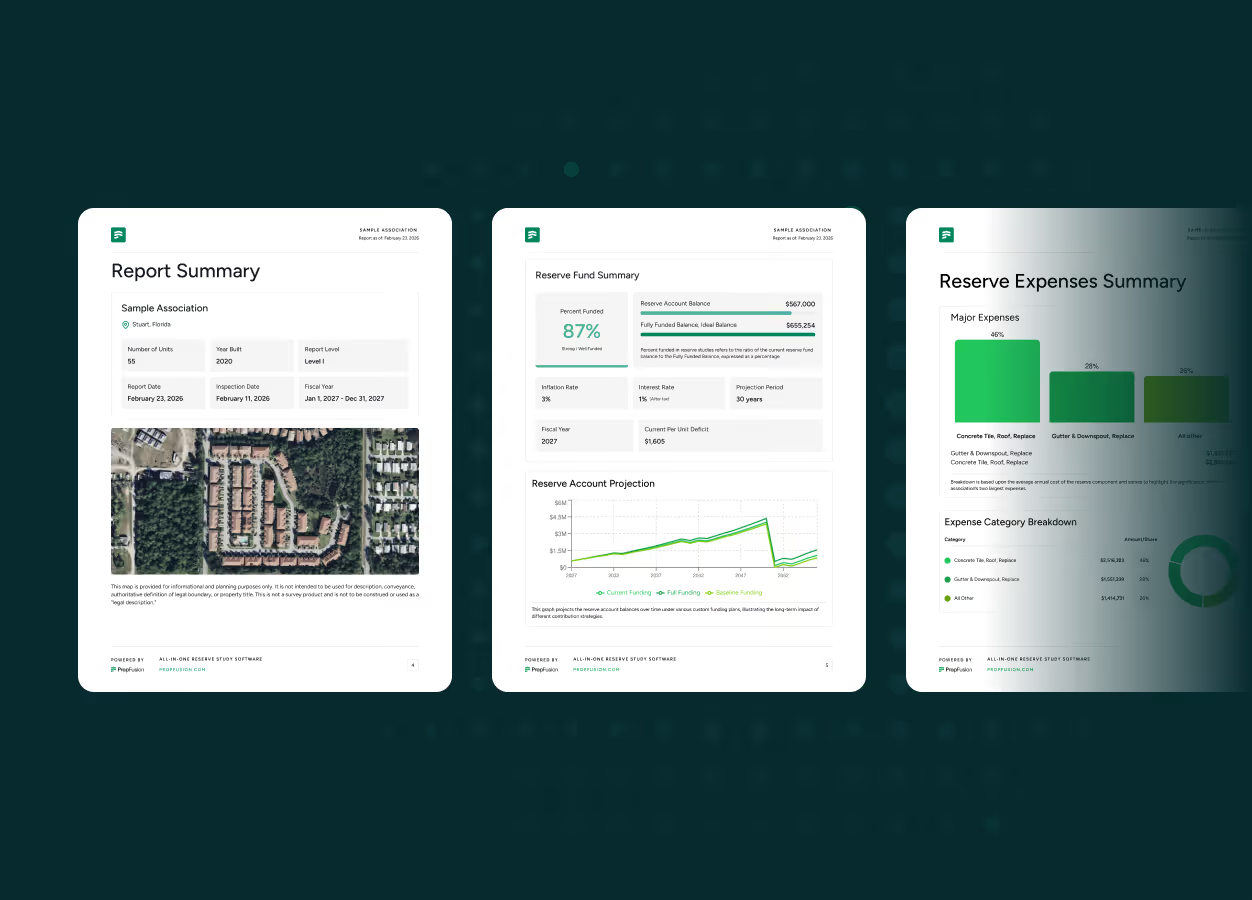
If you flip past the component inventory and go straight to the recommended contribution, you miss the real value. The funding projections show, year by year, how your reserve balance will rise and fall under different contribution levels and when it will be tested by major projects. For help interpreting these projections, see our guide on how to read and use your reserve study.
Look closely at:
- The years where your balance dips the lowest.
- The timing and size of major projects (roofing, siding, garages, SB 326-related balcony work).
- How far current contributions are from the "ideal" amount the study recommends.
Those three pieces will tell you how close you are to a future special assessment and roughly when it would occur if nothing changes.
Using the reserve study to compare "special assessment" vs. "steady funding" paths
Once you understand your projections, it becomes much easier to compare two approaches:
- Path A: Keep dues low now and accept the near certainty of large special assessments later.
- Path B: Increase contributions steadily to build reserves in advance and avoid major shocks.
Your reserve professional can model these choices explicitly. Ask them to show:
- A "do nothing" scenario where contributions stay flat.
- A "gradual ramp-up" scenario where contributions increase over 3–5 years.
- If necessary, a "hybrid" scenario where there is a modest contribution increase and a limited, clearly defined special assessment for one project.
Seeing these paths side by side – instead of just talking in percentages – changes the board conversation. You stop arguing about whether a 10% dues increase is "too much" in the abstract and start asking which path creates the least pain and risk over 10–20 years.
Designing a steady funding plan owners can live with
Why do we still get special assessments if we already have a reserve study?
In most California HOAs, special assessments happen because the board did not fully implement the funding plan shown in the reserve study. Contributions stay below the recommended level, major projects arrive on schedule, and the reserves simply are not there. The study is a roadmap, not an automatic solution. It only prevents assessments if you use it to set contributions and adjust your budget each year.
Does California law ban special assessments if we have a reserve funding plan?
No. California law requires a reserve study, an adopted funding plan, and proper disclosure, but it does not prohibit special assessments. In reality, special assessments remain a tool for emergencies or specific situations. The problem is when assessments become a regular substitute for steady funding. A healthy reserve plan minimizes, rather than eliminates, the need for them.
How can we decide whether to use a special assessment or just raise dues?
Start by having your reserve professional model both options. A special assessment may be reasonable for a one-time, clearly defined project, especially if your community has historically underfunded reserves. Raising dues is usually better for ongoing needs and to avoid recurring crises. In many California communities, the best answer is a combination: a limited one-time assessment plus a permanent increase in reserve contributions so the same problem does not repeat.
How do we explain higher reserve contributions to skeptical owners?
Tie every increase back to specific components and timelines in the reserve study: roofs, waterproofing, balconies, parking garages, mechanical systems. Show owners what happens to the reserve balance if contributions stay flat versus if you follow the recommended path. Emphasize that the goal is to prevent large, sudden assessments and protect both safety and property values, not to build a vague “slush fund.”
Get proposals from vetted reserve study professionals - with 30-year funding plans, powered by modern technology, and compared side by side for free.
Take the guesswork out of your reserve study
PropFusion matches your association with vetted reserve study professionals - powered by industry-leading software. Compare multiple proposals for free to get started.