HOA Operating vs. Reserve Accounts (With Chart)

Get proposals from vetted reserve study professionals - with 30-year funding plans, powered by modern technology, and compared side by side for free.
Every community association runs on two pots of money. One keeps the lights on this month; the other keeps a special assessment off the table ten years from now. Boards that blur the line between them are the boards that end up surprised.
What is the difference between an HOA operating account and a reserve account?
The operating account pays for predictable, recurring expenses — landscaping, utilities, insurance, management — out of this year's budget. The reserve account sets aside money for the repair and replacement of major common elements — roofs, pavement, elevators, pools — on a multi-decade schedule, usually guided by a reserve study.
Operating vs. Reserve Accounts: The Side-by-Side Chart
Here is the comparison most treasurers keep taped to the inside of the budget binder:
What Belongs in the Operating Account
Operating money covers anything the community consumes within the fiscal year:
- Landscaping, janitorial, and pool service contracts
- Utilities for common areas — water, electricity, gas, trash
- Insurance premiums and management fees
- Minor, routine repairs (a broken sprinkler head, a gate motor service call)
- Administrative costs: accounting, legal, mailings, software
The test is simple: if the expense recurs every year at roughly the same size, it is an operating expense.
What Belongs in the Reserve Account
Reserve money exists for components that wear out over many years and cost serious money when they do:
- Roof replacement and major waterproofing
- Repaving and concrete work
- Exterior painting cycles
- Elevator modernization, HVAC and boiler replacement
- Pool resurfacing, clubhouse renovation, major fencing
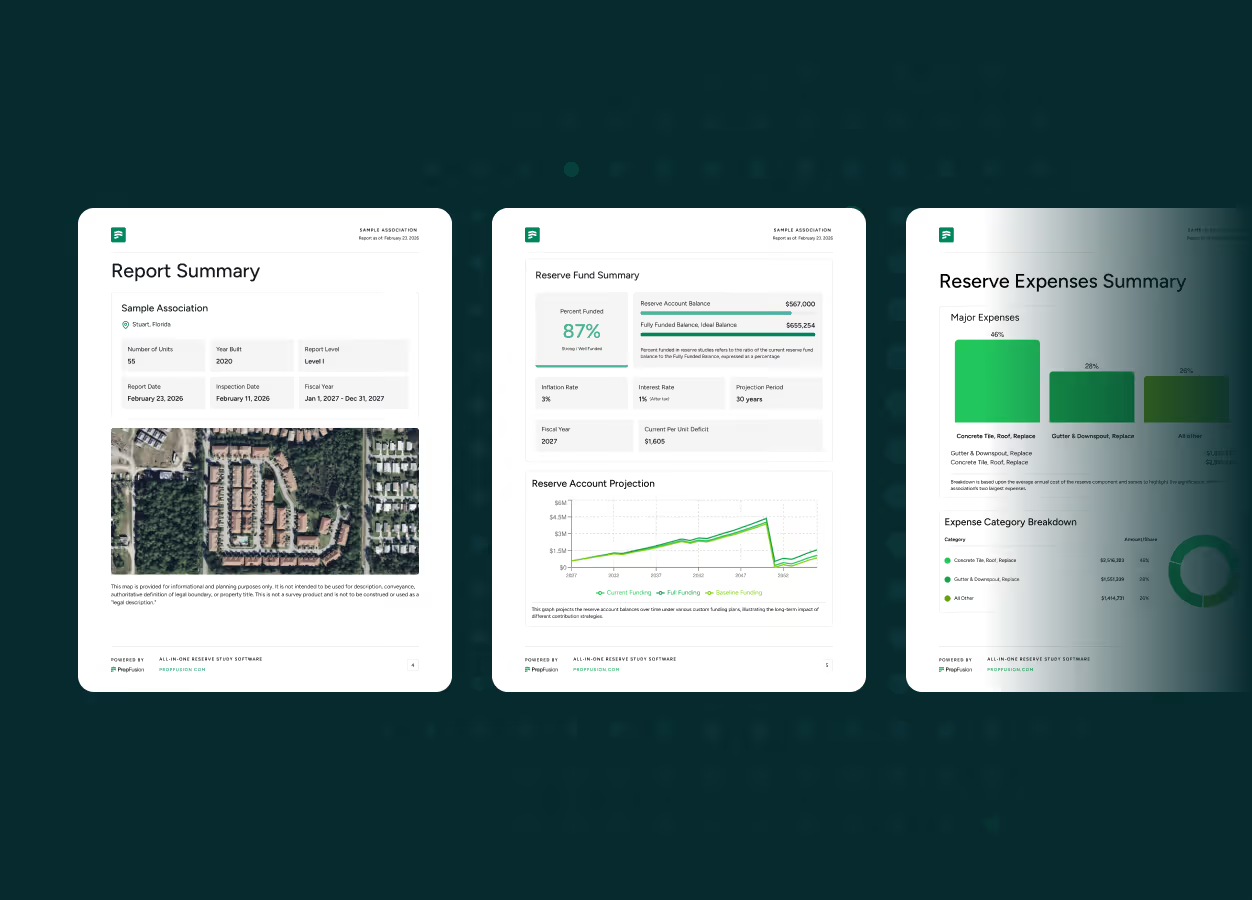
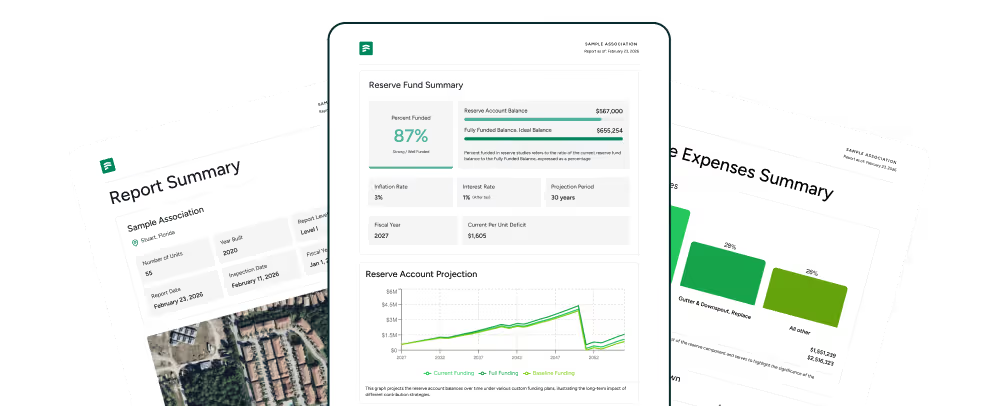
The list of components, their remaining useful life, and their replacement cost is exactly what a reserve study documents. Skipping those contributions is how communities accumulate deferred maintenance — repairs that get more expensive the longer they wait.
Can an HOA Move Money Between Operating and Reserve Accounts?
Sometimes — but this is where boards get into trouble, because the rules depend on your state and your governing documents.
Some states permit temporary borrowing from reserves to cover operating shortfalls, typically with formal board action, owner notice, and a written repayment plan. California's Davis-Stirling Act, for example, allows borrowing only with strict notice and repayment requirements. Florida goes further for condominiums: structural (SIRS) reserves generally cannot be waived or redirected to other uses at all. Other states are silent, which leaves your governing documents — and your auditor — as the controlling authority.
Before moving a dollar in either direction, check the reserve study requirements for your state and get the decision into the board minutes.
How Much Should Be in Each Account?
Operating: most managers target a cushion of one to three months of operating expenses, enough to absorb timing gaps and small surprises without touching reserves.
Reserves: there is no single right number — it depends on the age and condition of your components. The widely used benchmarks (percent funded, contribution per unit) are covered in our guide to the HOA reserves rule of thumb, and a professional study replaces those rules of thumb with component-level math. If cost is the question, see how much a reserve study costs.
Best Practices for Keeping the Two Accounts Straight
- Hold the funds in physically separate bank accounts — separate line items in one account is how commingling starts.
- Fund reserves as a fixed line in every budget, transferred automatically each month.
- Spend reserves only against components in the reserve study, by board vote recorded in minutes.
- If you must borrow from reserves, document the amount, the reason, and a repayment schedule — and check your state's notice requirements first.
- Update the reserve study every 3–5 years so the reserve target reflects current costs.
Frequently Asked Questions
Can HOA reserve funds be used for operating expenses?
Generally only as a documented, temporary loan with a repayment plan — and in some cases, such as Florida's structural SIRS reserves, not at all. Check your state statute and governing documents before transferring anything.
Do operating and reserve funds need separate bank accounts?
Best practice — and in some states a legal expectation — is yes. Separate accounts create a clean audit trail and make accidental commingling nearly impossible.
Who decides how much goes into the reserve account?
The board sets the contribution, ideally based on a current reserve study's funding plan rather than a guess. In some states minimum funding or disclosure rules apply.
Is interest earned on reserve funds taxable?
Often yes — interest income is generally taxable to the association even when dues are not. How it lands depends on which tax form the association files, so this is a question for your CPA at budget time.
What happens if the operating account runs short?
The board amends the budget, trims expenses, or raises assessments. Quietly covering the gap from reserves without documentation is the one option that creates audit findings and, in several states, legal exposure.
Want the reserve side of your budget grounded in real component data instead of estimates? Compare multiple reserve study proposals for free — professional studies with 30-year funding plans, side by side.
Get proposals from vetted reserve study professionals - with 30-year funding plans, powered by modern technology, and compared side by side for free.
Take the guesswork out of your reserve study
PropFusion matches your association with vetted reserve study professionals - powered by industry-leading software. Compare multiple proposals for free to get started.