Fully Funded SIRS Reserves In Florida: Options For Underfunded Condos

Get proposals from vetted reserve study professionals - with 30-year funding plans, powered by modern technology, and compared side by side for free.
Florida has moved from “owners can vote to waive reserves” to “fully funded structural reserves are mandatory” for most condominium buildings with three or more stories. The change follows the Surfside collapse and a series of reforms that now require both Structural Integrity Reserve Studies (SIRS) and fully funded reserves for key structural components.
For many associations that spent years waiving or reducing reserves, the first SIRS report is a shock. It often shows a large gap between what is in the bank and what the law expects. This article explains what “fully funded SIRS reserves” really means, why so many Florida condos are behind and realistic ways boards can catch up while staying compliant.
What Fully Funded SIRS Reserves Actually Mean
SIRS as the reference point
A Structural Integrity Reserve Study is a specific reserve study defined in section 718.112(2)(g), Florida Statutes. It focuses on critical structural and safety components such as roof, structural systems, fireproofing, plumbing, electrical systems, waterproofing and exterior painting, windows and exterior doors, and other qualifying items above a cost threshold.
The statute requires that every SIRS include a baseline funding plan that keeps the reserve cash balance above zero in each budget year and may also include alternative funding schedules, as long as each schedule is sufficient to meet the association’s maintenance obligation.
DBPR guidance confirms that unit owner controlled condominium associations with buildings three stories or higher must complete a SIRS by December 31, 2025 and at least every ten years after that.
No more waiving SIRS reserves
Under the updated version of section 718.112(2)(f), once an association is subject to SIRS it may not vote to provide no reserves or less reserves than required for the structural components listed in paragraph (g).
The DBPR FAQ states that for budgets adopted on or after December 31, 2024, associations subject to SIRS cannot waive or reduce reserves for SIRS items and must fund them in accordance with the reserve study. Budgets adopted before that date could still waive, but SIRS based funding must begin no later than January 1, 2026.
In other words:
- The SIRS tells you how much you need to reserve for structural items.
- You can adjust the schedule within the boundaries of the law, but you cannot ignore or undercut those amounts by owner vote once the deadlines kick in.
For a plain language breakdown of mandatory components and deadlines, boards can refer to the Florida SIRS requirements law guide.
Why So Many Florida Condos Are Underfunded
Before these reforms, Florida law allowed condo owners to vote every year to waive or reduce reserve contributions. Many associations did exactly that in order to keep monthly assessments low, even for major items such as roofs and concrete restoration.
After Surfside, SIRS and stricter reserve rules ended that practice. Associations now have to accumulate enough cash for structural components and cannot borrow from those line items for day to day expenses. Legal and engineering commentary notes that this is a deliberate shift away from “pay later with special assessments” toward “funding ahead of time for life safety work.”
The result is that thousands of buildings, especially older coastal properties, are discovering that they are significantly behind. Media coverage and state reports show many owners facing assessment increases of 30 to 60 percent or large special assessments to catch up.
Step One: Understand Your SIRS Baseline
Before deciding how to catch up, the board needs a clear view of the SIRS baseline.
A compliant SIRS should give you, for each structural component:
- Current condition and remaining useful life.
- Estimated replacement or major repair cost.
- A funding schedule that keeps reserves above zero over the planning horizon.
Boards should work with their reserve professional to answer three questions:
- How large is the total SIRS funding requirement over the next 10 to 30 years.
- How does the current reserve balance compare with what SIRS says you should already have.
- Which components drive the near term risk, for example roofs or structural systems that are close to the end of their useful life.
If you manage multiple buildings, bring all SIRS data into a single view so you can see where the biggest structural exposure sits in the portfolio.
Strategy 1: Phased Increases That Still Reach Full Funding
Many boards assume that once they see the SIRS number they have to jump straight to that annual contribution in a single year. The statute does not require such a hard landing. It requires that your funding schedule be sufficient to meet maintenance obligations and keep the reserve cash balance above zero, not that you must immediately match one particular straight line contribution.
Practical steps:
- Work with your SIRS provider or reserve professional to design a glide path from today’s contribution level to the SIRS required level.
- Confirm that under this path the reserve balance never drops below zero and that you have the cash in years when major SIRS components are due.
- Document the reasoning in board minutes so it is clear you acted in good faith and in line with the study.
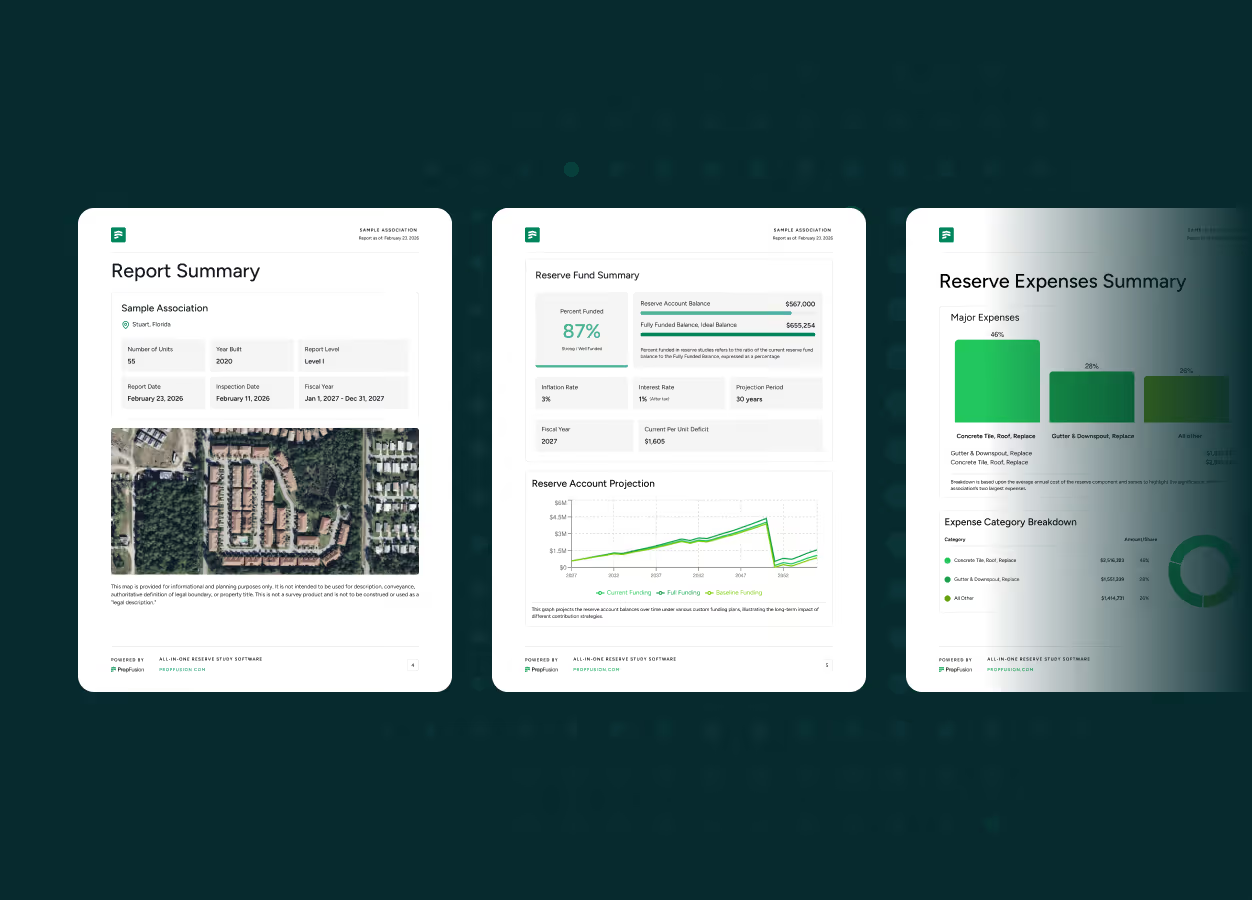
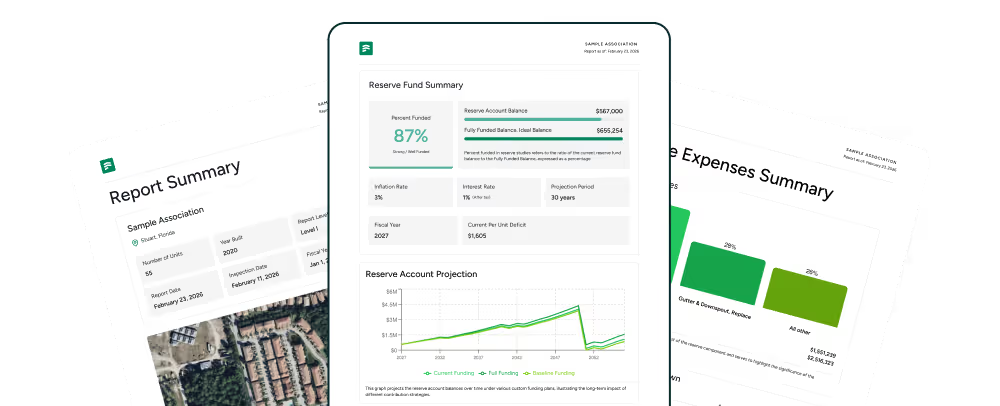
This is where a planning platform such as PropFusion is useful. Your reserve professional can load the SIRS component list into PropFusion, test different phased increase scenarios and show the board how each option affects balances and percent funded over time. Instead of guessing, you see exactly how long you can spread increases without falling out of compliance.
Strategy 2: Combine Monthly Assessments, Special Assessments And Loans
The newer condominium legislation and related guidance recognise that some associations cannot meet SIRS funding requirements through monthly assessments alone, at least in the short term. Recent bills and the governor’s press release describe additional flexibility, including the ability to use loans and lines of credit to satisfy reserve requirements and temporary relief while associations prioritise critical repairs.
Law firm and engineering summaries explain how this works in practice:
- Associations may cover SIRS reserve obligations with a mix of regular assessments, special assessments, loans or lines of credit, subject to owner approval where required.
- Any alternate funding method must still be sufficient to meet the SIRS schedule and cannot be used to permanently avoid reserves.
For an underfunded association, realistic combinations include:
- A one time special assessment to fill the “historic gap,” followed by higher monthly reserves that keep you on track.
- A project loan for near term structural repairs, with a SIRS compliant reserve line item dedicated to repaying that loan.
- A smaller special assessment combined with a phased increase in ongoing reserve contributions.
PropFusion allows your reserve professional to treat loans and special assessments as explicit funding events in the model, rather than rough notes in the margin. That makes it much easier to explain options to owners and show that each path still honours the SIRS schedule.
Strategy 3: Adjust Non SIRS Reserves Without Touching Structural Items
Florida law focuses SIRS on structural and safety critical components, while traditional reserve studies often include additional items such as interior finishes, amenities and landscape projects. Guidance from DBPR and industry sources confirms that SIRS items cannot be waived or reduced, but non SIRS items may still be funded more flexibly, subject to general reserve rules.
Recent legislation also raised the cost threshold for “other” items that must be included in SIRS from 10,000 dollars to 25,000 dollars, which slightly narrows the pool of mandatory components.
For an underfunded association this means:
- You must fully fund the SIRS structural items in line with statute and your study.
- You can review non structural reserves and decide whether some projects can be slowed or reprioritised while you catch up on SIRS obligations.
The key is to separate your component list into “SIRS structural” versus “non SIRS” items. A good SIRS report and a platform like PropFusion make that categorisation explicit, which helps the board make deliberate choices instead of across the board cuts.
Strategy 4: Use Milestone Related Relief Correctly
Florida’s 2025 legislative update introduced targeted relief tied to milestone inspections and structural repairs. Governor and media summaries explain that the new law allows associations facing significant milestone driven work to pause or reduce certain reserve contributions temporarily, so they can prioritise critical repairs, while still preserving the overall safety framework.
Legal commentary clarifies the boundaries:
- The relief is time limited, often up to two consecutive budget years.
- It applies when associations have completed required milestone inspections and are actively carrying out the recommended repairs.
- It does not allow permanent avoidance of SIRS reserves. Associations must obtain an updated SIRS after repairs and resume funding on a compliant schedule.
If you rely on this relief, record the legal opinion or guidance you received, track how freed up cash is spent on repairs and schedule the follow up SIRS as soon as practicable. PropFusion can help your reserve professional mark which projects are milestone related and show how the reserve balance recovers after the temporary pause.
Handling Owner Pushback
For many communities, fully funded SIRS reserves mean higher dues. AP coverage and local reporting highlight that retirees and owners on fixed incomes are feeling the impact, particularly in older South Florida buildings where construction and insurance costs are already high.
Boards can ease friction without stepping outside the law:
- Tie every assessment increase back to specific SIRS pages and statute references, rather than presenting numbers without context.
- Offer at least two compliant funding paths, such as “higher monthly dues with smaller special assessment” versus “moderate increase plus one larger special assessment,” so owners feel they have a choice.
- Use clear visuals in meetings to show how different paths affect reserve balances and the risk of future emergency assessments.
- Be transparent about tradeoffs if you slow non structural projects to prioritise structural reserves.
FAQs
What does “fully funded SIRS reserves” mean in Florida
It means that for the structural components listed in section 718.112(2)(g), your association must fund reserves at the levels and on the schedule recommended by your SIRS, using a funding plan that keeps the reserve cash balance above zero and is sufficient to meet maintenance obligations. Owners may no longer vote to waive or reduce those reserves once the SIRS deadlines apply.
Can owners still vote to waive SIRS reserves
No. DBPR’s FAQ and multiple legal summaries make clear that for budgets adopted on or after December 31, 2024, associations that are subject to SIRS cannot waive or underfund reserves for SIRS components. Votes to waive may still apply to non SIRS items, but not to the structural components covered by SIRS.
How fast does an underfunded association have to catch up
There is no single statewide timetable for “catch up,” but your funding plan must satisfy the SIRS baseline requirements and provide enough money when structural work is due. The statute allows alternative schedules as long as each schedule keeps reserves above zero and meets maintenance obligations, so phased increases are possible if they still reach the required balances in time.
Can we use loans instead of raising monthly assessments
Yes, subject to statutory conditions and owner approval where required. Recent legislation and state commentary confirm that associations can use loans or lines of credit, together with regular and special assessments, to meet SIRS reserve requirements. The key is that the total funding must still match the SIRS schedule and cannot be used as an excuse to underfund structural reserves.
What happens if we ignore SIRS funding requirements
Ignoring SIRS requirements is both a regulatory and fiduciary risk. DBPR guidance and legal analyses note that failure to complete SIRS and adopt compliant budgets can trigger investigations, fines, potential loss of insurance options and claims that directors breached their fiduciary duties. In severe cases, boards or individual directors may face personal liability if non compliance leads to structural failure or financial loss.
Get proposals from vetted reserve study professionals - with 30-year funding plans, powered by modern technology, and compared side by side for free.
Take the guesswork out of your reserve study
PropFusion matches your association with vetted reserve study professionals - powered by industry-leading software. Compare multiple proposals for free to get started.