Reserve Study Companies in Delaware
Get matched with vetted reserve study companies for your Delaware HOA or condominium — Level 1, 2, and 3 studies with 30-year funding plans built for the state's coastal flooding risks, salt corrosion, and freeze-thaw damage. Powered by software that gives your board complete control.




Reserve studies for Delaware HOAs and condos
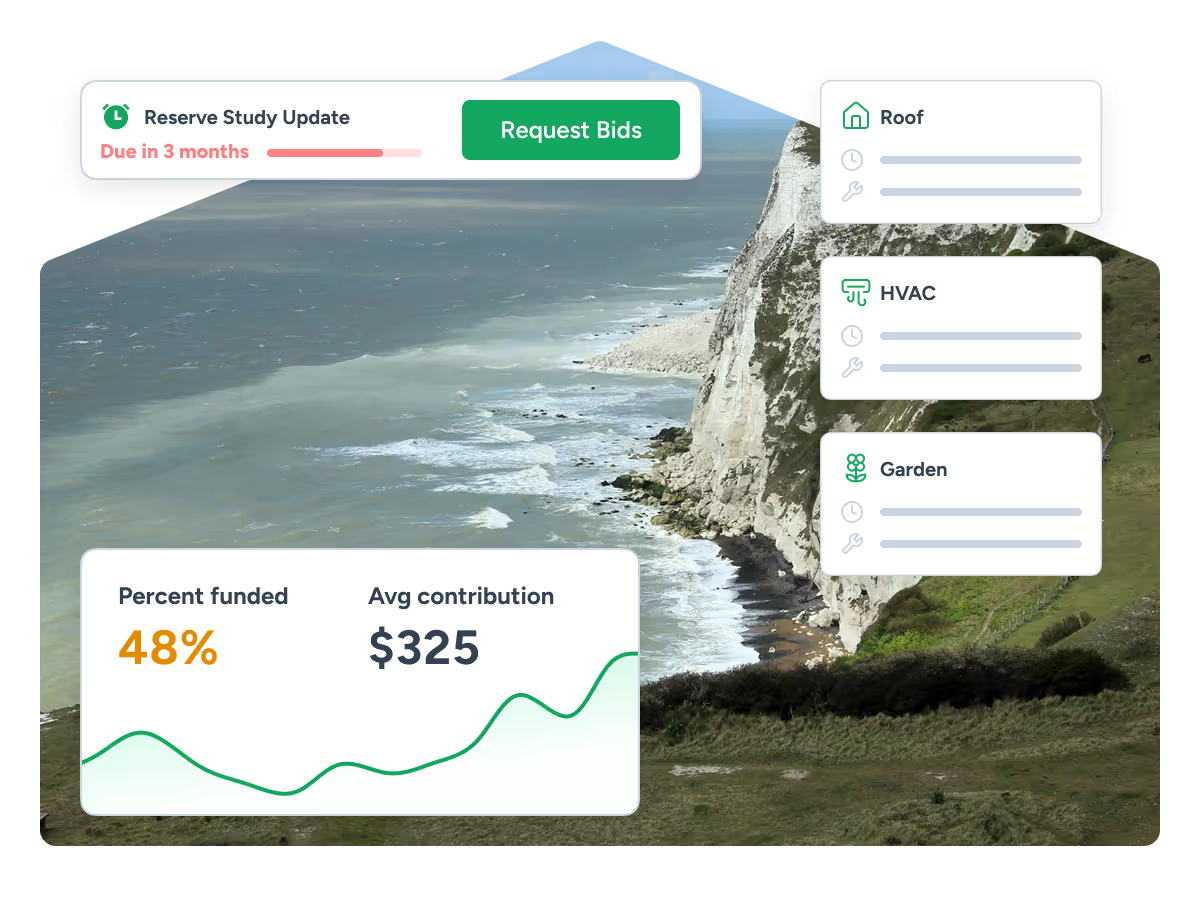
Delaware's compact geography packs diverse reserve planning challenges — from coastal communities along the Atlantic and Delaware Bay that face salt corrosion and flooding to northern New Castle County properties dealing with freeze-thaw cycles and aging infrastructure. PropFusion arranges professional reserve studies built on purpose-designed software, giving your board accurate data, clear funding plans, and a live workspace to manage reserves long after the report is delivered.
- We serve:
- Condominium associations (including beach and resort communities)
- Homeowners associations and master-planned communities
- Townhome and attached-unit communities
- 55+ active adult communities
- Mixed-use and commercial-residential developments

5,000+ Reserve Studies.
One standard.
PropFusion is led by Stuart Wilkinson, a licensed Reserve Specialist (RS) with more than 20 years in the field.
He's performed over 5,000 reserve studies across his career. He built PropFusion's technology because he saw the same problem play out at community after community: good studies, delivered professionally, collecting dust because boards couldn't make sense of them.
PropFusion is the platform he built to fix that - a network of vetted reserve study professionals, backed by software that makes every study usable.
What Delaware law requires from your board
Delaware's Uniform Common Interest Ownership Act is one of the strongest reserve study mandates in the country. Residential condominiums must complete a reserve study, fund reserves based on the study's recommendations, and allocate a minimum percentage of the annual budget to reserves. Boards that fail to comply face legal liability and potential personal director exposure. PropFusion produces Delaware-compliant reserve studies with the inspection data, funded schedules, and budget documentation your association needs to meet every statutory requirement.
Types of reserve studies available in Delaware
Level 1 – Full reserve study
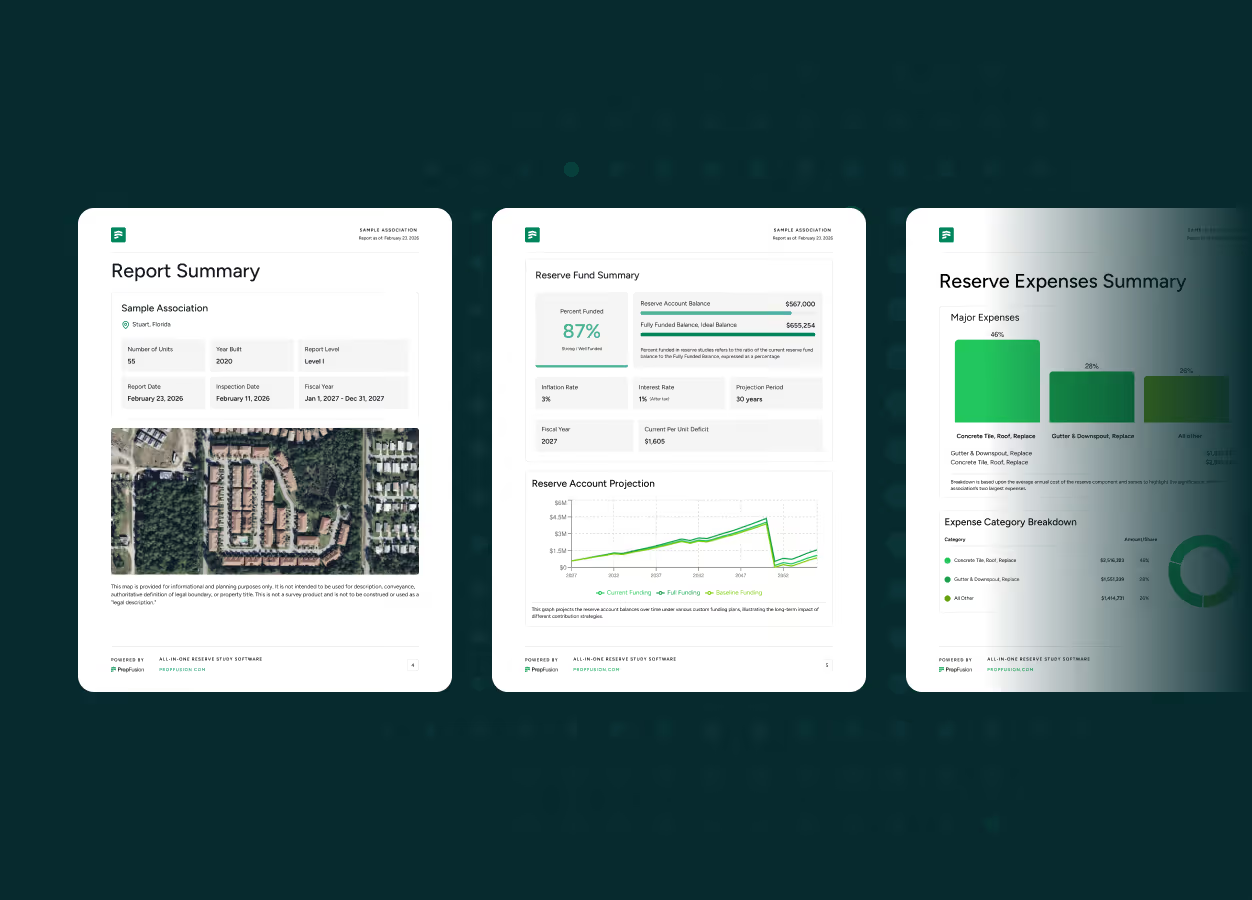
A complete physical and financial analysis: on-site inspection, component inventory, remaining useful life estimates, and a 20-30 year funding plan — all built inside PropFusion's platform so your board can reference and adjust projections anytime.
Level 2 – Update with site visit
A refresh of your existing reserve study with a new on-site inspection, updated replacement costs, and revised funding recommendations synced into your live reserve workspace.
Level 3 – Update without site visit
A financial update using your prior study and current financial data to recalibrate funding paths between full inspections — delivered with the same interactive online dashboard.
DUCIOA-aligned reserve studies for Delaware communities
While Delaware's Uniform Common Interest Ownership Act (DE Code Title 25 Ch. 81) encourages but does not mandate reserve studies, many Delaware associations need studies that align with DUCIOA disclosure requirements. Our Delaware studies also account for the state's coastal salt exposure, tidal flooding risk, and the humidity-driven deterioration patterns common across Sussex and Kent counties.
Delaware regions we serve
Our network provides on-site inspections and reserve studies across all three Delaware counties. The professionals we match you with understand coastal construction in the beach communities, suburban development patterns in central Delaware, and the older housing stock in the Wilmington metro area. Our network also serves communities in Maryland, Pennsylvania, and New Jersey.
- Areas we cover:
- New Castle County: Wilmington, Newark, Hockessin, Middletown, and surrounding suburbs
- Kent County: Dover and nearby planned communities
- Sussex County & the coast: Rehoboth Beach, Lewes, Bethany Beach, Fenwick Island, and inland resort communities along Route 1
When Delaware associations typically need a reserve study
Boards across Delaware contact us when:
Coastal exposure is driving unexpected repair costs
— Salt air, tidal flooding, and humidity along the Delaware coast cause accelerated deterioration to decking, railings, siding, and mechanical systems. Boards need a reserve plan that reflects actual coastal conditions, not generic inland estimates.
It's time for the next cycle
— You're approaching the 3-5 year mark since your last study and need updated replacement costs and funding paths before adopting a new budget.
After a major storm or flood event
— Delaware's low elevation makes it vulnerable to nor'easters and coastal storms. After emergency repairs, boards need to re-baseline the reserve plan.
At turnover from developer to owners
— The community is transitioning from developer control, and the new board needs an independent assessment of reserve health — especially in Delaware's rapidly growing Sussex County.
Before financing or resale reviews
— Lenders or buyers are requesting current reserve documentation as part of a transaction or refinancing process.
What you get with every Delaware reserve study
Every reserve study arranged through PropFusion includes:
On-site inspection of major components
Network inspectors visually assess roofs, waterproofing, structure, exterior finishes, pavement, mechanical systems, amenities, and other shared components — captured directly in PropFusion's field app with geotagged photos.
Component inventory & useful life estimates
A detailed inventory of every common-area component with quantities, remaining useful life, and current replacement costs — all structured in your live reserve dashboard, not just a static table.
30-year funding plan
Year-by-year projections showing recommended contributions, projected expenses, and reserve balances. Your board can run what-if scenarios directly in the platform to test different funding strategies.
Scenario planning and funding strategy support
Multiple funding scenarios accounting for Delaware's coastal deterioration rates and rising insurance costs, helping your board choose the right balance between steady contributions and targeted assessments.
Board-ready PDF report
A professionally formatted report you can attach to budgets, distribute to owners, and submit to lenders or insurers — generated directly from the platform for consistency and accuracy.
Online reserve planning workspace
Unlike a static spreadsheet, your reserve data lives in an interactive online workspace. Update assumptions, log completed projects, and track funding progress between formal study cycles.
Frequently asked questions
How much does a reserve study cost in Delaware?
Reserve study pricing in Delaware depends on community size, number of buildings, component count, and study type (full with on-site inspection vs. update). Most Delaware communities invest $2,500–$7,500 for a full study. Larger communities with pools, elevators, parking structures, or multiple building types will be at the higher end. Request proposals through PropFusion and compare multiple quotes for free based on your community's specifics.
What does a PropFusion reserve study include?
Every reserve study arranged through PropFusion includes an on-site inspection of all major common-area components, a detailed inventory with remaining useful life estimates calibrated for Delaware's coastal storms, humidity, salt air corrosion, and nor'easters, current replacement cost estimates based on local contractor pricing, and a 30-year funding plan with contribution recommendations. Everything is delivered through our interactive platform where your board can model different funding scenarios and track reserve performance over time.
How often should we update our reserve study?
Industry best practice is a full update with on-site inspection every 3 to 5 years, with interim reviews in between if your community completes major projects or experiences significant cost changes. Delaware communities dealing with coastal storms, humidity, salt air corrosion, and nor'easters may benefit from more frequent updates since these conditions can accelerate component wear. PropFusion tracks your component data over time, which makes updates faster and more cost-effective than starting from scratch.
Are on-site inspections included in Delaware?
Yes. Every full reserve study includes an on-site inspection by the reserve professional you're matched with. Our network covers all of Delaware — including Wilmington, Dover, Newark, Rehoboth Beach, and Lewes. They assess roofing, siding, paving, mechanical systems, and all other common-area components in person. We do not rely on desktop estimates or satellite imagery for full studies.
What makes PropFusion different from other Delaware reserve study providers?
PropFusion combines professional on-site inspections with modern technology. Unlike firms that hand you a static PDF, your reserve study is delivered through an interactive platform where your board can model funding scenarios, adjust assumptions, and track reserve performance year over year. Our component assessments are calibrated for Delaware's coastal storms, humidity, salt air corrosion, and nor'easters, and your data stays accessible for future updates — making each subsequent study faster and more cost-effective.
Get your Delaware reserve study started
Whether your board is managing coastal deterioration, planning for major infrastructure replacements, or building a long-term funding strategy for the first time — PropFusion matches you with the right professional — and gives you the tools to act on the study.