Delaware Reserve Study Requirements (2026)
Delaware’s reserve study rules are more detailed than many boards expect. Between the Delaware Uniform Common Interest Ownership Act (DUCIOA) and the older Unit Properties Act, condominium and cooperative associations have clear legal obligations to maintain repair and replacement reserves, keep a current reserve study, and fund reserves to the levels identified in that study. Boards that ignore these requirements risk underfunded common elements, special assessments, and friction with lenders and buyers.
See the full reserve study requirements by state guide
This guide explains how Delaware law treats reserve studies and reserve funds for condominiums, cooperatives, and homeowners associations (HOAs). It breaks down which communities must obtain a reserve study, how often it must be updated, what “fully funded” means, the minimum budget percentages that may apply, and how to build a practical compliance plan for your association.
Legislation Links
Delaware Uniform Common Interest Ownership Act (DUCIOA)
Are reserve studies legally required in Delaware?
Yes. Delaware law requires condominium and cooperative associations to maintain a repair and replacement reserve based on a current reserve study that has been performed or updated within the last five years. For HOAs that are not condominiums or co-ops, a formal reserve study is not explicitly mandated statewide, but it is strongly recommended and can be effectively required through governing documents and lender expectations.
How often does a Delaware association need to update its reserve study?
Delaware statutes define a “reserve study” as an analysis that has been performed or updated within the last five years. In practice, this means your condominium or cooperative should never go more than five years without updating its reserve study. Many boards choose to update more frequently when major projects or cost changes occur.
Does Delaware law specify how much we must contribute to reserves?
Yes for condominiums and cooperatives. The law requires a line item in the annual budget for the repair and replacement reserve and ties the required funding level to the recommendations of the reserve study. In addition, if there is no current reserve study, minimum percentages of the annual budget (5, 10, or 15 percent) must be allocated to reserves depending on which major components the association maintains. HOAs that are not condominiums or co-ops may not be subject to those exact minimums but still need adequate reserves to meet their fiduciary duties.
Are Delaware HOAs covered by DUCIOA in the same way as condos?
It depends on how the community is set up. Many planned communities are governed by DUCIOA as “common interest communities,” but key reserve provisions specifically reference condominiums and cooperatives. Even where a pure HOA does not have an explicit statutory reserve study requirement, its declaration, bylaws, or lender requirements may effectively require a reserve study and adequate funding. Boards should have association counsel confirm how DUCIOA and the Unit Properties Act apply to their specific community.
Get proposals from vetted reserve study professionals - with 30-year funding plans, powered by modern technology, and compared side by side for free.
How Delaware structures reserve laws
In Delaware, reserve fund rules sit primarily in two places in Title 25 of the Delaware Code.
Newer common interest communities, including many condominiums, cooperatives, and planned communities, fall under the Delaware Uniform Common Interest Ownership Act (DUCIOA). Older condominiums may instead be governed by the Unit Properties Act.
Both frameworks contain specific language about “repair and replacement reserves” and “reserve studies,” and both assume that a responsible association will maintain a separate reserve fund for long term capital projects rather than funding everything from the operating budget.
DUCIOA sets the modern framework. It defines what a reserve study is, describes what a “fully funded” reserve looks like, and requires condominium and cooperative budgets to include contributions to a repair and replacement reserve consistent with the study.
The Unit Properties Act contains similar language for older condos, including minimum percentages of the annual budget that must be dedicated to reserves when there is no current reserve study.
For HOAs that are not condominiums or co-ops, the picture is more nuanced. Many will still be “common interest communities” under DUCIOA, but the explicit five year reserve study definition and budget percentage rules are written with condominiums and cooperatives in mind.
As a result, purely HOA-style planned communities often rely on their governing documents and best practices rather than a clear statutory checklist.
What “reserve study” and “fully funded” mean in Delaware
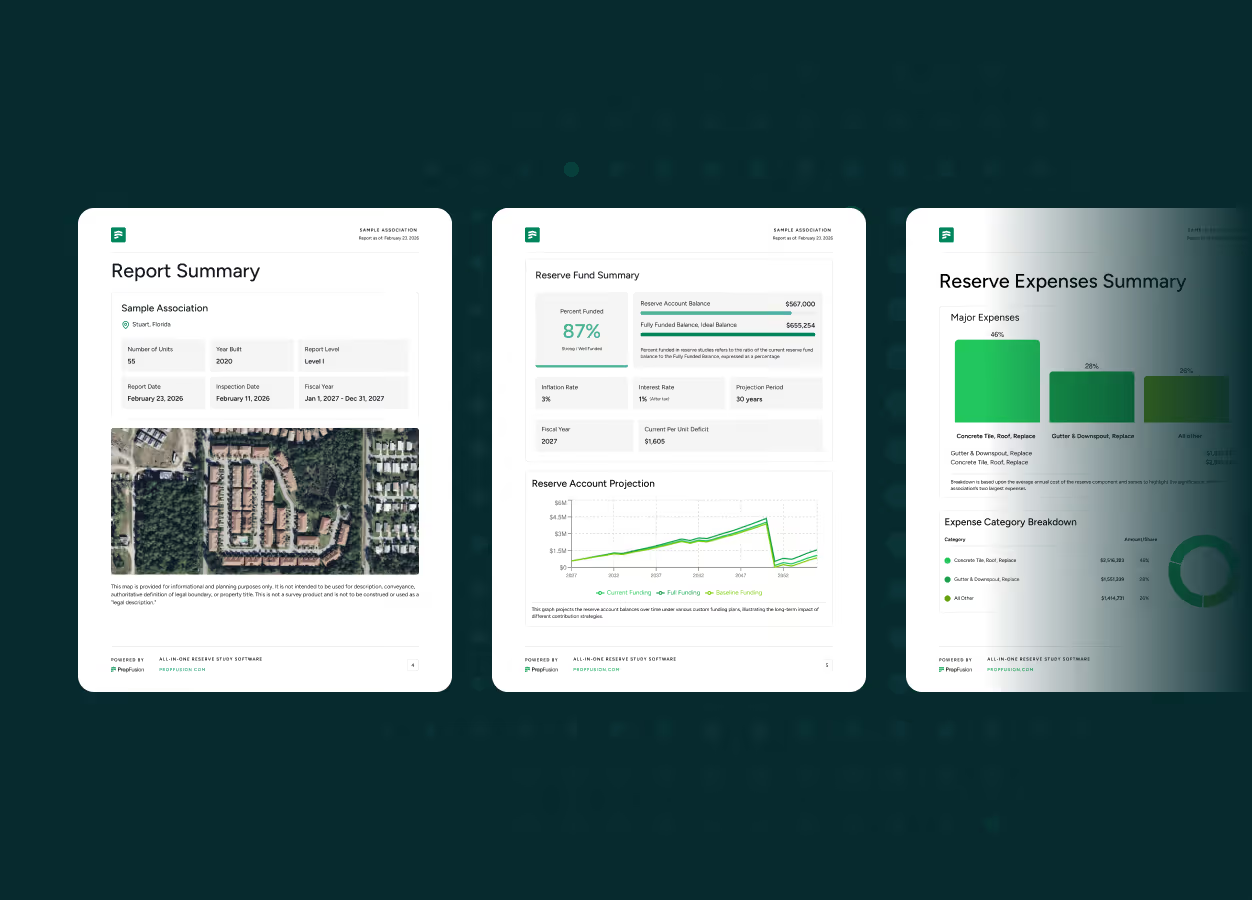
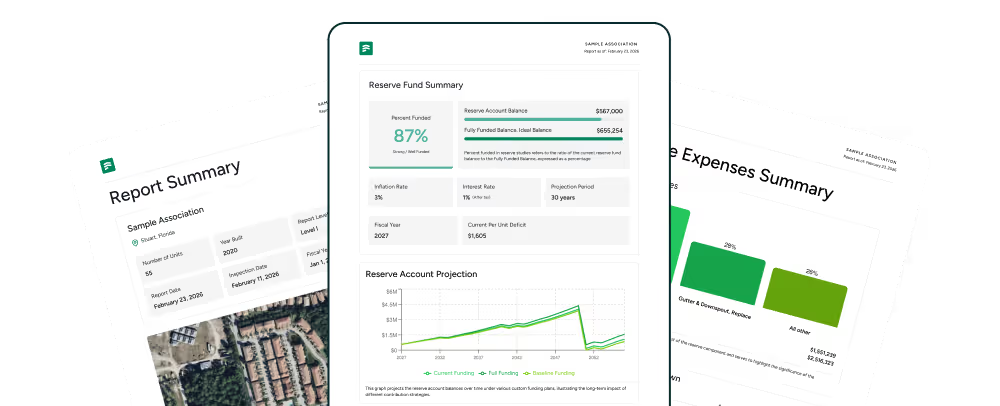
Delaware law does more than tell boards to “set aside something for the future.” It defines key terms in detail. A “reserve study” is an analysis, prepared or updated within the last five years by independent engineering, architectural, construction, or other qualified professionals, that estimates the remaining useful life and replacement cost of each major common element.
It must project repair and replacement needs over at least a 20 year period and indicate what level of reserve contributions will keep the fund from going negative over that horizon.
A “repair and replacement reserve” is a dedicated fund that can only be used for capital repairs and replacements of common elements, not to backfill operating deficits or cover routine operating expenses.
“Fully funded” means that, with the planned annual contributions and the projected expenditures, the reserve fund will always remain positive while covering each project when it comes due. In other words, a fully funded reserve in Delaware is not just a percentage target, it is a forward-looking financial plan that must match the underlying reserve study.
For condominium and cooperative boards, this has practical consequences. You cannot simply pick a contribution number that “feels” sufficient.
You need a current reserve study, and your annual budget must include reserve contributions that align with the funding level identified in that study if you want to treat your reserve as fully funded.
Who must have a reserve study, and how often
For condominium and cooperative associations, the answer is yes in practical terms. DUCIOA and the Unit Properties Act both treat a reserve study as the basis for a proper repair and replacement reserve, and the definition specifies that the study must be performed or updated within the last five years.
If you are a condo or co-op, operating without a current study puts you out of step with statutory expectations.
For HOAs that are not condos or co-ops, there is no single sentence in Delaware law that says, “Every HOA shall obtain a reserve study every five years.” However, boards still owe a fiduciary duty to manage the association’s finances prudently.
Lenders, insurance carriers, and buyers increasingly expect to see a current reserve study when evaluating the health of a common interest community. Many governing documents also incorporate DUCIOA concepts by reference or directly require a capital reserve plan.
In practice, HOAs that want to avoid litigation, underfunded reserves, and financing problems should treat a professional reserve study every three to five years as a baseline standard.
Minimum reserve funding percentages and the five year rule
Delaware law goes further than most states by tying minimum reserve contributions to budget percentages when there is no current reserve study.
Under Title 25, if a condominium or cooperative association is responsible for a specified set of major components such as roofs, elevators, clubhouses, or swimming pools, the annual budget must allocate at least 5, 10, or 15 percent of total expenses to the repair and replacement reserve, depending on how many of those systems the association maintains.
The more major systems the board is responsible for, the higher the minimum percentage.
If the association has a current reserve study, the requirement is to fund to the level that will achieve or maintain a fully funded reserve according to that study, not merely to hit the minimum percentage.
If there is no current study, the law uses those 5 to 15 percent thresholds as a fallback floor so that reserves still grow over time instead of being neglected. That structure is designed to discourage boards from skipping the study and starving their reserves.
For boards, the takeaway is simple. If you are a condominium or cooperative and you do not have a current reserve study, your annual budget may be legally required to allocate a significant portion of dues to the reserve fund anyway.
It is usually more efficient and defensible to obtain a proper study and follow its funding plan than to rely on the statutory minimums alone.
How this plays out differently for HOAs vs condominiums
Delaware is a state where condominiums must obtain and update reserve studies every five years, and where budgets must fund reserves according to those studies. Condominiums and cooperatives have the most explicit statutory obligations.
Homeowners associations that are not condos or co-ops sit in a more flexible space. Many are still subject to DUCIOA as common interest communities, but reserve related provisions often focus on “condominiums or cooperatives” rather than all common interest communities.
In addition, some HOAs predate DUCIOA or are structured under different sections of Title 25 or separate enabling acts.
However, even when there is no explicit percentage requirement for an HOA, boards still face risk if they ignore reserves. A declaration that references a “repair and replacement reserve,” covenants promising to maintain certain common elements, or lender guidelines tied to Fannie Mae and Freddie Mac standards can all effectively require a modern reserve program.
HOAs that treat reserve funding as optional may later face claims that they breached their fiduciary obligations by failing to plan and fund for predictable capital projects.
Practical compliance roadmap for Delaware boards
To make this concrete, Delaware boards can use the following practical roadmap:
First, confirm which statute governs your community. Your attorney or manager can tell you whether you are primarily under DUCIOA, the Unit Properties Act, or another framework. This matters for budget obligations and resale certificate disclosures.
Second, inventory your common elements and verify who is responsible for each major system: roofs, façades, elevators, roads, garages, mechanical systems, amenities, and so on. This step is crucial because Delaware’s minimum percentage rules depend on how many of those major components the association maintains.
Third, engage an independent reserve study professional who understands Delaware law. Statutes specifically contemplate that the study be performed by independent engineering, architectural, construction, or similarly qualified persons. Working with a specialist ensures your report meets both technical and legal expectations.
Fourth, adopt a budget that aligns with the study. Once you have the analysis, your budget should plainly include a reserve contribution line item at the level needed to stay on track with the funding plan. If your current funding is well below target, your board may need a multi year strategy to ramp up contributions while managing owner expectations.
Fifth, establish a five year update cycle as a minimum. Schedule a full update no later than five years after the last study, with interim updates whenever there are major projects, cost inflation, or scope changes. For rapidly aging infrastructure or communities facing structural concerns, more frequent updates may be warranted.
Why this matters for resale and lender scrutiny
Delaware law also ties reserve discipline to resale transactions. For condominiums and cooperatives governed by DUCIOA, the association’s records must include the most recent reserve study and the current balance in the repair and replacement reserve.
That information is often included in resale certificates and is reviewed by buyers and their lenders. A community with no current study and a thin reserve fund looks significantly riskier than a community that can show a current study and a realistic funding plan.
As a result, boards that invest in compliant reserve studies and proper funding not only reduce the risk of special assessments, they also protect property values by making units easier to sell and finance. For HOAs, even where statutes are less explicit, this market reality is one of the strongest incentives to treat reserves seriously.
Related reserve study resources for Delaware
Compare reserve study laws in nearby states, or find help running one for your association:
FAQ
Does every Delaware HOA have to follow DUCIOA’s reserve rules?
Not necessarily. DUCIOA clearly applies to many newer common interest communities, especially condominiums and cooperatives, but some planned communities or older developments may be governed by other provisions in Title 25 or by the Unit Properties Act. Your association’s declaration, bylaws, and attorney should confirm exactly which statute applies. Even when DUCIOA’s specific percentage rules do not apply, boards are still expected to maintain adequate reserves.
How often should a Delaware HOA or condo perform a reserve study in practice?
Statutes define a reserve study as having been performed or updated within the last five years, which sets a clear legal minimum. Many boards aim for a full update every three to five years, with smaller interim updates when major projects are completed or costs shift significantly. For communities with aging buildings or structural concerns, more frequent updates may be prudent.
What happens if our Delaware condo ignores reserve funding recommendations?
Failing to follow reserve study recommendations can leave the association underfunded, increase the likelihood of special assessments, and create potential claims that the board breached its fiduciary duty. It may also raise red flags for lenders and buyers reviewing your financials and resale certificates. While the specific consequences will depend on your situation, ignoring a professionally prepared and legally expected reserve plan is risky.
Is there a required reserve percentage for Delaware HOAs that are not condos or co-ops?
Delaware’s explicit minimum percentages, tied to 5, 10, or 15 percent of the annual budget, are written for condominiums and cooperatives. Pure HOAs may not be subject to those exact floors, but they still need reserve contributions that are adequate to meet long term obligations. Many HOAs in Delaware choose funding levels that move them toward a fully funded position over time, often guided by reserve study recommendations and lender expectations.
Can our board prepare a reserve study on its own to save money?
The law anticipates that reserve studies will be performed by independent engineering, architectural, construction, or similarly qualified professionals. A do it yourself spreadsheet is unlikely to meet that standard, particularly for condominiums and cooperatives. Boards that try to self perform may miss critical components, underestimate costs, and struggle to justify their funding decisions if challenged.
Does Delaware require a separate structural integrity reserve study like Florida’s SIRS law?
At the time of writing, Delaware does not have a dedicated structural integrity reserve study statute equivalent to Florida’s SIRS law. However, Delaware’s existing framework already expects condominiums and cooperatives to maintain fully funded repair and replacement reserves based on a current reserve study that covers major components. Boards still need to ensure that structural elements are properly evaluated and funded within that framework.
The information contained on this page is provided for informational purposes only, and should not be construed as legal advice on any subject matter. You should not act or refrain from acting on the basis of any content included on this page without seeking legal or other professional advice. The contents of this page contain general information and may not reflect current legal developments or address your situation. We disclaim all liability for actions you take or fail to take based on any content on this report.
Get proposals from vetted reserve study professionals - with 30-year funding plans, powered by modern technology, and compared side by side for free.
Take the guesswork out of your reserve study
From site inspection to 30-year funding plan, PropFusion handles the entire reserve study - accurate, transparent, and built on modern technology that gives you full control over your reserves.