Vermont Reserve Studies
Professional reserve studies for Vermont HOAs and condominiums — Level 1, 2, and 3 studies with 30-year funding plans built for communities dealing with harsh winters, heavy snow loads, and aging rural properties. Built on software that gives your board complete control over the process and results.




Reserve studies for Vermont HOAs and condos
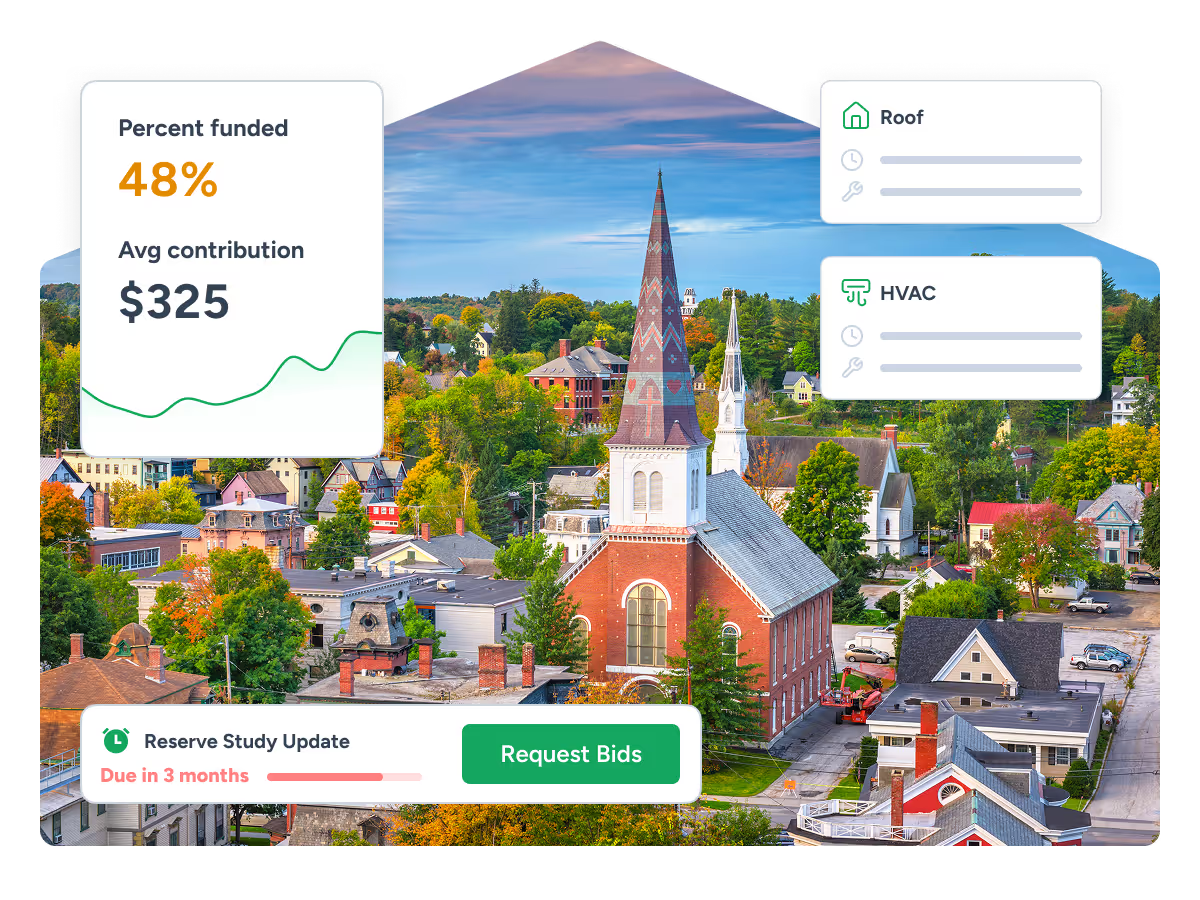
Vermont communities face the full force of New England winters — heavy snow loads that stress roofs and structures, freeze-thaw cycles that crack foundations and pavement, and an aging property stock where many buildings are decades past their original design life. PropFusion provides professional reserve studies built on purpose-designed software — giving your board accurate data, clear funding plans, and a live workspace to manage reserves long after the report is delivered.
- We serve:
- Condominium associations (including ski-area and mountain communities)
- Homeowners associations and planned communities
- Co ops
- Townhome and village communities
- Resort and vacation ownership communities
What Vermont law means for your reserve planning
Vermont does not mandate reserve studies by statute, but the Vermont Common Interest Ownership Act requires boards to maintain adequate reserves. Vermont's extreme winters, ice damage, heavy snow loads, and short construction seasons make deferred maintenance exceptionally costly. Boards without a professional reserve study risk special assessments and declining property values when major systems fail. PropFusion provides reserve studies built for Vermont's northern New England climate challenges.
Types of reserve studies we provide in Vermont
Level 1 – Full reserve study
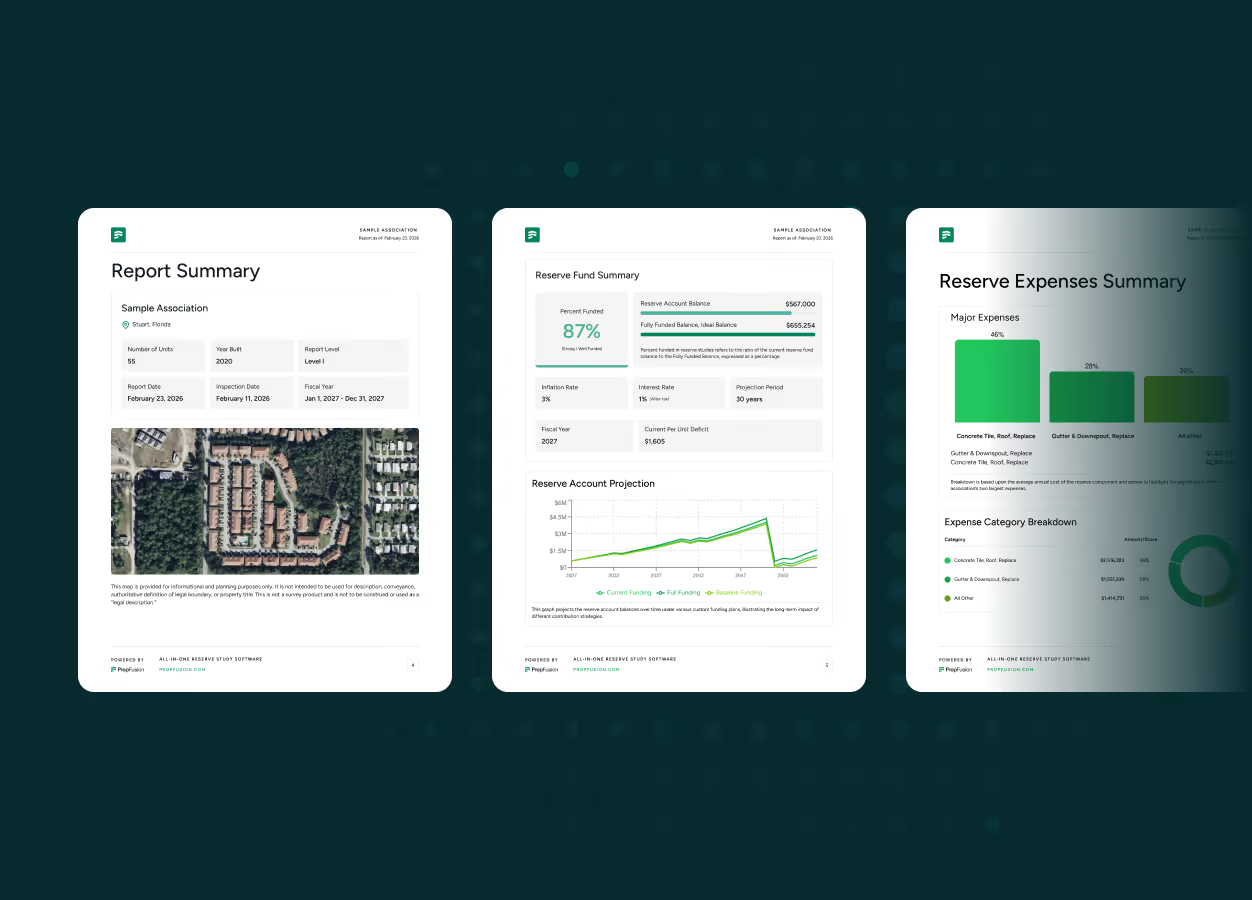
A complete physical and financial analysis: on-site inspection, component inventory, remaining useful life estimates, and a 20-30 year funding plan — all built inside PropFusion's platform so your board can reference and adjust projections anytime.
Level 2 – Update with site visit
A refresh of your existing reserve study with a new on-site inspection, updated replacement costs, and revised funding recommendations synced into your live reserve workspace.
Level 3 – Update without site visit
A financial update using your prior study and current financial data to recalibrate funding paths between full inspections — delivered with the same interactive online dashboard.
Climate-focused reserve studies for Vermont conditions
Vermont's harsh winters, heavy snow loads, ice dams, and freeze-thaw cycles create unique deterioration patterns for roofs, foundations, pavement, and exterior finishes. Our climate-focused studies adjust useful life estimates and replacement cost projections specifically for Vermont's mountain climate, older building construction methods, and New England's higher regional labor costs.
Vermont regions we serve
We provide on-site inspections and reserve studies across every region of Vermont. Our inspectors understand New England construction practices, cold-climate building challenges, and the freeze-thaw deterioration patterns that affect component lifespans from the Green Mountains to the Connecticut River Valley. We also serve communities in New Hampshire, Massachusetts, and New York.
- Areas we cover:
- Burlington metro and Lake Champlain communities: Burlington, South Burlington, Winooski, Essex Junction, Colchester
- Central Vermont and the capital region: Montpelier, Barre, Waterbury, nearby towns in Washington and Lamoille Counties
- Southern Vermont and I 91 corridor: Brattleboro, Bennington, Manchester, surrounding village and resort communities
- Rutland and ski country: Rutland, Killington, Pico, Okemo and nearby mountain associations
- Northern and rural Vermont: St Albans area, Franklin and Orleans Counties, small town and countryside HOAs
When Vermont associations typically need a reserve study
Boards across Vermont contact us when:
Aging properties need a comprehensive assessment
Many Vermont condominiums and HOAs are 25-40+ years old with building systems nearing the end of their useful life. Heavy snow, ice dams, and freeze-thaw cycles have accelerated deterioration, and the board needs a clear picture of what's ahead.
It's time for the next cycle
You're coming up on the 3-5 year update cycle and want updated replacement costs and funding paths before adopting a new budget.
After major projects or severe weather
You've completed a roof replacement, foundation repair, or paving project — or experienced ice dam or storm damage — and need to re-baseline your reserve plan.
At turnover from developer to owners
The community is transitioning from developer control, and the new board needs an independent assessment of reserve health and long-term funding gaps.
Before financing or insurance reviews
Lenders, buyers, or insurance carriers are requesting current reserve study documentation as part of their risk evaluation.
What PropFusion delivers with every Vermont reserve study
Every PropFusion reserve study includes:
On-site inspection of major components
Our inspectors visually assess roofs, waterproofing, structure, exterior finishes, pavement, mechanical systems, amenities, and other shared components — captured directly in PropFusion's field app with geotagged photos.
Component inventory & useful life estimates
A detailed inventory of every common-area component with quantities, remaining useful life, and current replacement costs — all structured in your live reserve dashboard, not just a static table.
30-year funding plan
Year-by-year projections showing recommended contributions, projected expenses, and reserve balances. Your board can run what-if scenarios directly in the platform to test different funding strategies.
Vermont cold-climate adjusted projections
Useful life estimates and replacement costs calibrated for Vermont's heavy snow loads, ice dam exposure, and freeze-thaw cycles — factoring in the accelerated deterioration and higher New England labor costs that national averages miss.
Board-ready PDF report
A professionally formatted report you can attach to budgets, distribute to owners, and submit to lenders or insurers — generated directly from the platform for consistency and accuracy.
Online reserve planning workspace
Unlike a static spreadsheet, your reserve data lives in an interactive online workspace. Update assumptions, log completed projects, and track funding progress between formal study cycles.
Frequently asked questions
How much does a reserve study cost in Vermont?
Reserve study pricing in Vermont depends on community size, number of buildings, component count, and study type (full with on-site inspection vs. update). Most Vermont communities invest $2,500–$8,000 for a full study. Larger communities with pools, elevators, parking structures, or multiple building types will be at the higher end. Request a proposal from PropFusion for an accurate quote based on your community's specifics.
What does a PropFusion reserve study include?
Every PropFusion reserve study includes an on-site inspection of all major common-area components, a detailed inventory with remaining useful life estimates calibrated for Vermont's heavy snowfall, freeze-thaw cycling, ice dams, and nor'easters, current replacement cost estimates based on local contractor pricing, and a 30-year funding plan with contribution recommendations. Everything is delivered through our interactive platform where your board can model different funding scenarios and track reserve performance over time.
How often should we update our reserve study?
Industry best practice is a full update with on-site inspection every 3 to 5 years, with interim reviews in between if your community completes major projects or experiences significant cost changes. Vermont communities dealing with heavy snowfall, freeze-thaw cycling, ice dams, and nor'easters may benefit from more frequent updates since these conditions can accelerate component wear. PropFusion tracks your component data over time, which makes updates faster and more cost-effective than starting from scratch.
How long does it take to complete a reserve study in Vermont?
Most PropFusion reserve studies take 4 to 8 weeks from the signed proposal to final report delivery. The on-site inspection typically requires one to two days depending on community size. Scheduling is usually the biggest variable — we coordinate with your property manager or board to find a convenient inspection date. After the inspection, our team completes the analysis and delivers your report through our interactive platform.
Can PropFusion handle seasonal or resort communities?
Yes. We work with seasonal and resort communities throughout Vermont. These properties often have unique components — pools, clubhouses, ski infrastructure, beach access, or recreational facilities — that require specialized assessment. We schedule inspections during accessible periods and account for seasonal usage patterns in our useful life estimates.
Do we need a reserve study company based in Vermont?
No — what matters is that your provider understands Vermont's specific conditions. PropFusion's inspectors have direct experience with heavy snowfall, freeze-thaw cycling, ice dams, and nor'easters. We conduct on-site inspections throughout Vermont and calibrate every useful life estimate and replacement cost for local conditions. Our team serves communities in Burlington, South Burlington, Rutland, Stowe, and Montpelier and everywhere in between.
What makes PropFusion different from other Vermont reserve study providers?
PropFusion combines professional on-site inspections with modern technology. Unlike firms that hand you a static PDF, we deliver your reserve study through an interactive platform where your board can model funding scenarios, adjust assumptions, and track reserve performance year over year. Our component assessments are calibrated for Vermont's heavy snowfall, freeze-thaw cycling, ice dams, and nor'easters, and your data stays accessible for future updates — making each subsequent study faster and more cost-effective.
Get your Vermont reserve study started
Whether your board is managing aging mountain properties, planning for major repairs after decades of harsh Vermont winters, or building a long-term funding strategy — PropFusion delivers the reserve study and the tools to act on it.