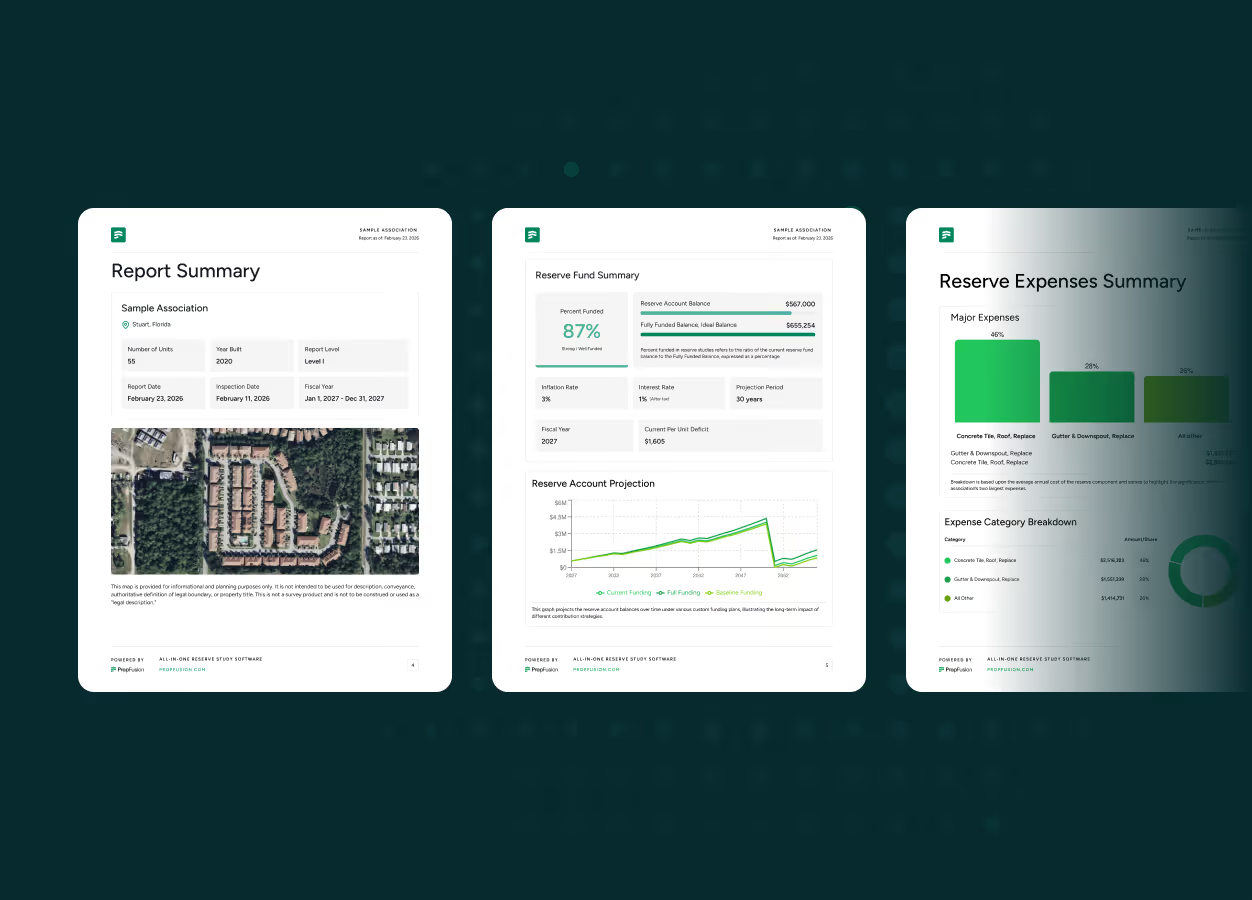
Vermont Reserve Study Requirements (2026)
Vermont does not require HOAs or condominium associations to perform formal reserve studies or to fund their reserve accounts to any specific level. Instead, the Vermont Common Interest Ownership Act (VCIOA) gives associations the power to adopt budgets that include reserves and requires certain disclosures to buyers, but leaves the specifics of reserve planning to each community.
See the full reserve study requirements by state guide
That flexibility can be a double-edged sword. Boards that plan proactively and base contributions on a professional reserve study can keep dues predictable, avoid disruptive special assessments, and protect property values. Boards that treat “no mandate” as “no need” for reserves risk deferred maintenance, owner disputes, and potential challenges to their decision-making. This guide walks through what Vermont law actually says, what it does not say, and how boards can build a sound reserve strategy anyway.
Legislation Link
Vermont Common Interest Ownership Act - 3-102
Vermont Common Interest Ownership Act - 3-103
Does Vermont law require HOAs or condominiums to have a reserve study? No. Vermont does not impose a statutory requirement for HOAs or condo associations to commission a reserve study. Associations may choose to obtain one as a best-practice tool for long-term planning.
Does Vermont require associations to fund reserves to a specific minimum level? No. Vermont law allows associations to adopt budgets that include reserves but does not mandate any specific funding formula or minimum percentage.
What does Vermont require associations to disclose about reserves? For new communities, the developer’s public offering statement must disclose the amount included in the budget as reserves or state that no amount is included. For resales, the association’s resale certificate must disclose anticipated capital expenditures for the current and next two fiscal years, the amount of reserves for capital expenditures, and any portions of reserves earmarked for specific projects.
If there is no mandate, why should a Vermont association still do a reserve study? A professional reserve study helps a board fulfill its fiduciary duty, avoid large special assessments, support property values, and provide documentation that reserve decisions were made using expert analysis rather than guesswork.
Need a reserve study in Vermont? Compare multiple reserve study proposals for free.
Get proposals from vetted reserve study professionals - with 30-year funding plans, powered by modern technology, and compared side by side for free.
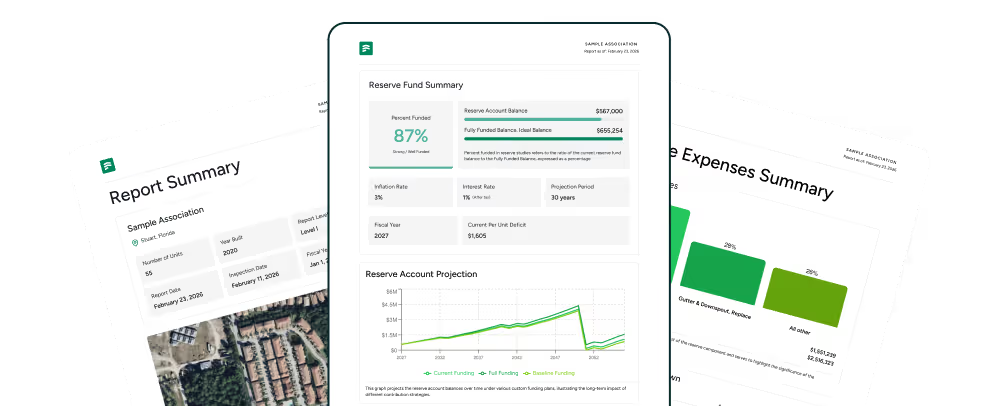
Overview of Vermont’s reserve fund laws
Vermont regulates common interest communities through the Vermont Common Interest Ownership Act (VCIOA), codified in Title 27A of the Vermont Statutes. The Act applies to most modern condominiums, planned communities, and other common interest communities formed in the state, with some exceptions for older projects and small associations.
Two provisions are especially important for reserve planning:
- 27A V.S.A. § 3-102 gives the association the power to “adopt and amend budgets for revenues, expenditures, and reserves” and to levy and collect assessments to fund them. This is enabling language: it authorizes, but does not compel, boards to maintain reserves.
- 27A V.S.A. § 4-103 requires a developer’s public offering statement for a new community to state the amount included in the budget as a reserve for repairs and replacement, or explicitly disclose that no amount is included.
Separately, 27A V.S.A. § 4-109 requires an association to provide a resale certificate when an owner sells a unit. That certificate must disclose any anticipated capital expenditures for the current fiscal year and the next two, the amount held in reserves for capital expenditures, and any portions of those reserves designated for specific projects.
The key takeaway: Vermont law expects transparency about reserve funding and capital plans, but leaves decisions about conducting reserve studies and how much to fund reserves to each board.
Are reserve studies or reserve funding legally required in Vermont?
According to the Community Associations Institute’s (CAI) most recent summary of state reserve fund laws, Vermont has:
- No statutory requirement to conduct a reserve study; and
- No statutory requirement to fund reserves at any particular level.
This places Vermont in the same category as many other states where boards have discretion but also bear full responsibility for the consequences of underfunding. The law grants budget authority and mandates disclosure, but it does not provide a simple “checklist” of what constitutes adequate reserves.
For boards, that means:
- You will not be fined or sanctioned by the state simply for failing to order a reserve study or set aside a specific percentage of your budget.
- You can still face serious financial and reputational consequences if chronic underfunding leads to large special assessments, deferred maintenance, or disputes with owners and buyers.
- Your decisions about reserves will be evaluated under general fiduciary standards, not a detailed reserve statute.
How fiduciary duty intersects with reserves
Like boards in other states, Vermont association directors must act in good faith and with the care an ordinarily prudent person would exercise under similar circumstances.
That standard, combined with VCIOA’s expectation that boards manage common property responsibly, effectively pushes boards toward prudent reserve planning even without an explicit mandate.
In practice, a Vermont board that ignores long-term capital needs, fails to plan for obvious future replacements, and repeatedly relies on emergency special assessments will find it difficult to argue that it exercised ordinary prudence.
Conversely, a board that commissions a professional reserve study, reviews it regularly, and incorporates its recommendations into the budget can demonstrate that it made informed, documented decisions.

What buyers and lenders see in Vermont
Vermont’s disclosure framework amplifies the importance of reserve planning even though it stops short of mandating specific funding. The resale certificate must disclose:
- Any capital expenditures anticipated in the current and next two fiscal years.
- The dollar amount held in reserves for capital expenditures.
- Any portions of those reserves earmarked for particular projects.
Those disclosures matter because:
- Buyers and their real estate agents will see, in black and white, whether the association has real reserves or is running close to empty.
- Many mortgage lenders evaluate an association’s financial health, including reserve levels, as part of underwriting. Weak reserves can make financing harder or narrow the pool of eligible buyers.
- Low reserves or an obvious mismatch between upcoming capital needs and available funds can depress sale prices and increase the time it takes to sell units.
So even without a mandate, Vermont’s disclosure rules create market pressure for boards to build and maintain credible reserve plans.
Best-practice reserve planning for Vermont associations
Because state law does not prescribe a formula, Vermont boards should lean on national standards and professional guidance. Common best practices include:
- Commissioning an initial reserve study
- Engage a qualified reserve study professional (for example, someone holding CAI’s Reserve Specialist (RS) designation or APRA’s Professional Reserve Analyst (PRA)) to perform a full, on-site Level I study.
- Ensure the scope covers all major common components for which the association is responsible: roofs, siding, windows, pavement, mechanical systems, amenities, and major site features.
- Updating the study regularly
- Update the study with a site visit approximately every 3-5 years, depending on the age and complexity of the community.
- Perform “no site visit” updates in off years when major events (large projects, storms, or unexpected failures) significantly change the financial picture.
- Update the study with a site visit approximately every 3-5 years, depending on the age and complexity of the community.
- Selecting a funding goal
- Use the reserve study to evaluate “percent funded” and choose a funding strategy (full, threshold, or conservative baseline).
- For most Vermont communities, aiming to keep reserves at a “strong” or at least “fair” funding level (rather than chronically underfunded) will reduce the risk of special assessments and lender concerns.
- Integrating reserves into the annual budget
- Treat reserve contributions as a non-negotiable line item, similar to insurance, rather than a “plug” that gets cut to keep dues low.
- Consider gradual annual increases rather than long periods of flat dues followed by a sharp spike.
- Using the study in board decision-making
- Rely on the study when prioritizing projects and timing replacements.
- Document how the board reviewed and used the study-minutes showing the board discussed and acted on the recommendations can be important evidence of prudence.
Practical guidance for Vermont HOAs and condo boards
For a Vermont board starting from limited reserves, a realistic improvement plan might look like this:
- Year 1: Commission a full reserve study, adopt a funding goal, and implement a multi-year contribution schedule. Begin modest dues increases rather than relying on special assessments.
- Years 2-3: Follow the funding plan, adjust as needed based on actual project costs and inflation, and communicate clearly with owners about why contributions are increasing.
- Years 4-5: Order an update with site visit, confirm assumptions, and adjust long-term contributions if major components are aging faster or slower than expected.
Throughout, the board should link its decisions back to its fiduciary duty: protecting the association’s assets, avoiding deferred maintenance, and preserving property values. That story plays well not only with owners but also with buyers, lenders, and anyone reviewing the association’s financial health.
A professional study, backed by modern planning tools, is the most reliable way to prove your board is acting prudently and protecting the community’s long-term financial health.
Related reserve study resources for Vermont
Compare reserve study laws in nearby states, or find help running one for your association:
FAQ
Does the Vermont Common Interest Ownership Act apply to all HOAs and condos in Vermont?
VCIOA applies to most modern common interest communities, including many condominiums and planned communities, but some older or very small associations may be governed by different statutes or their original declarations. Boards should confirm their community’s status with legal counsel if unsure.
Can a Vermont HOA decide not to maintain any reserve fund at all?
Legally, yes-Vermont does not mandate reserves-but doing so is usually risky. It can lead to frequent special assessments, lower property values, buyer and lender concerns, and potential challenges that the board failed to act prudently.
How much should a Vermont association contribute to reserves each year?
There is no statutory formula. Many communities use a reserve study to calculate contributions needed to stay “adequately funded” over a 20-30 year horizon. Some lenders look for either a current reserve study or a pattern of consistent contributions, often in the range of 8-15 percent of the operating budget, but boards should rely on their professional’s specific recommendations rather than a one-size-fits-all rule of thumb.
How often should a Vermont HOA or condo update its reserve study?
A common best practice is to obtain a full study early in the community’s life, update it with a site visit every 3-5 years, and perform interim financial updates in between if major projects or cost changes occur.
Are reserve study costs themselves paid from reserves or from the operating budget in Vermont?
Most associations treat reserve study costs as an operating expense tied to professional services, not as a capital project, but this can vary by governing documents and accountant guidance. The important thing is that the cost is planned for and does not derail the reserve funding plan.
What should Vermont boards look for when hiring a reserve study provider?
Key factors include credentials (such as RS or PRA designations), experience with similar communities, familiarity with Vermont’s legal and market context, clear deliverables, and the ability to provide practical funding recommendations, not just a technical report.
The information contained on this page is provided for informational purposes only, and should not be construed as legal advice on any subject matter. You should not act or refrain from acting on the basis of any content included on this page without seeking legal or other professional advice. The contents of this page contain general information and may not reflect current legal developments or address your situation. We disclaim all liability for actions you take or fail to take based on any content on this report.
Get proposals from vetted reserve study professionals - with 30-year funding plans, powered by modern technology, and compared side by side for free.
Take the guesswork out of your reserve study
From site inspection to 30-year funding plan, PropFusion handles the entire reserve study - accurate, transparent, and built on modern technology that gives you full control over your reserves.