Idaho Reserve Study Requirements (2026)

Idaho community associations operate in a relatively flexible legal environment when it comes to reserve studies and reserve funds. As of the most recent national summaries of state reserve laws, Idaho does not impose a statutory requirement to conduct a reserve study or to fund reserves at a specific level for HOAs or condominium associations.
See the full reserve study requirements by state guide
That flexibility is a double-edged sword. On one side, Idaho boards have wide discretion in how they plan for capital projects and major repairs. On the other, a lack of clear statutory rules makes it easy to underfund reserves, rely on special assessments, and leave owners exposed to unpleasant financial surprises. This guide explains what Idaho law does and does not require, how industry best practices fill the gap, and how your board can build a disciplined reserve study and funding program even without a state mandate.
Legislation Link
Idaho Condominium Property Act - Idaho Code Title 55, Chapter 15
Are reserve studies legally required for HOAs or condominiums in Idaho? No. Current summaries of Idaho law indicate there is no statutory requirement to conduct a reserve study or to fund reserves at a specified level for community associations.
If Idaho law does not require reserve studies, why should our board still do one? Because roofs, roads, siding, mechanical systems, and amenities will still fail over time. A reserve study gives your association a structured forecast of capital projects and a funding plan to avoid emergency assessments, sudden fee spikes, or deferred maintenance that drags down property values.
How often should an Idaho HOA or condo update its reserve study? Industry standards typically recommend a full reserve study every 3 to 5 years, with annual reviews of assumptions, project timing, and funding levels in between. Boards with rapidly changing communities or aging infrastructure may choose to update more frequently.
What percentage of our annual budget should go into reserves in Idaho? There is no fixed legal percentage. Many associations find that contributing 15-30 percent of the annual budget to reserves is reasonable, but the “right” number should come from your reserve study’s projections, not from a generic rule of thumb.
Need a reserve study in Idaho? Compare multiple reserve study proposals for free.
Get proposals from vetted reserve study professionals - with 30-year funding plans, powered by modern technology, and compared side by side for free.
Idaho HOA and Condo Reserve Study Requirements: Legal Baseline
The first question most Idaho boards ask is simple: “What does the law require us to do?”
As of recent national surveys of community association statutes, Idaho has not adopted any specific statute that requires community associations to perform reserve studies or to fund reserves in a particular way.
Condominium associations operate under the Idaho Condominium Property Act, found in Idaho Code Title 55, Chapter 15. This chapter sets out the framework for declarations, bylaws, common expenses, assessments, and liens, but it does not prescribe reserve study procedures, funding formulas, or minimum contribution levels.(Justia)
Homeowners associations are primarily governed by separate HOA and corporate statutes, which likewise focus on governance, meetings, disclosures, liens, and similar topics rather than on detailed reserve planning rules.
The bottom line: Idaho law gives boards broad discretion. Your association’s governing documents (CC&Rs, bylaws, and rules) can-and often do-impose more specific requirements than state law, including reserve targets or expectations around long-term planning.
Boards should always review those documents with association counsel to confirm any contractual obligations tied to reserves.
Why Reserve Studies Still Matter in Idaho
The absence of a statutory mandate does not reduce the importance of careful reserve planning. In practical terms, Idaho communities face the same financial risks as those in more heavily regulated states:
- Large capital projects like roof replacements, asphalt resurfacing, siding, or elevator work.
- Ageing infrastructure in older communities.
- Inflation in construction and labor costs.
- Owner resistance to large, unexpected special assessments.
A professionally prepared reserve study addresses these risks by answering four core questions:
- What common elements do we own and maintain?
- When will each element likely need major repair or replacement?
- What will those projects cost in future dollars?
- How much should we contribute each year so we are ready when those projects come due?
Even though Idaho law does not force you to commission a reserve study, your fiduciary obligations as a board member-acting in good faith, in the association’s best interests, and with reasonable care-strongly support having one.
Industry Best Practices for Idaho Reserve Studies
In a “no-mandate” state like Idaho, best practices become your de facto standard. Boards can use the following framework:
- Confirm your governing document requirements.
- Check the declaration and bylaws for any references to replacement reserves, capital accounts, or long-term maintenance planning.
- Clarify whether the documents require you to maintain reserves or follow a particular funding approach.
- Conduct a baseline reserve study.
- Hire an experienced reserve study professional who understands Idaho’s climate, typical building types, and local cost structures.
- Ensure the study includes a component inventory, remaining useful life estimates, and projected replacement costs.
- Adopt a clear funding strategy.
- Decide whether your board wants to target a “strong” funding position (typically 70-100 percent funded), a more moderate level, or a path to catch up from an underfunded starting point.
- Align your annual reserve contributions with that goal instead of simply “filling the gap” left after operating expenses.
- Update regularly.
- Plan to update your reserve study every 3-5 years, or sooner if you complete major projects, add amenities, or see significant cost changes.
- Perform annual high-level reviews to confirm that contributions are on track and that near-term projects are still correctly timed.
- Communicate with owners.
- Use plain language summaries and charts to show owners what the association is planning, why dues increases may be needed, and how reserves protect property values.
- Emphasize that a disciplined reserve plan is often cheaper for owners over time than a pattern of emergency assessments.
How to Build a Reserve Funding Policy Without a Statute
Idaho boards often feel uncertain when there is no state-specified number to aim for. A practical way to move forward is to formalize a reserve funding policy tailored to your community. That policy should address at least:
- Funding target: For example, maintaining reserves in a “strong” funded range over the 30-year plan, or reaching a specific funded percentage within a defined timeframe.
- Contribution method: Whether you will follow a full funding, baseline, or threshold strategy, and how conservative your assumptions will be.
- Dues philosophy: Whether you prefer gradual annual increases that track inflation and construction cost growth, or occasional step-changes tied to major projects.
- Use of special assessments: Under what conditions the board considers special assessments acceptable, and how they fit into your overall strategy.
- Review cadence: How often you will revisit the policy itself as part of your governance calendar.
Documenting this policy-and aligning your reserve study assumptions with it-reduces the risk that future boards will “reset” funding to unsustainable levels for short-term popularity.
Common Pitfalls for Idaho Associations
In states without clear reserve mandates, several recurring mistakes show up in troubled communities:
- Treating reserves as a “leftover” instead of a planned line item.
- Ignoring components that are not immediately visible (for example, underground utilities, retaining walls, or building envelopes).
- Relying on outdated cost assumptions, especially after periods of high construction inflation.
- Allowing politics to override math when setting dues, resulting in chronic underfunding.
- Failing to revisit the reserve plan after completing large projects or adding amenities.
Idaho boards that avoid these traps and follow a disciplined study-and-fund approach are much less likely to face sudden financial crises.
How PropFusion Helps Idaho HOAs, Condos, and Managers
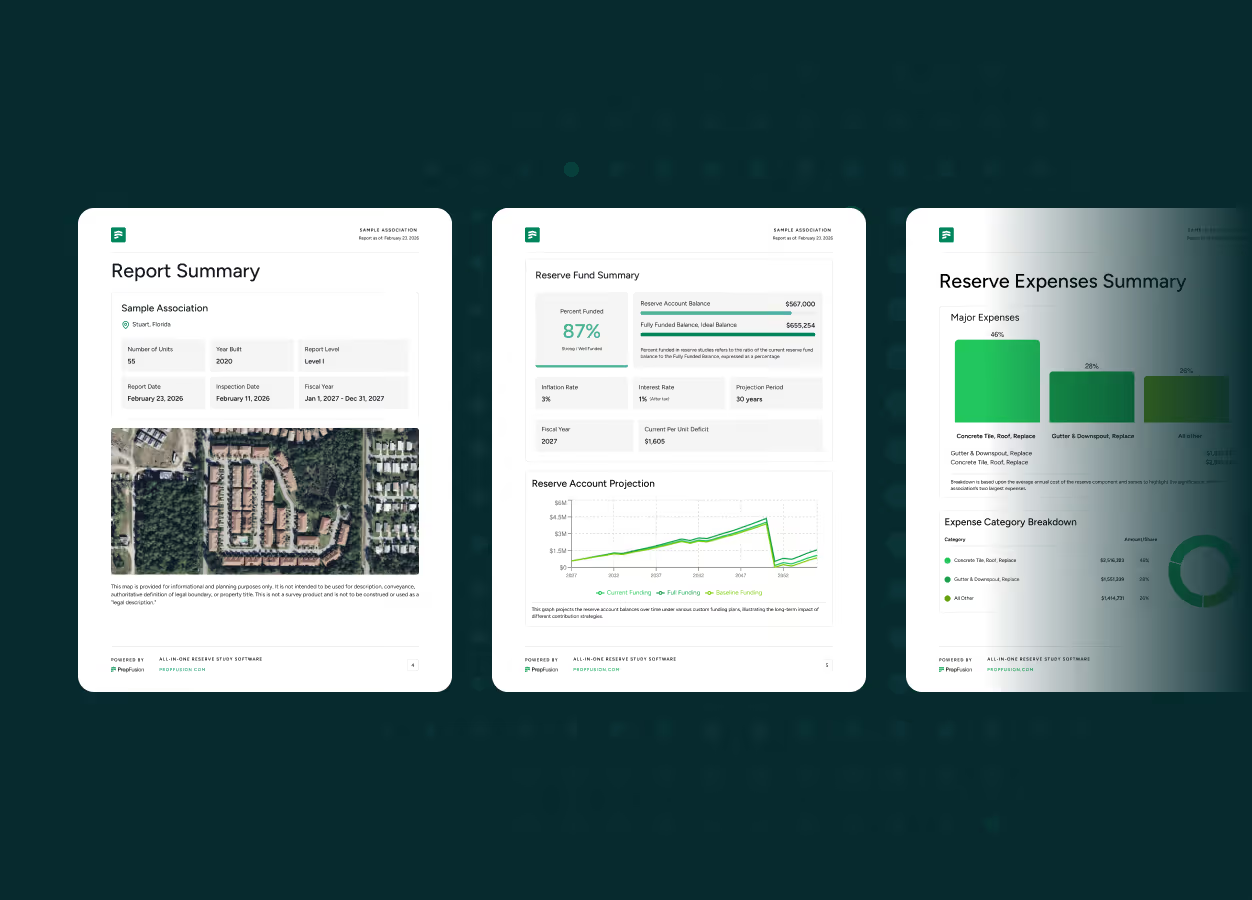
PropFusion is built to bring structure and transparency to reserve planning in flexible legal environments like Idaho. Boards, community managers, and reserve professionals can use PropFusion to:
- Centralize association data: Store all reserve study files, governing documents, and capital project histories in one place.
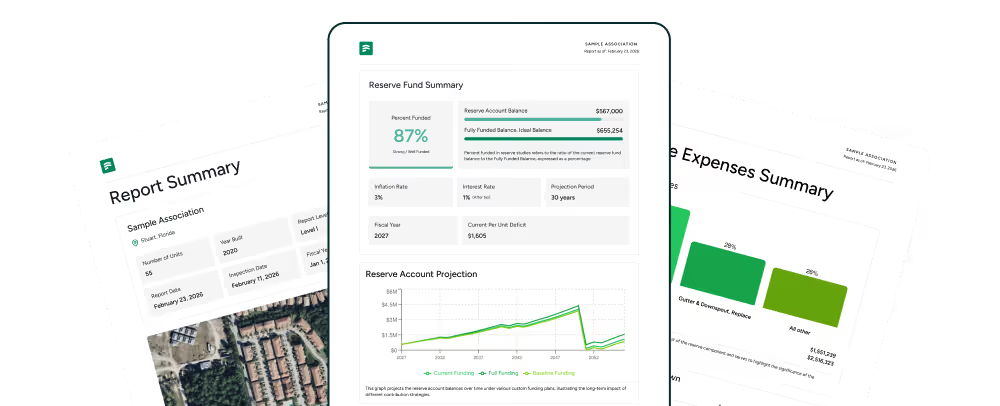
- Visualize funding plans: See how different contribution levels affect reserve balances, future project timing, and the risk of special assessments.
- Run what-if scenarios: Test the impact of cost increases, project deferrals, or amenity upgrades before committing to a budget.
- Coordinate with professionals: Invite your reserve study provider into the platform, so the financial model and the report remain aligned over time.
Because Idaho law gives you room to design your own approach, the associations that will stand out in the long run are those that apply professional standards voluntarily.
Combining a high-quality reserve study with a modern planning platform like PropFusion helps your board demonstrate that level of stewardship to current and future owners.
Related reserve study resources for Idaho
Compare reserve study laws in nearby states, or find help running one for your association:
FAQ
Does Idaho require a specific percentage of our budget to go into reserves?
No. Idaho statutes do not set a fixed reserve contribution percentage for HOAs or condominiums. Your contribution level should be based on the reserve study’s long-term projections and your board’s funding policy, not a generic one-size-fits-all number.
Our governing documents are silent on reserves. Is it still worth paying for a reserve study?
Yes. Even without a contractual or statutory requirement, a reserve study gives your board a defensible basis for dues decisions, reduces the likelihood of unexpected special assessments, and shows owners that you are managing their community assets responsibly.
Can owners in an Idaho community vote to avoid funding reserves altogether?
In many cases, owners could technically choose a low-funding or no-funding approach if the governing documents allow it, but doing so shifts risk onto future owners and boards. A documented, modest reserve plan is almost always preferable to a “pay as you go” model that depends on frequent special assessments.
How should Idaho boards handle underfunded reserves when they inherit a weak position?
Start by commissioning or updating a reserve study to quantify the shortfall. Then adopt a multi-year catch-up plan that gradually increases reserve contributions, combines them with realistic-but limited-special assessments if needed, and clearly communicates the roadmap to owners.
Are Idaho condo associations treated differently from HOAs regarding reserves?
Condominiums are governed by the Idaho Condominium Property Act, while many HOAs fall under different chapters of Title 55 and the nonprofit corporation statutes. However, none of these statutes currently imposes a detailed reserve study mandate, so both condos and HOAs rely primarily on their governing documents and industry standards for reserve planning.
How often should Idaho boards revisit their reserve funding policy?
At minimum, you should review the policy annually alongside the budget and again whenever you update the reserve study. Significant changes-such as major completed projects, new amenities, or large cost shifts-are good triggers for an interim review.
The information contained on this page is provided for informational purposes only, and should not be construed as legal advice on any subject matter. You should not act or refrain from acting on the basis of any content included on this page without seeking legal or other professional advice. The contents of this page contain general information and may not reflect current legal developments or address your situation. We disclaim all liability for actions you take or fail to take based on any content on this report.
Get proposals from vetted reserve study professionals - with 30-year funding plans, powered by modern technology, and compared side by side for free.
Take the guesswork out of your reserve study
From site inspection to 30-year funding plan, PropFusion handles the entire reserve study - accurate, transparent, and built on modern technology that gives you full control over your reserves.