Georgia HOA Reserve Study Requirements & Reserve Fund Laws (2026)
Georgia community associations sit in a gray zone: there is no statewide statute that forces HOAs or condominium associations to perform reserve studies or maintain a specific reserve fund level. At the same time, Georgia’s core community association laws - the Georgia Condominium Act and the Property Owners’ Association Act (POAA) - still define how budgets, assessments, and disclosures must be handled, including how reserves are presented in condominium resale documents.
See the full reserve study requirements by state guide
For board members and association managers, that combination can be confusing. This guide explains what Georgia law does and does not require, how the Georgia Condominium Act impacts reserve disclosures, and what “best practice” looks like for funding reserves in a state without a formal reserve study requirement.
It is written for Georgia HOA and condo boards that want to avoid special assessments, keep dues predictable, and demonstrate sound fiduciary stewardship to their owners and lenders.
Legislation Links
Georgia Condominium Act
Georgia Property Owners’ Association Act
Are reserve studies legally required for HOAs or condos in Georgia?
No. As of 2025, Georgia law does not require HOAs or condominium associations to commission reserve studies or maintain a specific reserve balance. Any reserve study requirements usually come from your declaration, bylaws, or lender guidelines rather than state statute.
Does the Georgia Condominium Act require associations to keep reserve funds?
The Georgia Condominium Act does not set a mandatory reserve funding percentage or dollar amount. It does, however, require that certain condominium resale disclosures include an estimated or actual operating budget that itemizes reserves, such as reserves for deferred maintenance and depreciation. That affects transparency, but it is not a minimum funding rule.
How often should a Georgia association update its reserve study if there is no law?
Most professionals recommend updating a full reserve study every 3-5 years and doing lighter updates when major projects are completed or costs shift materially. That frequency is based on industry standards, not Georgia statute.
Do Georgia single-family HOAs governed by the POAA have different reserve obligations?
POAA-governed HOAs must follow statutory rules for assessments, liens, and corporate governance, but the Act does not impose its own reserve study or minimum reserve balance requirement. Boards still have a fiduciary duty to budget responsibly, which in practice usually means adopting a written reserve funding plan, even without an explicit reserve law.
Need a reserve study in Georgia? Compare multiple reserve study proposals for free.
Get proposals from vetted reserve study professionals - with 30-year funding plans, powered by modern technology, and compared side by side for free.
Georgia’s legal framework for HOA and condo reserves
Georgia community associations operate under a mix of statutes and governing documents. Condominiums are governed primarily by the Georgia Condominium Act, codified at O.C.G.A. § 44-3-70 et seq. Homeowner associations can be organized under the Georgia Property Owners’ Association Act (POAA), O.C.G.A. § 44-3-220 et seq., or exist as “common law” HOAs that rely mainly on their recorded covenants and general Georgia contract and corporate law. (readingroom.law.gsu.edu)
None of these statutes currently impose a statewide requirement to perform reserve studies or to maintain reserves at a specific funding level. Instead, Georgia law focuses on how associations are formed, how assessments are adopted and collected, and what disclosures must be made to purchasers - particularly in condominiums - including budgets that identify reserve line items. (Justia Law)
Reserve studies in Georgia: what the law actually says
From a pure statutory perspective, Georgia falls into the category of “no mandate” states. Reputable national summaries of reserve study laws consistently state that Georgia does not require associations to perform reserve studies and does not require boards to allocate a specific percentage of dues into reserves.
However, that does not mean reserves are irrelevant in Georgia law:
- The Georgia Condominium Act requires sellers in residential condominium sales to provide buyers with an estimated or actual budget for the association, and that budget must itemize reserves, including reserves for deferred maintenance, reserves for depreciation, and other reserves.
- The same Act and the POAA make boards responsible for properly levying assessments and managing association finances under a fiduciary duty of care. Failing to plan for predictable long-term repairs can be argued as inconsistent with that duty, even if the statute never uses the words “reserve study.” (Nowack Howard)
In practical terms, Georgia boards are not told to perform a reserve study on a given schedule, but they are expected to manage money prudently, disclose reserve assumptions in condo resale documents, and avoid reckless underfunding that results in repeated emergency assessments.
What this means for Georgia condominium associations
Condominium associations are most directly touched by the Georgia Condominium Act’s reserve-related provisions.
While the statute does not compel a specific reserve balance, it forces transparency by requiring that resale disclosure budgets clearly identify multiple reserve line items, including reserves for deferred maintenance and depreciation.
That has several consequences for boards:
- Buyers will see whether your budget realistically funds future capital repairs or simply lists token reserve numbers.
- Lenders and insurers can quickly spot underfunding, which can affect loan approvals and insurance underwriting.
- Poorly funded budgets can depress sale prices and create pressure for steep special assessments shortly after purchase.
Because of those dynamics, many Georgia condominium boards treat periodic reserve studies as a de facto requirement, even though they are not written into the statute.
A professional reserve study makes it much easier to defend your budget assumptions, adjust contributions as components age, and demonstrate that the board acted in good faith when setting dues.
What this means for POAA and common-law HOAs
For HOAs organized under the POAA, the statute grants strong powers to levy and collect assessments and to enforce covenants, but it again stops short of dictating reserve study schedules or minimum reserve balances.
Common-law HOAs that never opted into the POAA depend heavily on what their declaration says about assessments and reserves, with Georgia case law filling gaps.
In both structures, the board’s duty of care and loyalty to the association is the key standard. A Georgia HOA board that habitually “zero-budgets” reserves and relies on last-minute special assessments for foreseeable projects (such as roof replacement, paving, or major mechanical replacements) increases legal and reputational risk, even if there is no explicit reserve law.
Owners, and their attorneys, can argue that such behavior is inconsistent with prudent, good-faith management.
Why reserve studies still matter in a “no-mandate” state
If the law does not explicitly require a reserve study, why bother? In Georgia, there are several hard-nosed reasons:
- Georgia’s humid subtropical climate - with hot summers, frequent thunderstorms, and heavy rainfall - accelerates deterioration of roofs, exterior finishes, HVAC systems, and drainage infrastructure.
- National reserve study data show that many associations discover they are significantly underfunded when a formal study is performed.
- Lenders and buyers increasingly expect HOAs and condos to demonstrate long-term capital planning, especially for older buildings and amenities.
A well-prepared reserve study gives your board a defensible roadmap for 20-30 years of capital projects, with estimated costs and recommended annual reserve contributions. For Georgia communities, that can be the difference between controlled dues increases and sudden, politically toxic special assessments.
Recommended reserve study frequency for Georgia associations
Because there is no Georgia-specific mandate, boards should rely on industry norms:
- Full reserve study (with site inspection): Every 3-5 years, or after major construction projects that materially change your component inventory or remaining useful lives.
- Interim updates (no site visit or limited inspection): Annually, to adjust for inflation, completed projects, and updated cost estimates.
- Trigger events: Commission at least a focused update when your association adds significant new amenities, experiences major storm damage, or faces a noticeable shift in construction costs.
This cadence keeps your long-term funding plan aligned with reality without overspending on studies.
Funding strategies for Georgia HOAs and condos
Georgia law does not prescribe a particular funding method, so boards commonly adopt one of the standard reserve funding strategies:
- Full-funding: Aim for reserves that match 100 percent of the amount needed to replace all components over the study’s time horizon. This is the most conservative and lender-friendly approach.
- Threshold funding: Target a defined minimum balance (for example, never less than 30-40 percent funded) and adjust contributions to stay above that floor.
- Baseline funding: Set contributions so the reserve balance never hits zero over the projection period, accepting periods of lower funding so long as you avoid negative balances.
For many Georgia associations, a blend makes sense: using threshold or baseline funding in the early years, then pushing closer to full-funding as the community ages and more components approach the end of their useful lives.
Regardless of method, the key is to document your chosen strategy in board minutes and explain it to owners when budgets are adopted.
Practical steps for Georgia boards
If you serve on a Georgia HOA or condo board, you can use this checklist to bring your reserve planning in line with best practices, even without a statutory mandate:
- Confirm your legal framework - Determine whether your community is a condominium under the Georgia Condominium Act, an HOA submitted to the POAA, or a common-law HOA. This affects your governance powers, lien rights, and how disclosures are handled.
- Review your governing documents - Read your declaration, bylaws, and any budgeting or reserve policies. Some Georgia communities have their own internal reserve study or minimum reserve balance requirements written into the governing documents, especially newer developments or lender-influenced projects.
- Commission an initial reserve study - Engage an experienced reserve study professional who understands Georgia’s climate, construction practices, and local cost environment. For condos, make sure the study’s funding plan aligns with how your budget will present reserves in the resale disclosure package so you are not inadvertently documenting underfunding.
- Adopt a written reserve funding policy - Based on the study, choose a funding method (full, threshold, or baseline) and adopt it formally in board minutes or a finance policy. Aim, over time, to move toward healthier funding levels (often in the 70-100 percent funded range) to keep projects on schedule and avoid crisis assessments.
- Communicate clearly with owners - Present your reserve study findings and funding plan at an open meeting. Use plain language to explain why reserves matter in Georgia’s climate, what projects are coming, and how your plan keeps dues predictable. Transparency lowers resistance to realistic contribution levels.
- Update consistently - Schedule your next full study or update before you adjourn the meeting where the current study is adopted. Treat reserve planning as a rolling process, not a one-off exercise.
How PropFusion helps Georgia communities manage reserves
PropFusion’s platform is designed to make this whole process easier for Georgia boards, association managers, and reserve study professionals:
- Boards can track reserve balances, upcoming projects, and funding scenarios in a single dashboard rather than in scattered spreadsheets.
- Association managers can monitor reserve health across an entire portfolio of Georgia communities and spot underfunded properties before they become problems.
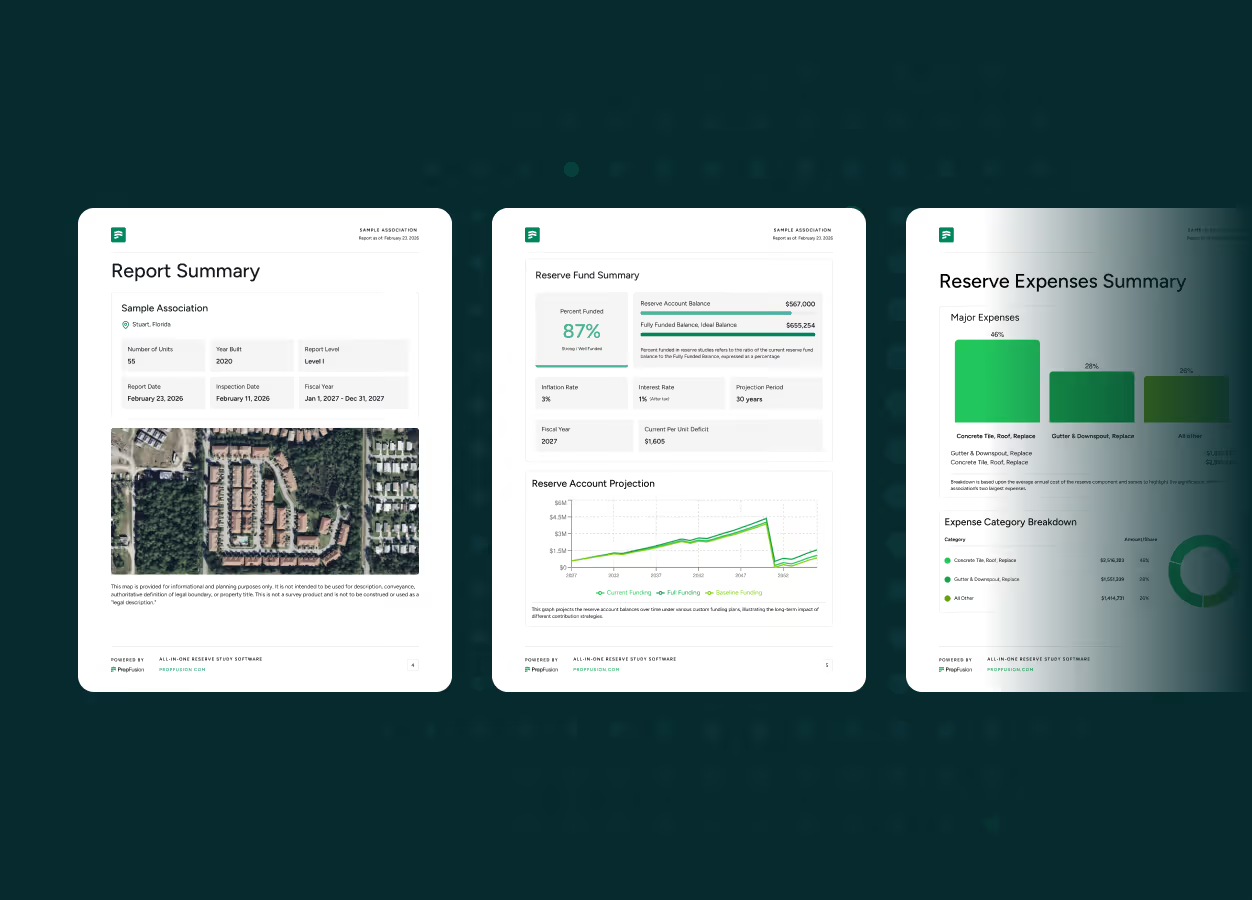
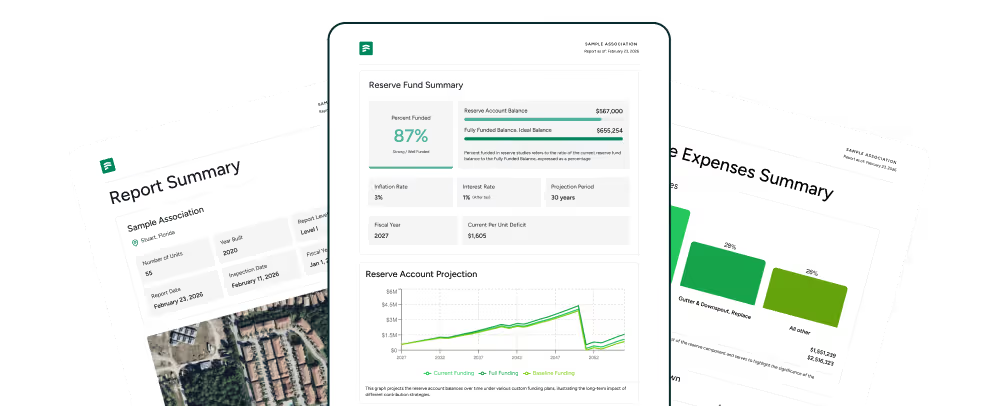
- Reserve professionals can deliver interactive, scenario-ready reports that boards can actually use when setting budgets and approving projects.
Related reserve study resources for Georgia
Compare reserve study laws in nearby states, or find help running one for your association:
FAQ
Does Georgia law require HOAs or condos to maintain a minimum reserve fund balance?
No. Georgia statutes do not set a mandatory minimum reserve balance for HOAs or condominiums. Boards are expected to budget responsibly and disclose reserve assumptions where required (such as in condominium resale budgets), but specific funding levels are driven by your governing documents and professional recommendations rather than a statewide formula.
Are Georgia associations legally exposed if they never perform a reserve study?
Even without a statutory requirement, Georgia board members have a fiduciary duty to act with care and in the best interests of the association. Persistently underfunding reserves and ignoring obvious long-term repair needs can increase the risk of disputes, claims of mismanagement, and problems with lenders or buyers, especially if special assessments become frequent.
How do I know if my Georgia HOA is subject to the POAA?
Check your recorded declaration. If it expressly elects to be governed by the Georgia Property Owners’ Association Act, your HOA is a POAA association and benefits from that statute’s lien, enforcement, and governance provisions. If there is no such election, your HOA is likely governed by common law and its covenants, with no special statutory reserve obligations either way.
Can Georgia owners vote to reduce or eliminate reserve contributions?
In many communities, the governing documents allow owners to approve budgets that reduce or even temporarily eliminate reserve contributions. However, that decision can backfire if it leaves the association unable to fund predictable capital projects. Boards should obtain legal and professional advice before presenting ultra-low-reserve budgets, and should clearly explain the risks to owners.
How does Georgia’s climate affect recommended reserve funding levels?
Georgia’s hot, humid climate and heavy rainfall accelerate wear on roofs, HVAC systems, exterior finishes, and drainage systems. That typically translates into shorter useful lives and higher long-term capital costs than in milder climates. As a result, Georgia associations often need stronger reserve funding than boards initially assume, even though the statute does not require a specific percentage.
When should a new Georgia community commission its first reserve study?
Ideally, a new condominium or HOA in Georgia should commission an initial reserve study near completion of the development or shortly after turnover from the developer to the owners. That first study sets realistic expectations for dues and long-term funding, and helps the post-turnover board correct any overly optimistic budgets adopted during the development phase.
The information contained on this page is provided for informational purposes only, and should not be construed as legal advice on any subject matter. You should not act or refrain from acting on the basis of any content included on this page without seeking legal or other professional advice. The contents of this page contain general information and may not reflect current legal developments or address your situation. We disclaim all liability for actions you take or fail to take based on any content on this report.
Get proposals from vetted reserve study professionals - with 30-year funding plans, powered by modern technology, and compared side by side for free.
Take the guesswork out of your reserve study
From site inspection to 30-year funding plan, PropFusion handles the entire reserve study - accurate, transparent, and built on modern technology that gives you full control over your reserves.