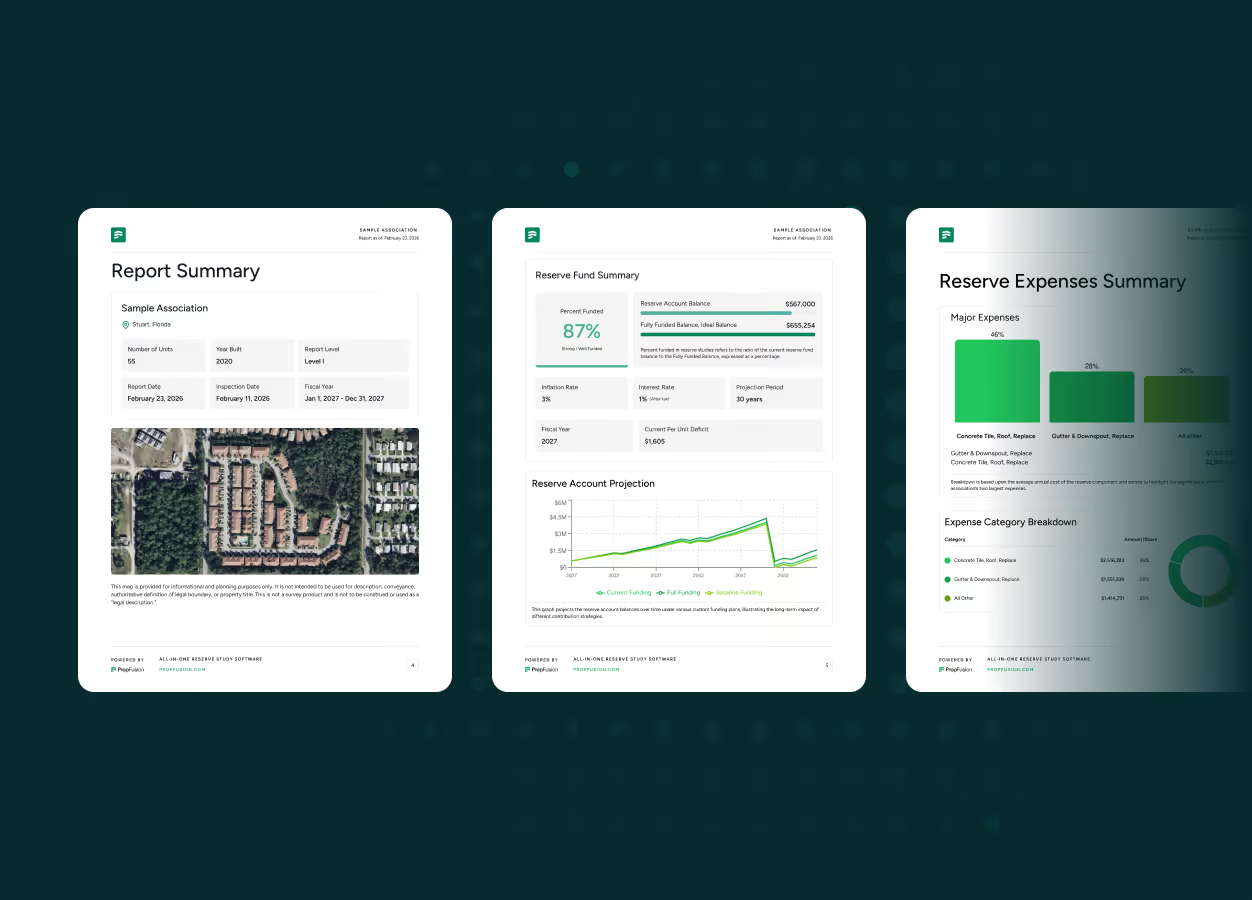
Florida SIRS: 14 Questions Boards Ask Most
Get proposals from vetted reserve study professionals - with 30-year funding plans, powered by modern technology, and compared side by side for free.
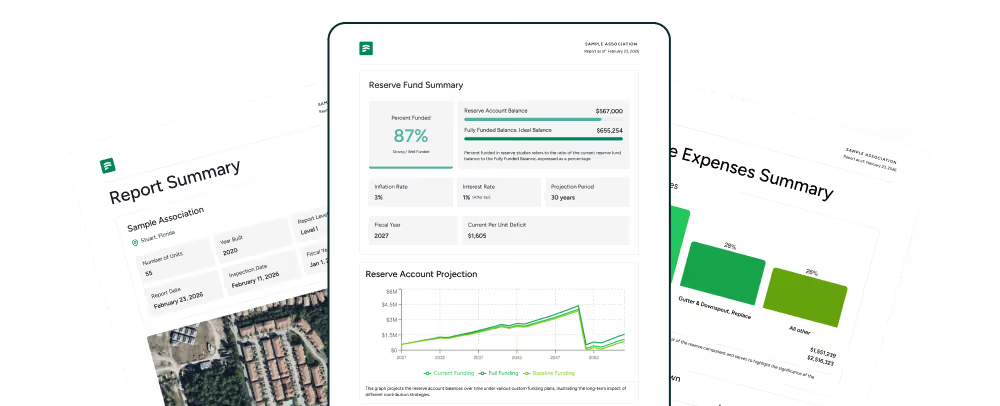
Structural Integrity Reserve Studies are no longer optional planning tools in Florida. For most condominium buildings with three or more habitable stories, a SIRS is a legal requirement that drives your budget, your disclosures and even buyer financing.
The rules are complicated and they keep changing. This article answers the questions we hear most from Florida boards and managers and points you to official sources when you need chapter and verse.
What exactly is a SIRS and how is it different from a regular reserve study?
Florida law defines a Structural Integrity Reserve Study as a study of the reserve funds required for future major repairs and replacement of condominium property, performed as required by section 718.112(2)(g).
In practice, a SIRS:
- Focuses on critical structural and life safety components such as roof, primary structural systems, fireproofing, plumbing, electrical systems, waterproofing, windows and exterior doors and certain high cost items.
- Must include a funding plan that keeps the reserve cash balance above zero in every budget year.
A traditional reserve study usually covers all association maintained components, including amenities and non structural items, and historically could be waived or reduced by owner vote. SIRS focuses on structural integrity and, for covered buildings, cannot be waived.
Which Florida buildings must complete a SIRS?
Under section 718.112(2)(g), a SIRS is required for each building on condominium property that is three or more stories in height as determined by the Florida Building Code.
Associations existing on or before 1 July 2022 that are controlled by unit owners other than the developer must complete a SIRS by 31 December 2025 for each such building. Associations that are required to complete a milestone inspection on or before 31 December 2026 may coordinate and complete the SIRS at the same time, but never later than 31 December 2026.
When is our first SIRS due, and how often after that?
For most existing associations, the first SIRS must be completed no later than 31 December 2025, with a limited extension to 31 December 2026 for associations that have a milestone inspection due by 31 December 2026 and choose to perform the SIRS at the same time.
After that, a SIRS must be completed at least every 10 years for each covered building.
If you remodel significantly or complete major structural work, it may make sense to commission an earlier update so your funding plan reflects the new condition.
Can a milestone inspection take the place of a SIRS?
Not completely. DBPR’s FAQ explains that if a qualifying milestone inspection or similar local recertification inspection was performed within the past five years and meets the SIRS visual inspection requirements, that inspection can be used in place of the visual inspection portion of the SIRS.
You still need a SIRS that:
- Identifies the required components.
- States remaining useful lives and replacement costs.
- Provides a SIRS style funding plan.
In short, you can leverage milestone inspection work, but you cannot skip SIRS altogether.
Can owners vote to waive or reduce SIRS reserves?
For buildings that are subject to SIRS, the answer is effectively no.
Florida law now states that, for budgets adopted on or after a specified date, unit owners in associations required to obtain a SIRS may not vote to provide no reserves or less reserves than required for SIRS items, except in limited situations such as certain multi condominium structures approved for an alternative funding method.
Traditional reserve items that are not SIRS components can still be waived or reduced by vote, subject to the usual statutory procedures. That distinction is covered in more detail in both the DBPR SIRS FAQ and PropFusion’s Florida SIRS guide.
Does “fully funded” mean we need 100 percent of the replacement cost in the bank right now?
No. DBPR’s SIRS bulletin makes an important point: the funding plan must be designed so that the reserve cash balance stays above zero and is sufficient to pay for the structural components when they need to be repaired or replaced. It does not require you to have the entire replacement cost saved immediately if the work is many years away.
Think of “fully funded” in the SIRS context as:
- Keeping the reserve account from going negative.
- Having enough in years when major projects hit, without relying on wishful thinking or constant emergency assessments.
Our HOA reserve funding content in the HOA Reserve Study hub walks through how this compares with traditional concepts like percent funded and baseline funding.
Who can perform a SIRS?
Under current law, a SIRS can be prepared by a person who is qualified to perform such a study, but the visual inspection portion must be performed or verified by one of the following:
- A Florida licensed engineer under chapter 471.
- A Florida licensed architect under chapter 481.
- A person certified as a Reserve Specialist or Professional Reserve Analyst by CAI or APRA.
Industry guidance recommends hiring a firm that has specific experience with Florida condominium SIRS work, since the statute is detailed and there is significant liability for getting it wrong.
How much does a SIRS usually cost?
There is no statutory fee schedule. Legal and engineering providers consistently say that cost depends on:
- Size and complexity of the building or portfolio.
- Number of structural components and amenities.
- Whether the provider has to build a full component inventory from scratch or can use existing data.
For a single mid rise, boards often see pricing in the low five figures. Larger high rise complexes with shared garages, amenities and complex structures will pay more. The important thing is to budget for periodic SIRS updates every 10 years and to revisit your annual reserve contribution between studies when conditions change.
How detailed does the visual inspection need to be?
Section 718.112(2)(g) and DBPR’s SIRS guidance state that, at a minimum, the study must:
- Identify each visually inspected item.
- State the estimated remaining useful life and estimated replacement cost or deferred maintenance expense for each item.
- Provide a funding plan that keeps the reserve balance above zero.
If a prior milestone inspection or similar local inspection meets those visual requirements and was performed within 5 years, it may be used as the visual inspection portion of the SIRS.
In practice, boards should expect a structured field visit that looks at all structural systems within the SIRS scope, not a quick walk through with a clipboard.
How does SIRS affect our annual budget and assessment notices?
The law is clear that SIRS is not a report you can leave on a shelf. For associations subject to SIRS:
- Your annual budget must use the latest SIRS as the basis for structural reserve funding.
- Any budget adopted on or after the applicable date that underfunds SIRS items or ignores the study’s baseline funding plan can put the association out of compliance.
- Recent legislative changes require associations to distribute the completed SIRS to owners or notify them that it is available and to file a statement with the Division confirming completion and distribution.
What happens if we ignore SIRS or miss the deadline?
DBPR materials warn that failing to complete a required SIRS or to properly fund SIRS reserves can be treated as a breach of directors’ fiduciary duties.
Potential consequences include:
- Division investigations and administrative penalties.
- Difficulty obtaining or renewing insurance.
- Problems with buyer financing, since lenders and real estate forms now explicitly ask about SIRS status.
In extreme cases, ignoring structural funding requirements can lead to safety issues and personal liability claims if failures occur.
If your board is behind, start by reviewing our SIRS law guide, then engage counsel and a reserve professional to map out a realistic catch up plan.
How do SIRS reserves interact with loans, special assessments and insurance?
Section 718.112(2)(g) and recent legislative summaries explain that SIRS must now consider the funding methods you use, including regular assessments, special assessments, lines of credit and loans.
Key points:
- You can use loans and special assessments to meet SIRS obligations, but the study must be updated to reflect whatever mix you choose and your funding plan still has to keep reserves above zero.
- You cannot permanently rely on debt to avoid structural reserves. Funding must line up with the SIRS schedule.
- Insurers and lenders are beginning to ask directly whether your association is SIRS compliant, so a clear plan and updated study are becoming essential for coverage and financing.
PropFusion lets your reserve professional plug different combinations of assessments and loans into the model and see how they affect reserve balances and SIRS compliance.
How do SIRS and milestone inspections work together in practice?
Milestone inspections under section 553.899 focus on whether the building is structurally sound today. SIRS focuses on whether you will have enough money to keep it sound over the coming decades.
Florida law now links them in several ways:
- You can coordinate the SIRS visual inspection with the milestone inspection if the timing lines up and then use that inspection for both.
- Some of the more recent legislation gives limited flexibility to pause or adjust SIRS funding for a short period while an association is actively carrying out milestone driven structural repairs, then requires an updated SIRS once repairs are complete.
Where should Florida boards look for official guidance and updates?
Because the rules are still evolving, boards should check official and primary sources regularly, including:
- The text of section 718.112 and related provisions on the Florida Legislature’s statute site.
- DBPR’s condominium SIRS and milestone inspection pages and their Did You Know bulletins on reserves.
- Legislative summaries from reputable community association law firms that track new bills such as HB 1021 and HB 913.
PropFusion’s own Florida SIRS requirements guide keeps an updated summary of deadlines, who is covered and what has changed, with links out to those primary sources.
Get proposals from vetted reserve study professionals - with 30-year funding plans, powered by modern technology, and compared side by side for free.
Take the guesswork out of your reserve study
PropFusion matches your association with vetted reserve study professionals - powered by industry-leading software. Compare multiple proposals for free to get started.