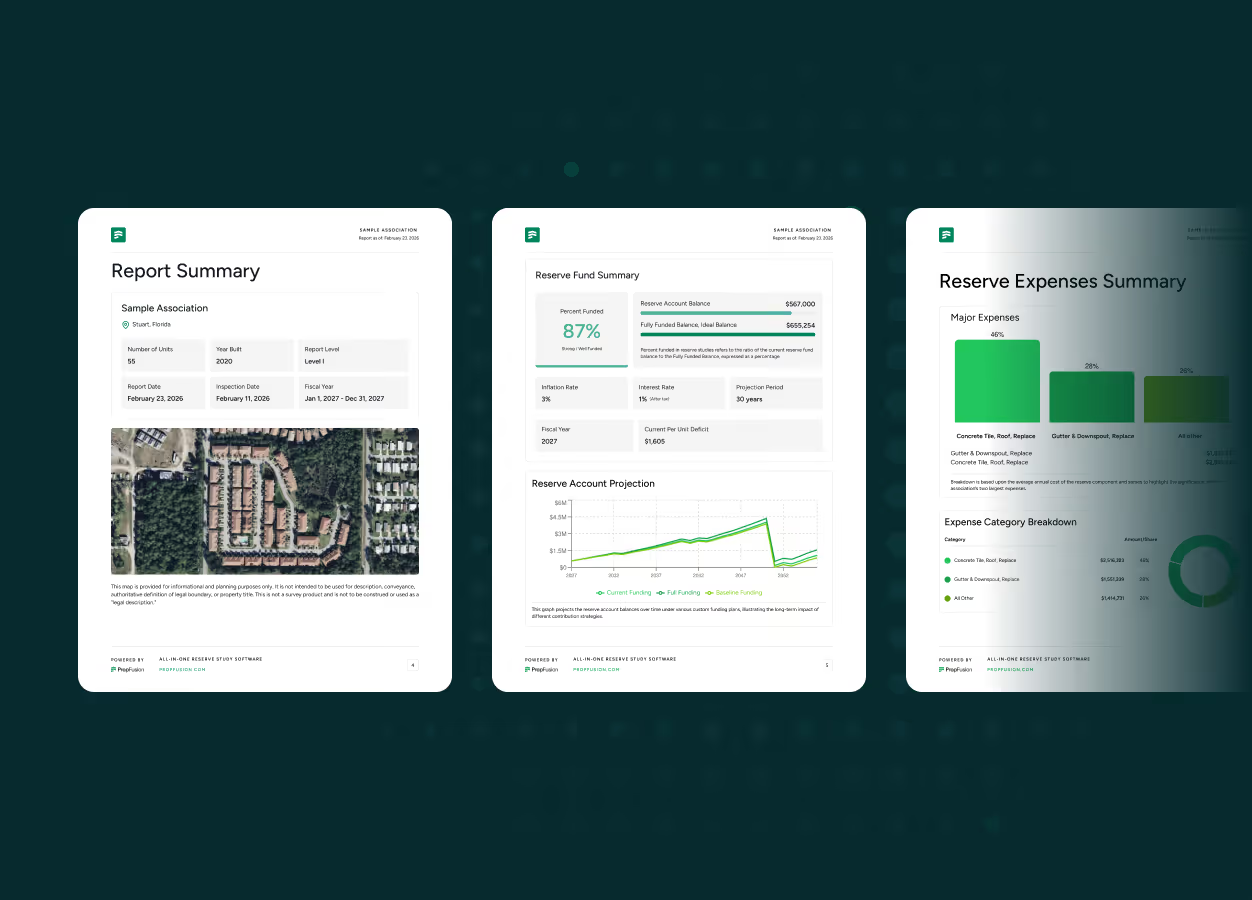
Reserve Study Companies in Connecticut
Get matched with vetted reserve study companies for your Connecticut HOA or condominium — Level 1, 2, and 3 studies with 30-year funding plans built for New England's freeze-thaw cycles, nor'easters, and aging multi-family properties. Powered by software that gives your board full control.
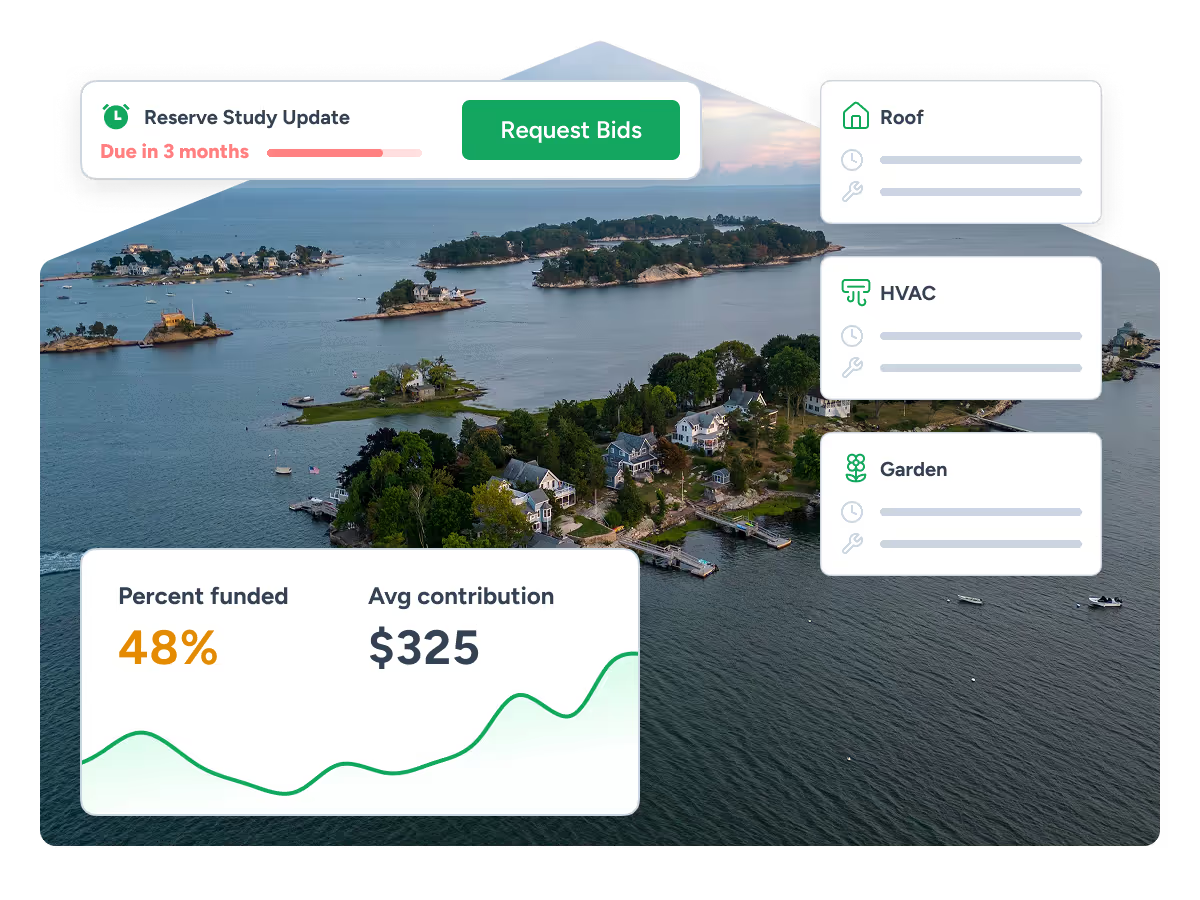




Reserve studies for Connecticut HOAs and condos
Connecticut's dense condo market and aging housing stock create significant reserve planning challenges. Harsh winters with repeated freeze-thaw cycles, coastal flooding along Long Island Sound, and nor'easters that batter roofing and siding all shorten component lifespans. PropFusion arranges professional reserve studies built on purpose-designed software, giving your board accurate data, clear funding plans, and a live workspace to manage reserves long after the report is delivered.
- We serve:
- Condominium associations (including historic conversions and mid-rise buildings)
- Homeowners associations and planned communities
- Townhome and attached-unit communities
- Co-operative housing corporations
- Mixed-use and transit-oriented developments

5,000+ Reserve Studies.
One standard.
PropFusion is led by Stuart Wilkinson, a licensed Reserve Specialist (RS) with more than 20 years in the field.
He's performed over 5,000 reserve studies across his career. He built PropFusion's technology because he saw the same problem play out at community after community: good studies, delivered professionally, collecting dust because boards couldn't make sense of them.
PropFusion is the platform he built to fix that - a network of vetted reserve study professionals, backed by software that makes every study usable.
What Connecticut law means for your reserve planning
Connecticut's Common Interest Ownership Act requires condominium associations to include adequate reserves in their annual budgets, and courts have interpreted this as effectively requiring a professional reserve study to demonstrate adequacy. Boards without a current study face legal exposure if reserves prove insufficient for major repairs. Connecticut's harsh winters, coastal storm exposure, and aging housing stock make deferred maintenance especially costly. PropFusion arranges reserve studies that document budget adequacy and give your board a clear path to funded reserves.
Types of reserve studies available in Connecticut
Level 1 – Full reserve study
A complete physical and financial analysis: on-site inspection, component inventory, remaining useful life estimates, and a 20-30 year funding plan — all built inside PropFusion's platform so your board can reference and adjust projections anytime.
Level 2 – Update with site visit
A refresh of your existing reserve study with a new on-site inspection, updated replacement costs, and revised funding recommendations synced into your live reserve workspace.
Level 3 – Update without site visit
A financial update using your prior study and current financial data to recalibrate funding paths between full inspections — delivered with the same interactive online dashboard.
New England climate-adapted reserve studies
Connecticut's combination of freeze-thaw cycles, nor'easters, coastal exposure along Long Island Sound, and aging properties from the mid-20th century creates accelerated deterioration that generic reserve studies underestimate. Our Connecticut studies account for winter-shortened roof lifespans, masonry deterioration from ice infiltration, and the elevated costs of working with older construction systems common throughout the state.
Connecticut regions we serve
Our network provides on-site inspections and reserve studies across every region of Connecticut. The professionals we match you with understand New England construction practices, coastal exposure along the shoreline, and the freeze-thaw patterns that drive component replacement cycles throughout the state. Our network also serves communities in New York, Massachusetts, and Rhode Island.
- Areas we cover:
- Greater Hartford: Hartford, West Hartford, Newington, New Britain
- Coastal corridor: Stamford, Norwalk, Bridgeport, New Haven, Milford, coastal towns along Long Island Sound
- Other key metros: Waterbury, Danbury, Meriden, Middletown and surrounding suburbs
When Connecticut associations typically need a reserve study
Boards across Connecticut contact us when:
Aging buildings need a realistic funding plan
— Many Connecticut condominiums were built in the 1970s and 1980s and are now facing simultaneous major replacements — roofing, siding, boilers, paving — that require careful financial planning to avoid special assessments.
It's time for the next cycle
— You're approaching the 3-5 year mark since your last study and need updated costs that reflect Connecticut's rising construction pricing and current component conditions.
After a nor'easter or severe winter
— You've dealt with storm damage, ice dam issues, or emergency boiler repairs and need to re-baseline your reserve plan to reflect current conditions and upcoming capital needs.
At turnover from developer to owners
— The community is transitioning from developer control, and the new board needs an independent assessment of reserve health and long-term funding gaps.
Before financing or resale reviews
— Lenders, buyers, or real estate attorneys are requesting current reserve documentation as part of a condo resale or refinancing process — a common requirement in Connecticut's competitive real estate market.
What you get with every Connecticut reserve study
Every reserve study arranged through PropFusion includes:
On-site inspection of major components
Network inspectors visually assess roofs, waterproofing, structure, exterior finishes, pavement, mechanical systems, amenities, and other shared components — captured directly in PropFusion's field app with geotagged photos.
Component inventory & useful life estimates
A detailed inventory of every common-area component with quantities, remaining useful life, and current replacement costs — all structured in your live reserve dashboard, not just a static table.
30-year funding plan
Year-by-year projections showing recommended contributions, projected expenses, and reserve balances. Your board can run what-if scenarios directly in the platform to test different funding strategies.
CIOA compliance documentation
For communities governed by Connecticut's Common Interest Ownership Act (CT Gen. Stat. 47-261), we include documentation aligned with CIOA disclosure requirements, ensuring your reserve study supports resale certificate preparation and board fiduciary obligations.
Board-ready PDF report
A professionally formatted report you can attach to budgets, distribute to owners, and submit to lenders or insurers — generated directly from the platform for consistency and accuracy.
Optional: working file / spreadsheet
Many firms also provide a working spreadsheet you can reference between formal updates.
Online reserve planning workspace
Unlike a static spreadsheet, your reserve data lives in an interactive online workspace. Update assumptions, log completed projects, and track funding progress between formal study cycles.
Frequently asked questions
How much does a reserve study cost in Connecticut?
Reserve study pricing in Connecticut depends on community size, number of buildings, component count, and study type (full with on-site inspection vs. update). Most Connecticut communities invest $3,000–$9,000 for a full study. Larger communities with pools, elevators, parking structures, or multiple building types will be at the higher end. Request proposals through PropFusion and compare multiple quotes for free based on your community's specifics.
What does a PropFusion reserve study include?
Every reserve study arranged through PropFusion includes an on-site inspection of all major common-area components, a detailed inventory with remaining useful life estimates calibrated for Connecticut's nor'easters, freeze-thaw cycles, coastal salt air, and heavy snow, current replacement cost estimates based on local contractor pricing, and a 30-year funding plan with contribution recommendations. Everything is delivered through our interactive platform where your board can model different funding scenarios and track reserve performance over time.
How often should we update our reserve study?
Industry best practice is a full update with on-site inspection every 3 to 5 years, with interim reviews in between if your community completes major projects or experiences significant cost changes. Connecticut communities dealing with nor'easters, freeze-thaw cycles, coastal salt air, and heavy snow may benefit from more frequent updates since these conditions can accelerate component wear. PropFusion tracks your component data over time, which makes updates faster and more cost-effective than starting from scratch.
Are on-site inspections included in Connecticut?
Yes. Every full reserve study includes an on-site inspection by the reserve professional you're matched with. Our network covers all of Connecticut — including Hartford, New Haven, Stamford, Bridgeport, and Greenwich. They assess roofing, siding, paving, mechanical systems, and all other common-area components in person. We do not rely on desktop estimates or satellite imagery for full studies.
What makes PropFusion different from other Connecticut reserve study providers?
PropFusion combines professional on-site inspections with modern technology. Unlike firms that hand you a static PDF, your reserve study is delivered through an interactive platform where your board can model funding scenarios, adjust assumptions, and track reserve performance year over year. Our component assessments are calibrated for Connecticut's nor'easters, freeze-thaw cycles, coastal salt air, and heavy snow, and your data stays accessible for future updates — making each subsequent study faster and more cost-effective.
Get your Connecticut reserve study started
Whether your board is managing aging infrastructure, preparing for resale disclosures, or building a long-term funding strategy to withstand New England winters — PropFusion matches you with the right professional — and gives you the tools to act on the study.