Wyoming Reserve Study Requirements (2026)
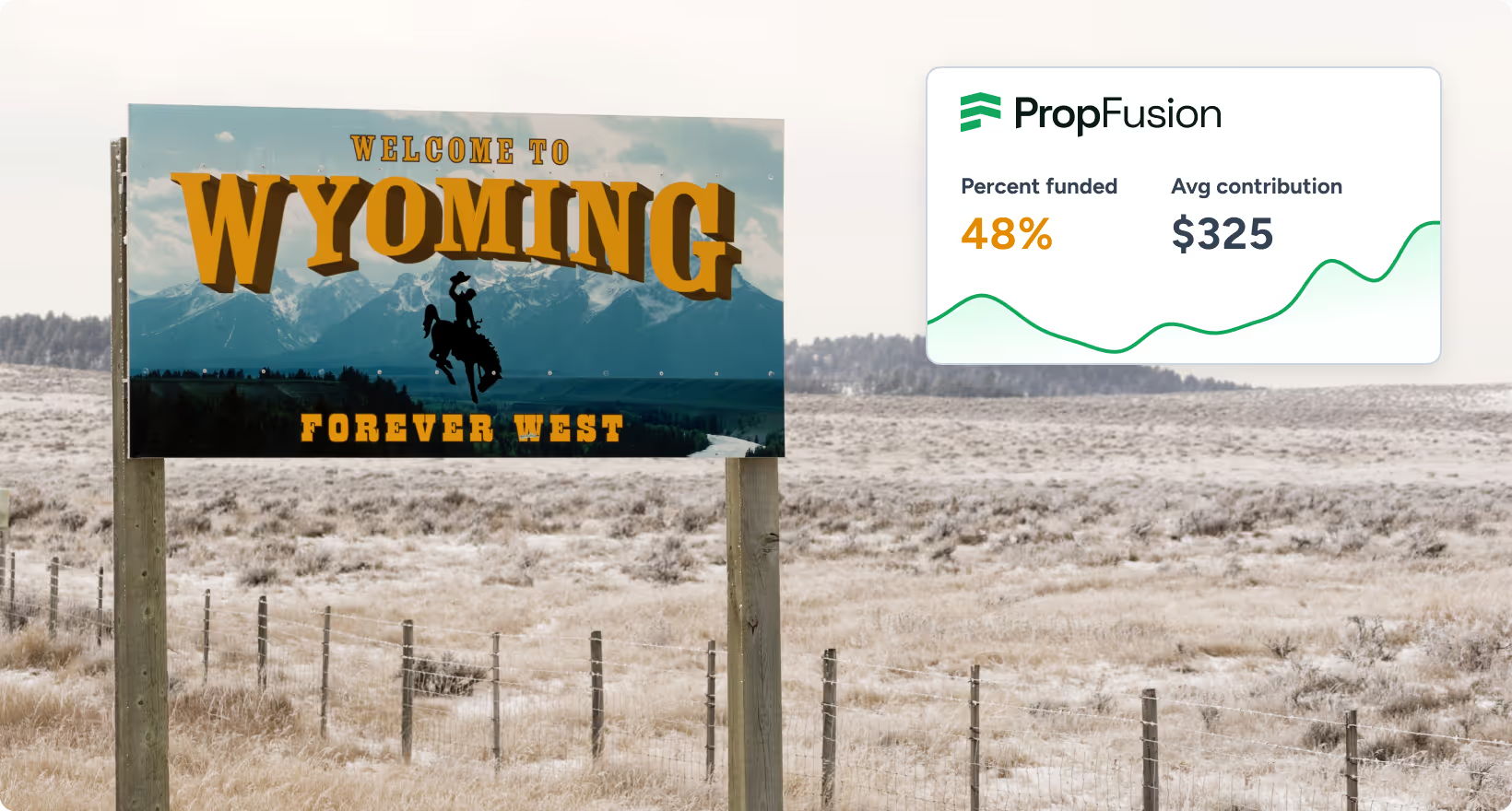
Wyoming takes a relatively light-touch approach to regulating homeowners associations and condominium associations. There is no standalone HOA act and, critically for boards and owners, no statute that requires a community association to perform a reserve study or to maintain a specific level of reserve funding.
See the full reserve study requirements by state guide
That does not mean reserves are optional in practice. Major shared elements like roofs, parking areas, siding, boilers, and private roads still wear out, and boards still have a fiduciary duty to plan for those costs. In Wyoming, that duty is shaped primarily by two laws: the Wyoming Condominium Ownership Act (Title 34, Chapter 20 of the Wyoming Statutes) and the Wyoming Nonprofit Corporation Act (Title 17, Chapter 19), which governs many association corporations.
This guide explains how those statutes fit together, confirms that there is no reserve study mandate, and lays out practical standards that responsible boards can follow to protect their communities.
Legislation Link
Wyoming Condominium Ownership Act
Wyoming Nonprofit Corporation Act
Are reserve studies legally required for HOAs and condos in Wyoming? No. Wyoming does not have a statute that requires HOAs or condominium associations to commission reserve studies on any schedule. Current summaries of state law indicate there is no statutory requirement to conduct a reserve study and no statutory requirement to fund reserves.
Does Wyoming law require associations to maintain a reserve fund? No Wyoming statute requires an HOA or condo association to maintain a dedicated reserve fund or to fund reserves to any particular level. However, boards still have budget and fiduciary responsibilities under the Wyoming Condominium Ownership Act and the Wyoming Nonprofit Corporation Act, and failing to plan for future capital repairs can create governance and legal risk.
If there is no legal mandate, can our governing documents still require a reserve study? Yes. Many Wyoming communities embed reserve planning expectations directly in their declarations, covenants, bylaws, or board policies. Those provisions can require a reserve study, specify how often it must be updated, or dictate how much should be transferred to reserves each year, even though state law itself is silent.
Which Wyoming communities benefit most from reserve studies? Any association with significant common elements or aging infrastructure benefits from a formal reserve study-especially condo buildings, townhome communities with private roads or roofs, master associations, and rural communities with shared wells, wastewater systems, or amenities such as clubhouses and pools.
Need a reserve study in Wyoming? Compare multiple reserve study proposals for free.
Get proposals from vetted reserve study professionals - with 30-year funding plans, powered by modern technology, and compared side by side for free.
Overview: how Wyoming regulates HOAs and condominiums
Unlike many states, Wyoming does not have a dedicated “Common Interest Community Act” specifically for HOAs. Instead, the legal framework comes from a combination of general corporate law and a relatively short condominium-specific statute.
For condominiums, the Wyoming Condominium Ownership Act (Title 34, Chapter 20) formally recognizes condominium ownership, defines key terms like “condominium unit,” “common elements,” and “declaration,” and lays out the high-level structure for how condo projects are created and recorded.
It focuses on property rights and recording, not on detailed operational rules about reserves or long-term budgeting.
For HOAs and many condo corporations, the Wyoming Nonprofit Corporation Act (Title 17, Chapter 19) supplies the corporate governance rules: how entities are organized, how boards are elected, duties of directors, meetings, member voting, and the authority to adopt budgets and collect assessments.
These statutes together give boards wide discretion to manage the association’s finances-including decisions about whether and how to fund reserves.
No statutory requirement for reserve studies or reserve funding
Authoritative national summaries of state reserve laws confirm that Wyoming does not mandate either reserve studies or reserve funding levels for community associations. There is no statute in Title 34 or Title 17 that:
- Requires associations to perform a reserve study on a set interval.
- Requires a specific “baseline,” “threshold,” or “full funding” approach.
- Requires a minimum reserve contribution in the annual budget.
Practically, this means that reserve planning in Wyoming is governed by:
- The association’s own governing documents (declaration, bylaws, rules).
- The general fiduciary duty of directors under corporate law to act in good faith, with ordinary prudence, and in the best interests of the corporation.
- Market expectations from owners, buyers, lenders, and insurers who increasingly expect communities to plan for long-term capital needs, even without a mandate.
Why reserve studies still matter in Wyoming
Even without a statutory requirement, skipping reserve planning is a risky strategy. Major common-area components still deteriorate, and in a state with harsh winters and wide temperature swings, the impact on roofs, facades, parking lots, and mechanical systems can be significant.
Boards that do not quantify upcoming replacement costs tend to face:
- Special assessments when big projects hit.
- Cash-flow crises that delay essential repairs.
- Owner anger when “surprise” costs are imposed.
- Difficulty in sales, as buyers and lenders scrutinize association financials.
By contrast, boards that use reserve studies-even voluntarily-gain a clear multi-year picture of upcoming expenses. That picture supports more stable assessments, smoother project planning, and healthier long-term property values.
Many Wyoming-focused HOA resources now encourage associations to adopt reserve planning as a best practice, even in the absence of a mandate.

Recommended components of a Wyoming reserve study
Because Wyoming law does not prescribe the content of a reserve study, boards can follow widely accepted industry standards. At a minimum, a solid study should include:
- A component inventory: all major shared assets with a predictable life and significant replacement cost (roofing systems, building envelopes, asphalt, concrete, elevators, boilers, chillers, decks, retaining walls, common-area interiors, etc.).
- Condition assessments and remaining useful lives for each component.
- Current replacement cost estimates, adjusted for local pricing.
- A funding plan that projects reserve contributions and balances over at least 20–30 years.
- Scenario modeling that compares different funding objectives-such as baseline (avoid a negative balance), threshold (maintain a minimum reserve balance), or full funding (keep reserves close to 100 percent of deterioration).
Even if your Wyoming community is small or has few shared elements, commissioning a one-time study is often enough to identify whether you are drastically under- or over-funded and to set a baseline strategy.
Best practices for Wyoming reserve funding
In the absence of a legal formula, Wyoming boards should adopt clear, written funding policies that set expectations for owners and future boards. Practical steps include:
Define your funding objective
Decide whether your association’s goal is to avoid negative balances (baseline), maintain a target minimum percentage of estimated deterioration (threshold), or stay close to fully funded. Explicitly adopt that objective by board resolution and incorporate it into your annual budget process.
Set a stable annual contribution level
Rather than “backing into” reserves after all operating expenses are budgeted, treat reserves as a non-negotiable line item. Many communities aim for a fixed percentage of total assessments (for example, 15–30 percent) and then refine that number using the reserve study projections.
Use periodic updates to avoid shocks
Even without a mandate, it is sensible to update a professional reserve study every three to five years, with internal “desktop” reviews in between to adjust for inflation and project scope changes. This mirrors the cadence required in more heavily regulated states and helps Wyoming boards avoid surprises.
Tie reserve decisions to fiduciary duty
Under the Nonprofit Corporation Act, directors must act in the best interests of the corporation, with care and loyalty.A documented pattern of ignoring obvious long-term repair needs or deferring all planning to future boards can be difficult to defend if disputes arise. A reserve study, and a documented funding policy, show that the board has thought ahead and acted prudently.
Owner communication, transparency, and buy-in
Because Wyoming statutes do not spell out specific disclosure requirements for reserves in association budgets, expectations are primarily set by your governing documents and by best practices in corporate governance. However, transparent communication is still critical.
Boards should:
- Include reserve contributions and projected balances in the annual budget package sent to owners.
- Clearly explain why reserves are necessary and how they prevent disruptive special assessments.
- Provide plain-language summaries of the reserve study, not just technical reports.
- Document reserve decisions in meeting minutes so future boards and owners can see the reasoning.
These practices build trust and make it easier to secure owner support when assessments need to increase.
How Wyoming governing documents interact with reserves
Because state law is minimal, your declaration and bylaws often do the heavy lifting. In Wyoming, many sets of CC&Rs:
- Authorize the association to levy assessments for common expenses, which boards can interpret to include reserve funding.
- Allow or require the board to establish reserve accounts for capital repairs and replacements.
- Specify approval thresholds for special assessments, which create a strong incentive to build reserves in advance.
When your governing documents are silent or ambiguous, consider working with Wyoming-qualified counsel to clarify the board’s authority and to modernize language around long-term capital planning.
How PropFusion supports Wyoming associations with reserve planning
Even without a statutory mandate, Wyoming boards and managers still need tools to make reserve planning practical. PropFusion’s reserve planning platform allows you to:
- Centralize your component inventory and cost data for each Wyoming community.
- Build long-term funding plans that model different contribution levels and funding objectives.
- Run what-if scenarios when inflation spikes, bids come in higher than expected, or owners request amenity upgrades.
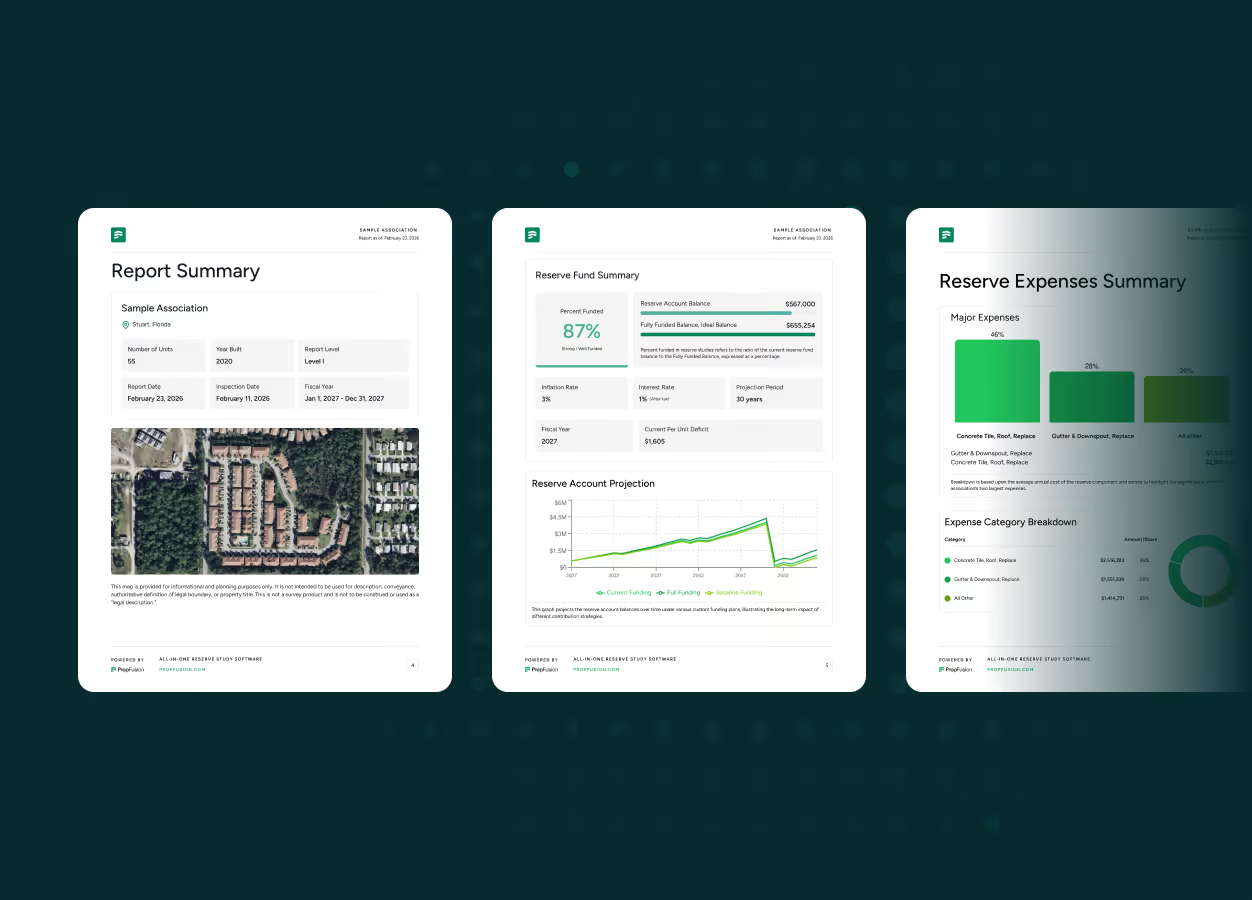
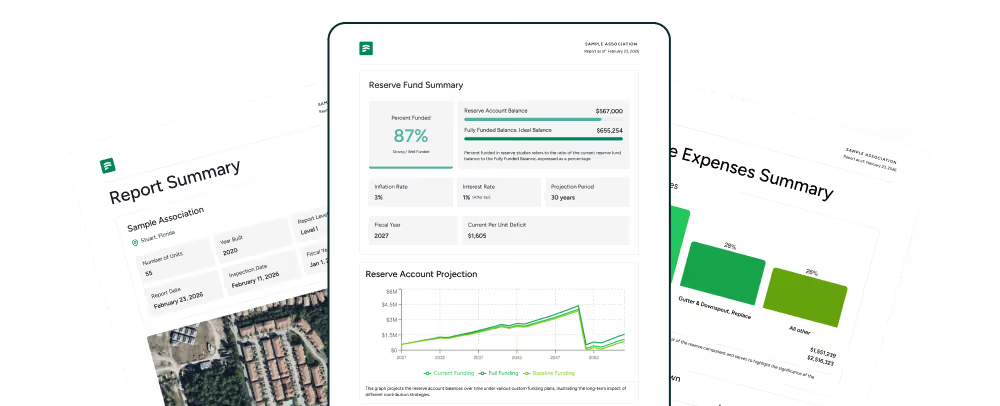
- Share clear, visual reports with boards and owners that explain why reserves matter and what different funding paths will mean for future assessments.
By combining Wyoming’s flexible legal framework with disciplined reserve planning and modern software, your association can avoid the pitfalls of “no mandate” while still benefiting from the autonomy that state law provides.
Related reserve study resources for Wyoming
Compare reserve study laws in nearby states, or find help running one for your association:
FAQ
How often should a Wyoming HOA or condo update its reserve study if there is no legal requirement?
A practical standard is to commission a full professional reserve study every three to five years and perform lighter internal updates annually. This cadence keeps cost estimates current and allows the board to adjust contributions gradually rather than reacting to emergencies.
Can a Wyoming association choose not to have a reserve fund at all?
Legally, yes-Wyoming does not require a reserve fund. However, opting for no reserves typically leads to large special assessments, cash-flow stress, and potential disputes among owners. From a fiduciary, marketability, and fairness standpoint, maintaining at least a modest reserve fund is strongly recommended.
Do lenders or buyers care about reserves in Wyoming if the state does not regulate them?
Yes. Many lenders, especially for condominium loans, review association financial statements and may treat very low reserves as a risk factor, regardless of state law. Buyers also increasingly ask about reserves, upcoming projects, and the likelihood of special assessments before committing to a purchase.
What should Wyoming boards document to show they are acting prudently on reserves?
Boards should document that they have: reviewed a reserve study or prepared a reasonable internal plan; discussed funding options; adopted a formal reserve funding policy; incorporated reserve contributions into the annual budget; and communicated the plan to owners. Clear documentation in minutes and budget materials is often as important as the numbers themselves.
If our Wyoming governing documents are silent, can the board still budget for reserves?
In most cases, yes. General authority to levy assessments for “common expenses” or “maintenance, repair, and replacement of common elements” is usually sufficient to justify reasonable reserve contributions, especially when tied to a documented reserve plan. When in doubt, seek legal advice and consider amending the documents to eliminate ambiguity.
Are there any Wyoming statutes that limit how much an association can increase assessments to fund reserves?
Wyoming does not have a universal cap on association assessment increases in its condominium or nonprofit corporation statutes. Any limits are likely to come from your own declaration or bylaws, which may require owner votes for certain levels of increase or for special assessments. Boards should review their governing documents carefully before implementing major changes.
The information contained on this page is provided for informational purposes only, and should not be construed as legal advice on any subject matter. You should not act or refrain from acting on the basis of any content included on this page without seeking legal or other professional advice. The contents of this page contain general information and may not reflect current legal developments or address your situation. We disclaim all liability for actions you take or fail to take based on any content on this report.
Get proposals from vetted reserve study professionals - with 30-year funding plans, powered by modern technology, and compared side by side for free.
Take the guesswork out of your reserve study
From site inspection to 30-year funding plan, PropFusion handles the entire reserve study - accurate, transparent, and built on modern technology that gives you full control over your reserves.