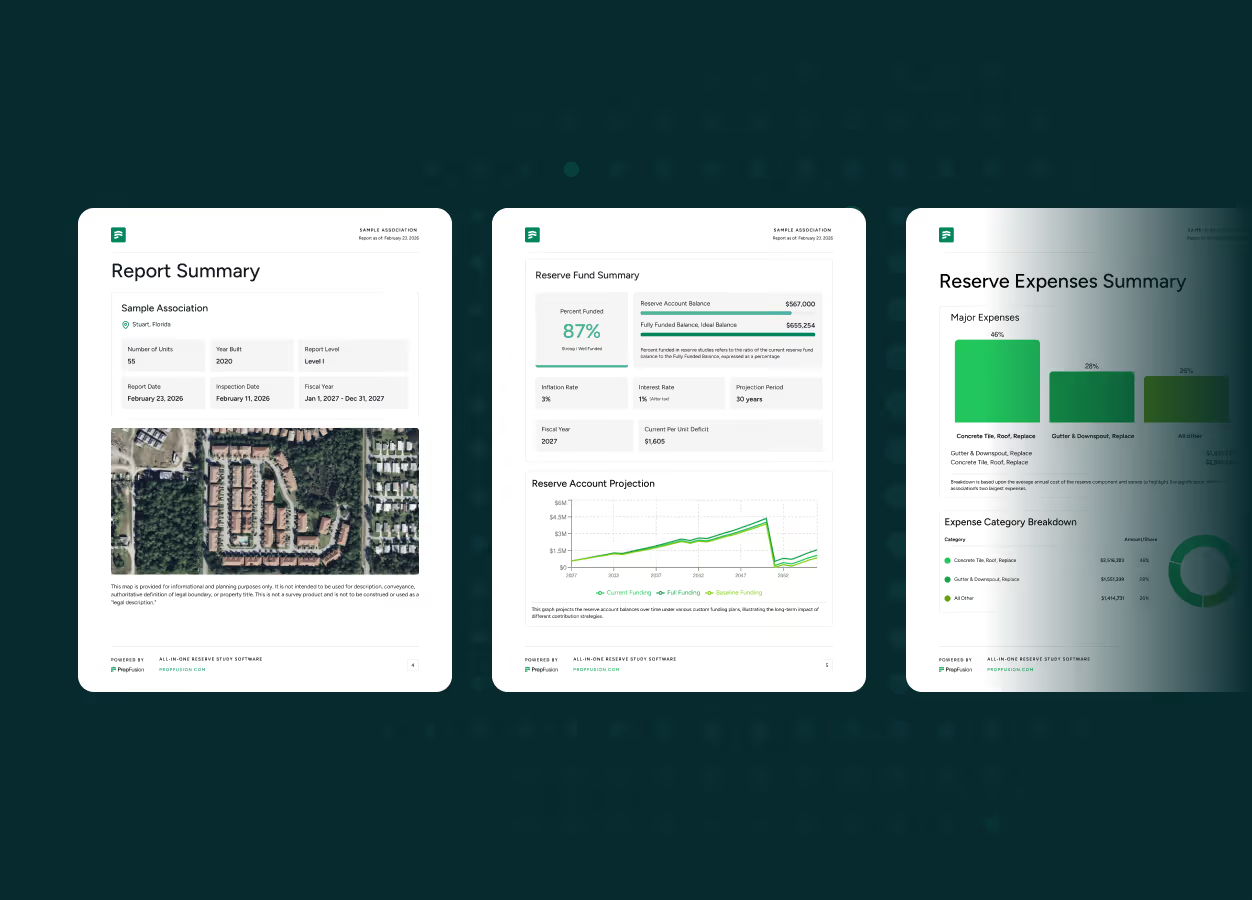
Washington Reserve Study Requirements (2026)
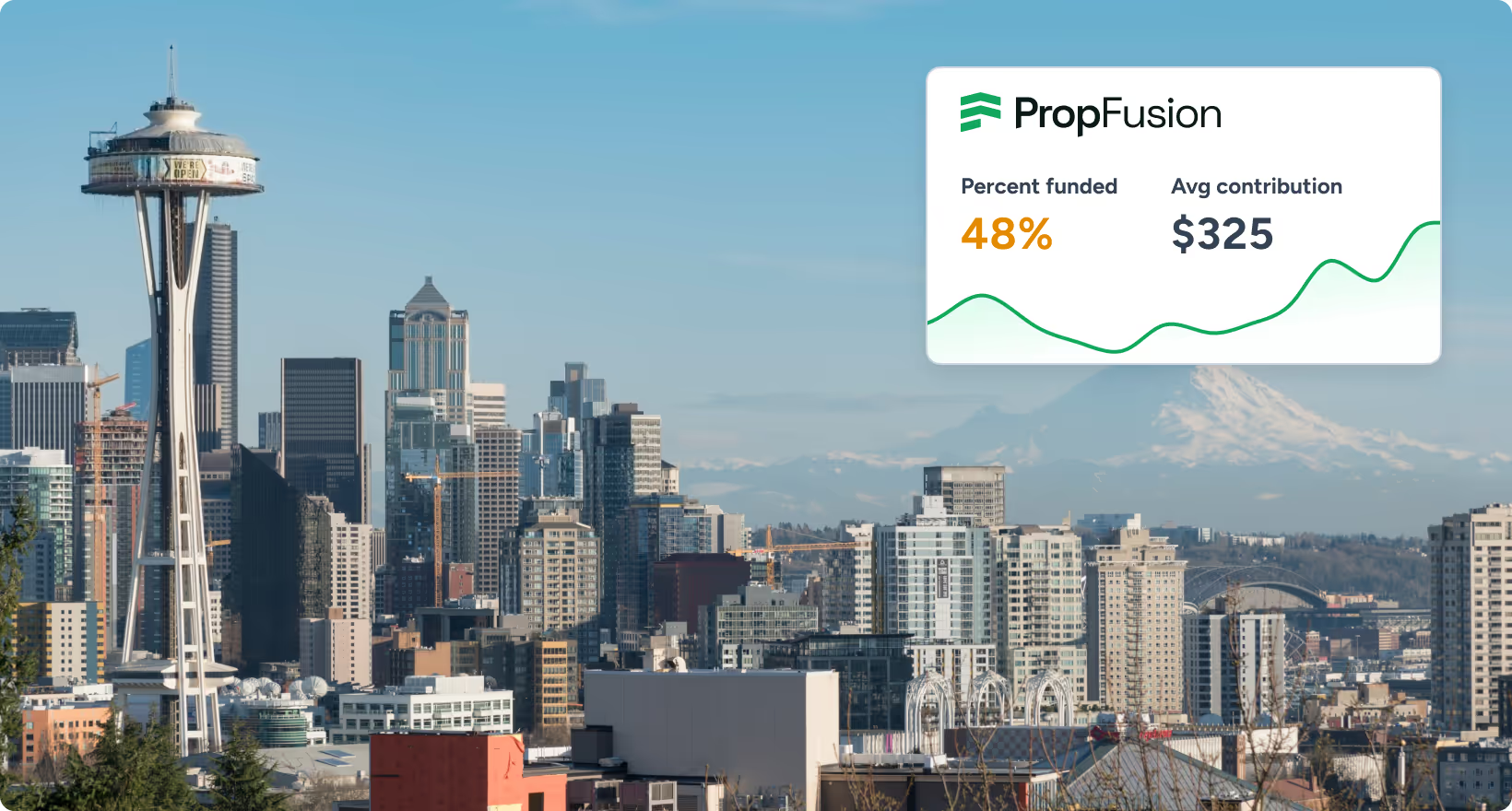
Washington is one of the strictest states in the country when it comes to reserve study requirements for community associations. Between the Washington Condominium Act (RCW 64.34), the Homeowners’ Associations Act (RCW 64.38), and the Washington Uniform Common Interest Ownership Act (RCW 64.90), most residential condominiums and homeowners’ associations that maintain meaningful common property are expected to prepare and regularly update a reserve study.
See the full reserve study requirements by state guide
At the same time, the law has evolved quickly. Older sections of the Condo Act and HOA Act are now cross-referenced with RCW 64.90 and scheduled for repeal in 2028, and there are narrow exemptions for certain nonresidential or “nominal reserve cost” communities.
This guide cuts through that complexity so Washington boards can understand what the law actually requires today, how often reserve studies must be updated, when an association might be exempt, and how to use reserve studies to comply with Washington state HOA budget laws and protect owners from surprise special assessments.
Legislation Link
RCW 64.38.065 - Washington Homeowners’ Associations Act
RCW 64.34.380 - Washington Condominium Act
RCW 64.90.545 - Washington Uniform Common Interest Ownership Act
Washington state HOA laws are primarily governed by three statutes: the Washington Condominium Act (RCW 64.34), the Homeowners' Association Act (RCW 64.38), and the newer Uniform Common Interest Ownership Act (RCW 64.90), which will eventually replace the older laws. Each statute sets different rules for reserve studies, reserve funding, and financial disclosures. Below, we break down which Washington HOA rules apply to your community and what your board must do to stay compliant.
Are reserve studies legally required for HOAs and condominiums in Washington state?
In practical terms, yes for most residential communities that maintain shared building systems or significant common elements. Condominiums are expressly covered under RCW 64.34.380 and, together with HOAs and other common interest communities, are now tied into RCW 64.90.545, which requires associations that are not exempt to prepare and update a reserve study on a regular schedule.
How often must Washington associations update their reserve study?
Washington law expects an annual update, with a full visual-site-inspection update by a reserve study professional at least every third year. That schedule appears in RCW 64.38.065 for HOAs and in RCW 64.90.545 for communities governed by the Uniform Common Interest Ownership Act.
Do Washington HOA reserve study requirements apply to very small or low-budget communities?
Some very small or low-budget communities can be exempt. Historically, older law allowed exemptions if the cost of the study exceeded a percentage of the budget, the association did not have significant assets, or there were ten or fewer homes. Under RCW 64.90.545 and related provisions, exemptions focus on nonresidential communities, communities with “nominal reserve costs,” and situations where the cost of the study would exceed a specified share of the annual budget. Boards in borderline cases should get legal advice before assuming they are exempt.
What are “Washington state HOA budget laws” in the context of reserve studies?
Washington budget laws require boards to prepare an annual budget, disclose reserve contributions, and share information from the most recent reserve study with owners. Under RCW 64.90, communities that are required to have a reserve study must circulate a summary and disclose whether the reserve funding plan is adequate, which directly ties reserve studies to the annual budget approval process.
Need a reserve study in Washington? Compare multiple reserve study proposals for free.
Get proposals from vetted reserve study professionals - with 30-year funding plans, powered by modern technology, and compared side by side for free.
Overview of Washington condo law and HOA reserve study requirements
Washington regulates reserve accounts and reserve studies through three main statutory frameworks:
- RCW 64.34 (Washington Condominium Act), including RCW 64.34.380 and related sections that require condominium associations to maintain a reserve account, prepare a reserve study, and update that study on a regular basis.
- RCW 64.38 (Homeowners’ Associations Act), including RCW 64.38.065 and RCW 64.38.070, which define reserve accounts, reserve studies, and the content that a compliant reserve study must contain for HOAs.
- RCW 64.90 (Washington Uniform Common Interest Ownership Act, or WUCIOA), particularly RCW 64.90.545 and 64.90.535, which now impose reserve study obligations across most common interest communities, and establish reserve account rules and enforcement mechanisms.
These regimes overlap. Existing condominium and HOA statutes have been amended to cross-reference RCW 64.90.545, and many of their reserve provisions are scheduled for repeal in 2028 as WUCIOA becomes the single framework.
For boards, the practical takeaway is simple: if your Washington association owns or maintains significant common property, you should assume that a reserve study is required unless you clearly fall within a specific statutory exemption.
Which Washington communities must obtain a reserve study
Washington law focuses on “associations with significant assets.” For most residential condominiums and HOAs, this includes any community that maintains roofs, building envelopes, private roads, parking lots, garages, elevators, clubhouses, pools, retaining walls, or other capital-intensive common elements with an expected life of more than a few years.
RCW 64.34.380 and 64.38.065 tie the requirement to these kinds of shared components, and RCW 64.90.545 extends the obligation broadly across common interest communities created after July 1, 2018, and to many older communities as well.
In practice, the following Washington associations should assume that reserve studies are part of their legal obligations:
- Residential condominium associations governed by RCW 64.34 or the older RCW 64.32.
- Homeowners’ associations with meaningful shared assets governed by RCW 64.38.
- Common interest communities created under RCW 64.90 after July 1, 2018, including mixed condominium and HOA structures.
- Many “old act” communities that, because of Chapter 64.90 RCW, are now subject to the same reserve study framework as newer communities.
The main categories that may be exempt are narrowly defined: nonresidential communities, communities with “nominal reserve costs” as defined in RCW 64.90.010, and communities where the cost of a reserve study exceeds a percentage of the annual budget.
Even then, these are technical determinations, and boards should confirm their status with qualified counsel rather than assuming they are outside the reserve study requirements.
How often Washington reserve studies must be updated
A recurring theme in Washington’s reserve law is that reserve planning is not a one-time exercise. RCW 64.38.065 and RCW 64.90.545 both require associations that are not exempt to:
- Prepare an initial reserve study based on a visual site inspection by a reserve study professional.
- Update the reserve study every year.
- Ensure that at least once every third year, the updated study is again based on a new visual site inspection by a reserve study professional.
Boards must treat it as a standing obligation tied to the annual budget cycle. A common best practice is to:
- Commission a full Level I or Level II reserve study (with site inspection) every three years.
- Use Level III “no site visit” updates in the off years, updating costs, inflation, and completed projects.
- Align each annual budget with the current reserve funding plan so owners see clearly how reserve contributions match upcoming capital needs.
Required contents of a Washington reserve study
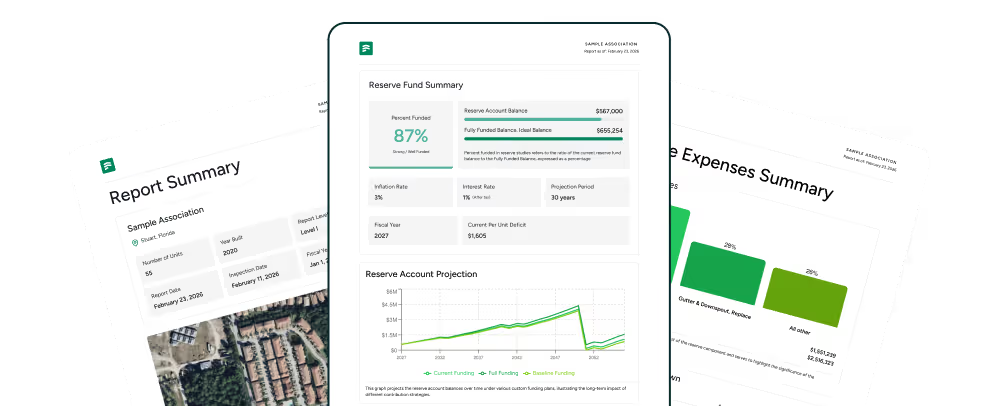
Washington is unusually prescriptive about what a reserve study must contain. RCW 64.38.070 and the condominium counterparts (64.34.382 and related sections) describe a detailed content list, which has been echoed for WUCIOA communities. At a minimum, a compliant reserve study should include:
- A reserve component list identifying each major component that will require significant maintenance, repair, or replacement, typically any item that would cost more than one percent of the annual budget.
- For each component: remaining useful life, total useful life, and current estimated replacement cost.
- The association’s current reserve account balance and the percentage of “fully funded” reserves.
- A 30-year projection of reserve account balances, expected expenditures, and recommended contribution rates.
- At least two funding approaches: a full-funding plan targeting 100 percent funding by the end of the period, and a baseline plan that keeps the reserve balance above zero without unplanned special assessments.
- A clear disclosure that the study may not include every possible component and that missing components can still require special assessments, as required by statute.
How reserve studies tie into Washington HOA budget laws
Reserve studies are not just engineering reports. Under Washington state HOA budget laws, they directly inform the annual budget process and what must be disclosed to owners. WUCIOA requires that for associations subject to RCW 64.90.545, the board must:
- Include the cost of preparing or updating a reserve study in the annual budget when required.
- Circulate a budget summary and, in many cases, a summary of the most recent reserve study to owners.
- Disclose whether current assessments are projected to meet the recommended reserve funding level, and the consequences if they do not.
Older provisions in RCW 64.38 allow owners holding a portion of the association’s voting power to demand that the cost of a reserve study be included in the next budget if the association has gone too long without an update.
Under RCW 64.90.555, owners can also petition the court to compel compliance with reserve study requirements and may be awarded attorneys’ fees if they prevail.
What happens if a Washington association ignores reserve study requirements
Washington law distinguishes between damages and enforcement. Under RCW 64.38.085, HOAs and their boards cannot be sued for money damages solely because they failed to establish a reserve account or prepare a current reserve study, but that does not mean the law can be ignored.
WUCIOA adds teeth by allowing owners to demand a reserve study and seek a court order forcing the association to comply, including potential fee-shifting for attorneys’ fees. (wildernessrim.org)
Beyond formal enforcement, a missing or outdated reserve study creates real-world problems:
- Buyers and lenders increasingly expect current reserve information and may view the association as risky without it.
- Boards have little defense when they impose large special assessments if they have not followed statutory reserve planning practices.
- Communities risk falling short of future major repair needs, especially in climates where roofs, siding, and pavement deteriorate quickly.
Upcoming changes and the 2028 transition
The Washington legislature has already signaled that WUCIOA will ultimately govern reserve studies across common interest communities.
The RCW dispositions table for Chapter 64.34 shows that sections 64.34.380 through 64.34.392, which currently handle condominium reserve accounts and studies, are scheduled for repeal effective January 1, 2028. Similar changes apply across the chapter.
For boards, the safe strategy is to:
- Follow the existing detailed requirements in RCW 64.34 and 64.38 while they remain in force.
- Ensure your practices are already consistent with RCW 64.90.545 and its annual-plus-three-year inspection schedule.
- Treat any exemptions as narrow and carefully documented.
That way, as older statutes are retired and WUCIOA becomes the single framework, your association will already be operating at or above the required standard.
Broader Washington HOA law: governance, assessments, and owner rights
Reserve studies are just one part of Washington’s comprehensive HOA regulatory framework. Boards searching for information on Washington HOA laws should understand how reserve obligations fit within the broader governance structure established by WUCIOA and the older statutes.
Board governance and elections
Under RCW 64.90, boards must follow specific rules for director elections, terms of service, and removal procedures. Association elections must use secret ballots in most cases, and boards are required to maintain accurate records of all votes. Directors who fail to fulfill their fiduciary duties, including neglecting reserve study obligations, can face removal by the membership.
Assessments, liens, and collections
Washington HOA law gives associations the power to levy assessments against owners and enforce payment through liens on the property. Under RCW 64.90.485 and related sections, an association’s lien for unpaid assessments has priority over most other liens except certain tax and mortgage liens. This assessment authority is directly tied to reserve funding — if the reserve study shows that higher contributions are needed, the board has the legal tools to adjust assessments accordingly.
Meetings, records, and owner rights
WUCIOA requires associations to hold open board meetings, provide owners with access to financial records including reserve study documents, and give proper notice before taking major actions. Owners have the right to inspect the association’s books, including the current reserve study, reserve account statements, and budget documents that show how reserve contributions are being allocated.
Recent legislative activity: WUCIOA expansion
The Washington legislature has progressively expanded WUCIOA’s reach. Senate bills including SB 5129 and SB 5796 have been part of a broader effort sometimes called “WUCIOA for All,” which aims to bring all existing common interest communities — not just those created after 2018 — under the uniform act. For boards, this means that even older communities that previously operated under the less prescriptive provisions of RCW 64.34 or 64.38 should expect to meet WUCIOA’s standards for reserve studies, financial disclosures, and governance practices in the near future.
Dispute resolution
Washington encourages alternative dispute resolution for HOA conflicts. Under RCW 64.90.680, associations and owners are generally required to offer or participate in mediation or arbitration before filing suit over most disputes. Reserve-related disagreements — such as challenges to special assessments imposed because of inadequate reserves — often fall within the scope of these dispute resolution provisions. Boards that maintain a current reserve study and follow its recommendations are in a much stronger position if a dispute reaches mediation or court.
Related reserve study resources for Washington
Compare reserve study laws in nearby states, or find help running one for your association:
FAQ
What is the difference between RCW 64.34, 64.38, and 64.90 for reserve studies in Washington?
RCW 64.34 is the Washington Condominium Act and contains detailed rules on condominium reserves and reserve studies. RCW 64.38 is the Homeowners’ Associations Act and addresses reserve accounts and studies for HOAs. RCW 64.90, the Washington Uniform Common Interest Ownership Act, overlays both and increasingly serves as the primary framework, requiring reserve studies for most common interest communities unless a specific exemption applies.
Are Washington reserve study requirements different for condominiums and HOAs?
The statutes are organized separately, but the practical requirements are now similar. Condominiums and HOAs with significant assets are expected to prepare an initial reserve study, update it annually, and obtain a new visual site inspection at least every third year. Some terminology and cross-references differ between RCW 64.34 and 64.38, but RCW 64.90.545 has harmonized the core obligations.
Can a Washington HOA or condo association vote to waive its reserve study entirely?
Under older law, there were more explicit exemptions tied to budget percentage thresholds and small association size, and some boards treated reserve studies as optional. With RCW 64.90.545 in place, the focus has shifted to narrow statutory exemptions for nonresidential communities, nominal reserve cost communities, and cases where a study would create an unreasonable hardship. A simple member vote is not a reliable way to “waive” the requirement, and boards should not assume they can opt out without a clear statutory basis.
How do Washington reserve study rules apply to very small communities with a few homes and minimal common property?
Small plat or single-family associations that maintain only minimal shared property sometimes qualify as having “nominal reserve costs” or find that the cost of a formal reserve study would exceed the allowed share of the annual budget. In those cases, they may be exempt. However, the thresholds and definitions are technical, and an incorrect assumption about exemption can create problems during sales, refinancing, or disputes. Legal advice is strongly recommended for any community that thinks it might be exempt.
What should a Washington board do if no reserve study has been performed in the last three years?
The safest approach is to treat that as a compliance gap. Boards should budget for a full reserve study by a qualified reserve study professional, schedule a site inspection, and implement the recommended funding plan. If owners demand a study under RCW 64.38 or RCW 64.90, the board may be legally obligated to include the cost in the next budget and complete the study by a specific deadline.
How do Washington reserve study requirements affect resale disclosures and buyer confidence?
Buyers, lenders, and their advisors increasingly review reserve balances and reserve study summaries in Washington. A current, statute-compliant reserve study that is reflected in the budget signals that the community is proactive and financially healthy. A missing, outdated, or clearly noncompliant study raises red flags and can reduce buyer confidence, affect lending decisions, and make it harder to justify large special assessments.
How can PropFusion help a Washington board implement what the statutes require?
PropFusion gives boards a structured place to store Washington reserve studies, test funding scenarios, and tie reserve contributions directly to the annual budget. Instead of manually updating spreadsheets, boards can use the platform to keep their reserve plan aligned to RCW content expectations, get visibility into upcoming projects, and share clear, understandable reserve information with owners and management.
The information contained on this page is provided for informational purposes only, and should not be construed as legal advice on any subject matter. You should not act or refrain from acting on the basis of any content included on this page without seeking legal or other professional advice. The contents of this page contain general information and may not reflect current legal developments or address your situation. We disclaim all liability for actions you take or fail to take based on any content on this report.
Get proposals from vetted reserve study professionals - with 30-year funding plans, powered by modern technology, and compared side by side for free.
Take the guesswork out of your reserve study
From site inspection to 30-year funding plan, PropFusion handles the entire reserve study - accurate, transparent, and built on modern technology that gives you full control over your reserves.