OK Reserve Study Requirements (2026)

Oklahoma is one of the many states where there is no specific statute that forces homeowners associations or condominium associations to perform a reserve study or to maintain a minimum reserve fund. That does not mean reserves are optional in practice. Lenders, buyers, and prudent owners increasingly expect boards to have a clear plan for long-term repairs and replacements.
See the full reserve study requirements by state guide
This guide explains how Oklahoma law treats reserves, what that means for your HOA or condominium association, and how to apply national best practices to build a stable reserve funding plan. It also outlines how reserve studies, while not mandated, can help your community avoid special assessments, smooth out contributions, and protect property values over time.
Legislation Link
Oklahoma Unit Ownership Estate Act
Oklahoma Real Estate Development Act
Oklahoma General Corporation Act
Are HOA or condo reserve studies legally required in Oklahoma? No. Multiple industry and legal summaries confirm that Oklahoma has no statute requiring HOAs or condominium associations to perform reserve studies.
Does Oklahoma law require an HOA to maintain a specific reserve fund? No. There is no Oklahoma statute that obligates associations to allocate money to reserves or to maintain a certain funded percentage. Boards decide their reserve funding levels unless their governing documents impose specific requirements.
If there is no law, do we still need a reserve study? Legally, you are not required to have one. Practically, a reserve study is one of the most important tools for avoiding special assessments, planning major projects, and meeting buyer and lender expectations. Many Oklahoma communities voluntarily commission reserve studies every 3-5 years.
Can our CC&Rs or bylaws require reserves even if the state does not? Yes. Your declaration, CC&Rs, or bylaws may require the association to maintain reserves or follow a particular funding policy. Those provisions are enforceable even though the state statutes are silent on reserves, so boards should always review and follow their governing documents.
Need a reserve study in Oklahoma? Compare multiple reserve study proposals for free.
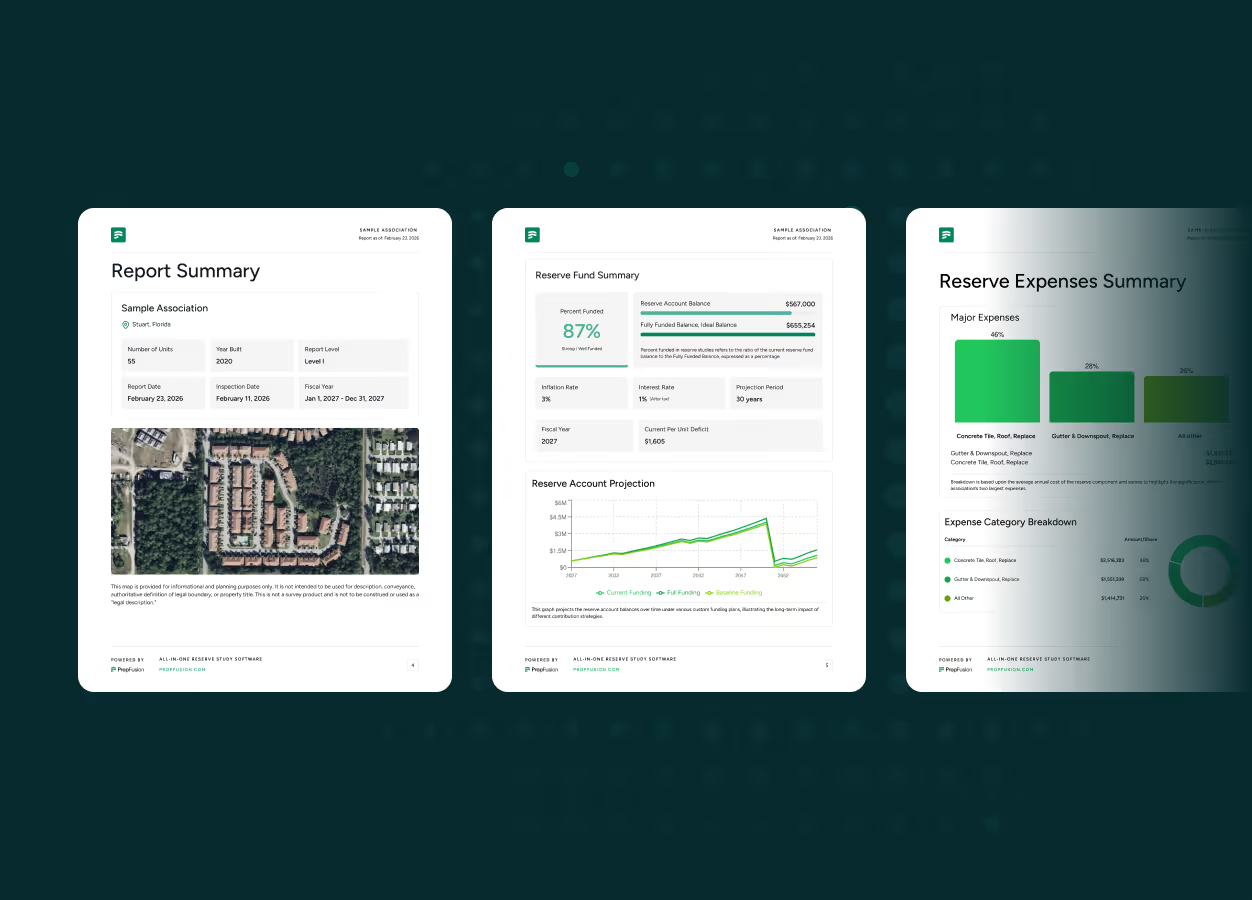
Get proposals from vetted reserve study professionals - with 30-year funding plans, powered by modern technology, and compared side by side for free.
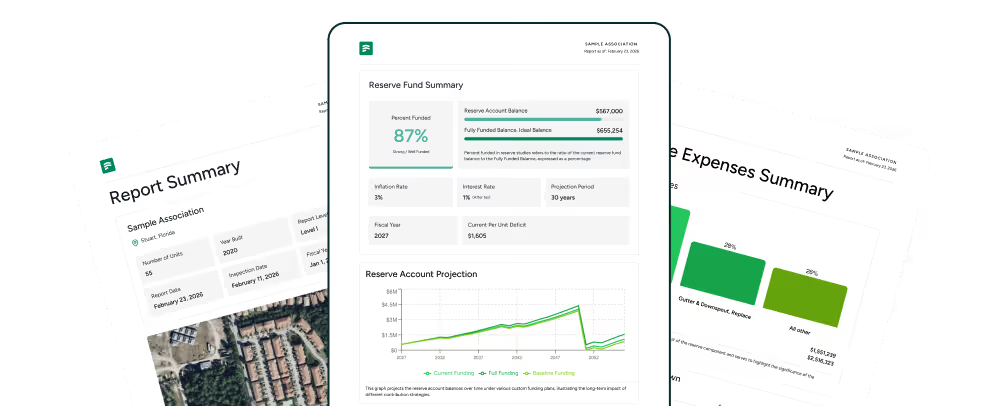
Snapshot: Reserve studies in Oklahoma
From a statutory standpoint, Oklahoma is straightforward: there is no state law that requires HOAs or condo associations to carry out reserve studies or to fund reserves at any particular level.
The key statutes - the Unit Ownership Estate Act for condominiums and the Real Estate Development Act for homeowners associations - define how associations are formed, operated, and empowered to assess owners, but they do not mention reserve studies or prescribe minimum reserve contributions.
Despite this, reserve planning is not optional if your community wants to avoid financial surprises. Buyers now routinely ask about reserve balances. Lenders and underwriters look at reserves when deciding whether they will lend in your community.
And owners rightly expect the board to plan ahead for roofs, paving, mechanical systems, and other major components that will eventually wear out.
What Oklahoma law actually says about HOAs and condos
For condominiums, the Oklahoma Unit Ownership Estate Act (Title 60, §§ 501-530) defines the framework for unit ownership estates, common elements, association governance, and assessments.
It authorises the condo association to levy assessments for common expenses and maintain the property, but it does not require a formal reserve study or dictate reserve fund amounts.
For HOAs and planned developments, the Real Estate Development Act (Title 60, §§ 851-858) creates “owners associations” and describes their authority to manage common areas, enforce covenants, and assess owners.
Again, it gives boards the power to collect assessments and manage funds but does not specify how much must be placed into reserves or how often long-term needs must be analysed. (Justia)
Finally, most associations in Oklahoma are organised as nonprofit corporations under the General Corporation Act (Title 18). That Act governs corporate governance, board duties, and record-keeping, but it remains silent on reserve studies and reserve funding thresholds. (eppersonlaw.com)
Put together, the statutory picture is:
- No state-mandated reserve study requirement.
- No state-mandated reserve funding minimums.
- Boards have broad discretion, subject to their governing documents and general fiduciary duties.
What “no statutory requirement” really means for your board
It is easy for boards to misinterpret “no legal requirement” as “we do not need to worry about reserves.” In reality, it means your board carries more of the responsibility:
- Owners will look to the board, not the legislature, for financial discipline.
- Courts and regulators will still expect directors to act prudently and in the best interest of the association.
- Lenders and buyers will judge the association based on its financial statements and disclosure packages, not on whether a statute forced you to do a study.
Several national and regional resources highlight that in Oklahoma, there is “no legal obligation to perform a reserve study or allocate funds for reserves,” but they still recommend that boards build and follow a reserve funding plan. That is because the absence of a legal mandate does not protect you from the financial consequences of underfunding.

Role of your governing documents
In Oklahoma, your governing documents can be stricter than state law. It is common to see provisions that:
- Require the board to include a reserve line item in the annual budget.
- Mandate that a certain percentage of assessments be placed into reserves.
- Require an engineer’s report, reserve study, or capital plan at specific intervals.
- Set rules for using, borrowing from, or replenishing reserve funds.
If your CC&Rs, declaration, or bylaws contain these types of requirements, the board must follow them. The fact that Oklahoma statutes are silent on reserves does not give the board permission to ignore its own governing documents.
Boards should:
- Have association counsel review the documents and flag any reserve-related language.
- Document in the minutes how the annual budget and reserve contributions comply with those provisions.
- If the documents are outdated, consider a formal amendment process to modernise reserve policies rather than informally ignoring them.
Best-practice reserve funding for Oklahoma associations
Because state law does not set a target, Oklahoma boards should lean on national best practices rather than simple rules of thumb.
A strong approach looks like this:
- Commission a professional reserve study: A qualified reserve specialist or engineer inspects major common elements (roofs, siding, paving, mechanical systems, amenities) and creates a component list with remaining useful lives, replacement costs, and a long-term funding plan.
- Move toward a 70-100% funded position over time: While there is no statute requiring a specific “percent funded,” many industry guidelines consider an association “weak” below about 30-40% funded, “fair” in the 40-70% range, and “strong” above about 70%. The closer you are to fully funded, the lower your risk of special assessments.
- Use rules of thumb only as a temporary fallback: Some Oklahoma communities that have never done a study contribute 10-20% of their annual operating budget to reserves as an interim measure. That is better than nothing, but it should not replace a proper engineering-based calculation.
- Keep reserves in a separate account: Even though Oklahoma law does not explicitly require segregated reserves, it is best practice to maintain reserves in their own account(s) and track them separately in your financial statements.
How often should Oklahoma HOAs and condos update a reserve study?
Again, Oklahoma statutes are silent. Industry standards fill the gap:
- Full reserve study (with site visit) every 5 years: This refreshes component lists, useful life estimates, and cost projections.
- Update or “level two” study every 3 years: Between full site visits, many associations update the financial model and timing based on actual expenditures and cost changes.
- Annual budget check-in: Each year, compare your planned reserve contributions with your reserve study recommendations and adjust as needed.
This cadence aligns with the practices in many states that do have formal reserve study requirements, which makes your Oklahoma association easier to compare for lenders and buyers even though your state does not mandate it.
Communicating with owners about reserves
Because Oklahoma law does not force you to present a specific reserve study disclosure, communication is largely up to your board. Good practice includes:
- A clear reserve section in the annual budget package, showing:
- Opening reserve balance.
- Planned contributions.
- Projected expenditures.
- Ending reserve balance.
- A plain-language summary of your reserve study:
- What components were analysed.
- How long your reserves are expected to last under current funding.
- Whether your association is underfunded, adequately funded, or overfunded.
- Honest discussion of trade-offs:
- Keeping assessments artificially low today almost always leads to special assessments later.
- Gradual, predictable increases are easier for most owners to handle than emergency levies.
Documenting these communications in board minutes is also helpful if questions arise later about the board’s diligence.
Related reserve study resources for Oklahoma
Compare reserve study laws in nearby states, or find help running one for your association:
FAQ
Are HOA reserve funds required by law in Oklahoma?
No. Current summaries of Oklahoma HOA reserve fund laws agree that there is no legal obligation to create or fund a reserve account at the state level. Your governing documents may still require reserves, so they must be reviewed carefully.
Does any Oklahoma statute mention reserve studies by name?
No. Neither the Unit Ownership Estate Act nor the Real Estate Development Act refers to reserve studies or sets a schedule for them. They focus on association formation, powers, and assessments, leaving reserve planning to boards and their governing documents.
If there is no legal requirement, why should our board invest in a reserve study?
A reserve study gives your board a roadmap for major repairs and replacements. It helps you avoid special assessments, smooth out dues increases, and maintain property values. It also reassures buyers and lenders that the association is being managed prudently, which can directly affect marketability and financing.
How much should an Oklahoma HOA contribute to reserves each year?
There is no statutory percentage in Oklahoma. Many associations start by contributing around 10-20% of the annual operating budget to reserves as a temporary rule of thumb, but the proper number should come from a professional reserve study that factors in your actual components, timing, and costs.
Can owners vote to reduce or skip reserve contributions in Oklahoma?
Because there is no state-mandated minimum, owners in many communities can amend budgets or governing documents to reduce reserve funding. However, doing so increases the risk of future special assessments, deferred maintenance, and reduced property values. Boards should seek legal advice before proposing or approving any such changes.
How often do best-run Oklahoma communities update their reserve studies?
Strong boards typically commission a full reserve study with a site visit every 5 years, update the numbers every 3 years, and review the funding plan annually during budget season. That cadence mirrors many states with formal requirements and keeps the plan realistic as costs and conditions change.
Where can our board read the actual laws that govern our Oklahoma HOA or condo?
You can review the official Oklahoma Statutes Title 60 (Property), which includes the Unit Ownership Estate Act and Real Estate Development Act, and Title 18 (General Corporation Act) on the Oklahoma Legislature and Oklahoma Senate websites. These statutes define how associations are formed and governed but do not impose reserve study or reserve funding mandates.
The information contained on this page is provided for informational purposes only, and should not be construed as legal advice on any subject matter. You should not act or refrain from acting on the basis of any content included on this page without seeking legal or other professional advice. The contents of this page contain general information and may not reflect current legal developments or address your situation. We disclaim all liability for actions you take or fail to take based on any content on this report.
Get proposals from vetted reserve study professionals - with 30-year funding plans, powered by modern technology, and compared side by side for free.
Take the guesswork out of your reserve study
From site inspection to 30-year funding plan, PropFusion handles the entire reserve study - accurate, transparent, and built on modern technology that gives you full control over your reserves.