NH Reserve Study Requirements (2026)

New Hampshire does not currently mandate that homeowner associations or condominium associations perform reserve studies or fund reserves at a specific minimum level. That can create a false sense of freedom for boards that assume “no law” means “no need to plan.” In reality, the long-term health of a New Hampshire community still depends on disciplined reserve planning and transparent communication with owners.
See the full reserve study requirements by state guide
This guide explains how New Hampshire’s legal framework, especially the New Hampshire Condominium Act (RSA 356-B), affects reserve funds and financial disclosures, what is and is not legally required, and which best practices boards should adopt anyway. Whether your association is a small townhouse condominium or a large mixed-use community, this page is designed to be your most practical reference on New Hampshire reserve fund requirements and reserve study expectations.
Legislation Link
New Hampshire Condominium Act (RSA 356-B)
New Hampshire Condominium and Subdivision Registration
NH Condo Law: Enhanced Governance Requirements
Are reserve studies legally required for HOAs and condos in New Hampshire? New Hampshire law does not currently require associations to commission reserve studies, either at the time of creation or under homeowner control. Reserve studies are an industry best practice rather than a statutory obligation.
Does New Hampshire require HOAs or condominium associations to fund reserves at a specific minimum level? No. There is no statutory requirement that New Hampshire associations fund reserves to a particular percentage of the budget or to any fixed threshold. How much to set aside is largely driven by the governing documents and board decisions.
Are there any disclosure requirements about reserve funds under New Hampshire law? Yes. For condominiums, public offering statements and resale disclosures must provide information about the status and amount of any reserve for major maintenance or replacement, which means boards must understand and track their reserve position even if funding is not mandated.
Do these rules apply only to condominiums, or to all HOAs in New Hampshire? The New Hampshire Condominium Act (RSA 356-B) applies specifically to condominium associations created under that statute. Other forms of HOAs may not be covered by the same provisions, so their reserve practices are primarily dictated by declarations, bylaws, and good governance standards.
Need a reserve study in New Hampshire? Compare multiple reserve study proposals for free.
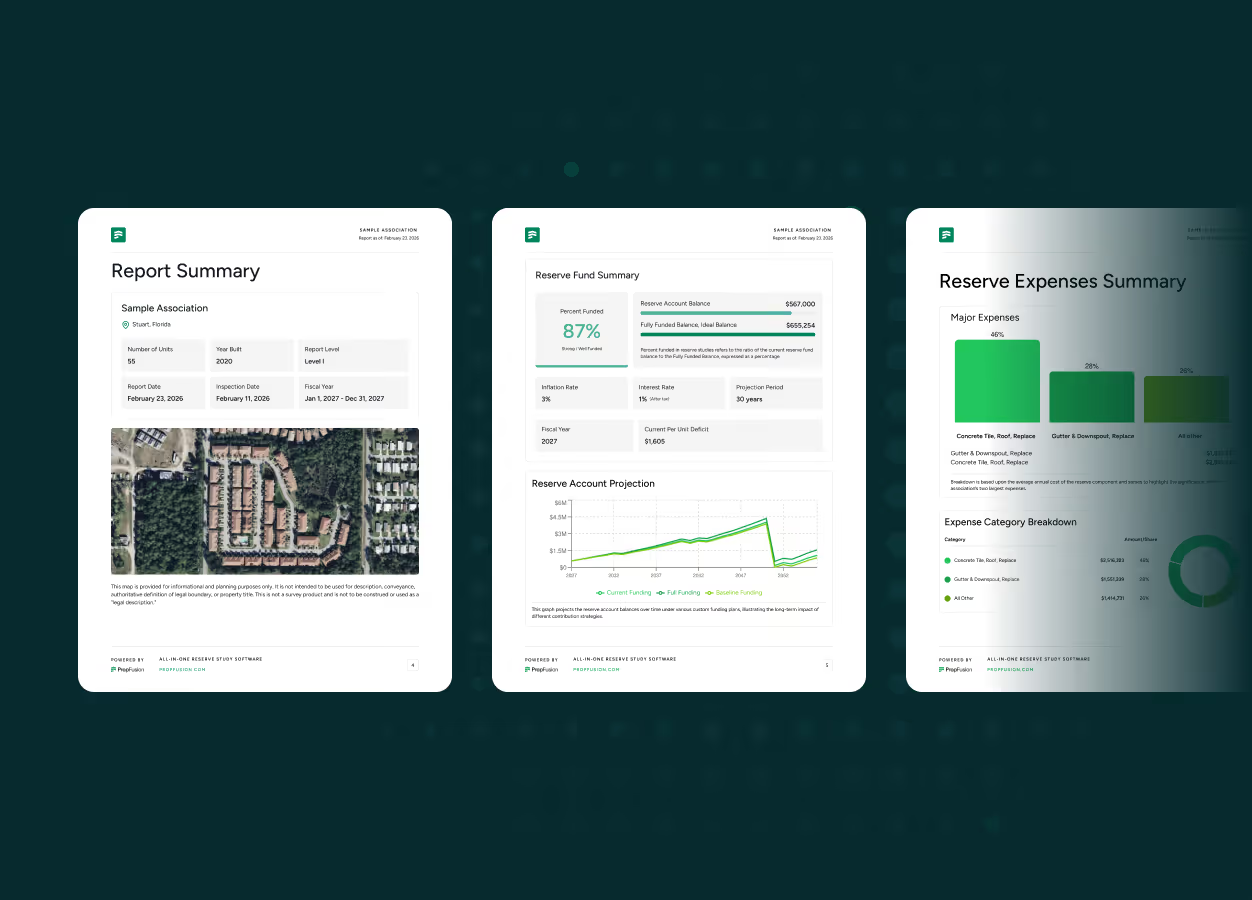
Get proposals from vetted reserve study professionals - with 30-year funding plans, powered by modern technology, and compared side by side for free.
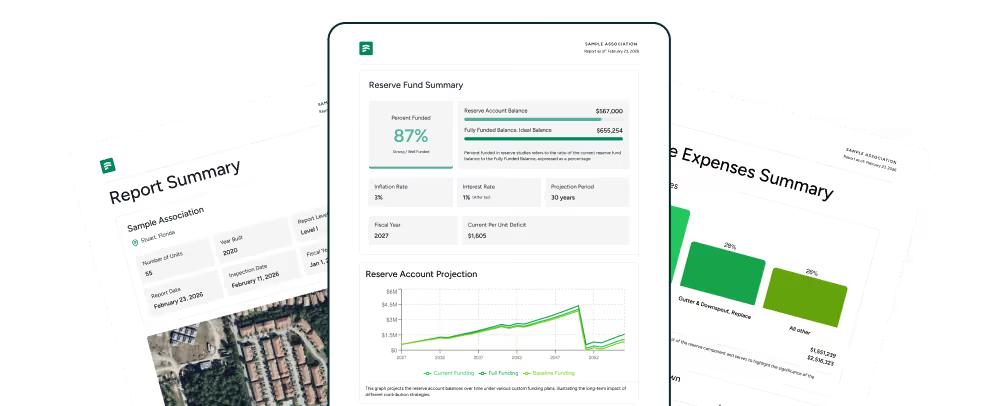
Overview of New Hampshire reserve fund and reserve study landscape
New Hampshire is in a middle position compared to other states. It has a comprehensive Condominium Act (RSA 356-B) that governs how condominium associations are created, managed, and disclosed, but it does not go as far as requiring reserve studies or mandating a specific reserve funding formula.
The law is more focused on governance, disclosure, and consumer protection than on dictating technical reserve practices.
For boards, this means there are two layers of responsibility. First, you must comply with the disclosure and governance rules that do exist. Second, you must still manage long-term capital projects responsibly, even without a statute telling you exactly how to do it.
A well-prepared board treats reserve planning as a core fiduciary duty, not just a legal checkbox.
Legal framework: what the New Hampshire Condominium Act actually says
The New Hampshire Condominium Act applies to condominiums created after 1977 and lays out how declarations, bylaws, budgets, and association powers work. It defines “common expenses” broadly to include both current operating costs and any funds assessed to create or maintain reserves, when those reserves are authorized in the condominium instruments.
There are three important legal touchpoints for reserve planning under RSA 356-B:
- Budgets and financial transparency. Boards must adopt budgets and disclose financial information to unit owners. While the statute does not prescribe a specific reserve funding level, budgets typically indicate whether a major maintenance or replacement fund exists and how it will be funded over time.
- Public offering statements. When a condominium project is first offered for sale, the public offering statement must describe the status and amount of any reserve set aside for major maintenance or replacement, as well as any portion earmarked for specific projects. This forces the declarant and early board to think explicitly about long-term capital needs.
- Resale and buyer disclosure. When a unit is resold, New Hampshire law gives prospective buyers the right to obtain key information from the association, including statements about anticipated capital expenditures and the status and amount of any reserve fund. A separate statute requires sellers to notify buyers that they have this right.
Combined, these provisions do not require a reserve study or a particular funding formula, but they do require that boards know where their reserves stand and be prepared to disclose that information accurately.

No statutory reserve study or reserve funding mandate
Industry summaries are clear on two critical points for New Hampshire: there is no statutory requirement to conduct a reserve study, and there is no statutory requirement to fund reserves. The state does not tell a board how often to commission a study, what methodology to use, or what funding percentage to maintain.
Practically, this does not mean reserves are optional in a business sense. Lenders, insurers, and buyers increasingly expect associations to have documented capital plans and reasonable reserve balances.
A New Hampshire association that skips reserve planning simply because there is no statute is more likely to suffer special assessments, property value erosion, and reputational damage in the market.
How boards should think about reserve studies in New Hampshire
Even without a legal mandate, reserve studies are the single most effective way to set rational, defensible reserve funding levels. A typical study for a New Hampshire HOA or condo will:
- Inventory all common elements with significant replacement cost: roofs, siding, pavement, decks, elevators, mechanical systems, amenities, and site improvements.
- Estimate remaining useful life and replacement cost for each component, using local cost data and site inspections.
- Build a year-by-year funding model that aims to keep reserves at a level where major projects can be paid for without emergency assessments.
For most New Hampshire communities, commissioning a full reserve study every 3 to 5 years, with lighter updates in between, is a realistic baseline. This cadence aligns with industry standards and is frequent enough to capture inflation, construction cost changes, and shifts in project scope.
Reserve funding strategies for New Hampshire associations
Because there is no mandated formula, boards in New Hampshire have flexibility to choose a funding approach that matches their community’s risk tolerance and demographics. Common strategies include:
- Full funding, where reserves are built up to match the projected deterioration of all components across the full 30-year (or similar) horizon.
- Threshold or “minimum balance” funding, where the board targets a lower but still substantial reserve balance that is sufficient to avoid most special assessments in the near to medium term.
- Conservative “pay-as-you-go” strategies, which are usually only viable for small, simple associations with few shared elements.
Regardless of approach, New Hampshire boards should document their chosen policy, tie it explicitly to the latest reserve study or capital plan, and show owners how annual assessments support that policy. This documentation is important not only for governance, but also for satisfying lenders and for preparing accurate resale disclosures. (newenglandcondo.com)
Condominium versus non-condominium HOAs
Most of the statutory framework discussed above is written for condominiums. Many communities that people casually call “HOAs” in New Hampshire are in fact condominiums legally, and they are governed by RSA 356-B.
For planned communities that are not organized as condominiums, there is less specific state-level direction on reserves. In those cases, reserve funding obligations flow mainly from the recorded declaration and bylaws, plus any additional requirements imposed by lenders or master insurers.
The best practice for non-condominium HOAs is to mimic the discipline of condominium reserve planning: treat long-term capital items as shared obligations, establish a separate reserve account, and adopt a written policy about contributions and use of funds.
Practical steps for New Hampshire boards
A New Hampshire board that wants to move from “bare minimum” to “well-run” should:
- Commission an initial reserve study or capital plan, even though it is not legally required.
- Adopt a board resolution describing your reserve funding objective and how annual assessments will support it.
- Ensure the annual budget and disclosure documents clearly show reserve contributions and projected projects.
- Maintain a dedicated reserve account separate from operating funds, with clear internal controls.
- Review and update the reserve study every 3 to 5 years, or sooner if major projects or cost changes arise.
- Build your resale disclosure process around up-to-date reserve information so that buyers receive accurate, consistent data.
These steps position your community to handle major repairs proactively, comply with disclosure requirements, and demonstrate sound financial stewardship to current and future owners.
How PropFusion supports New Hampshire communities
PropFusion is designed to make this entire process easier for New Hampshire HOAs and condominium associations. Through our platform, boards and managers can:
- Centralize their reserve study data and capital projects in a single dashboard, instead of chasing spreadsheets.
- Build and compare multiple funding plans, so you can see how different assessment levels affect future reserve balances and the risk of special assessments.
- Track upcoming expenditures, prioritize projects, and keep stakeholders aligned on timing and cost.
For New Hampshire boards, this means you can move quickly from a static PDF reserve study to a live planning tool that supports better budget decisions, more accurate disclosure, and clearer communication with owners.
Key takeaways for New Hampshire reserve fund planning
- New Hampshire does not require reserve studies or mandate specific reserve funding levels, but it does require meaningful financial and reserve-related disclosures, especially for condominiums.
- Boards remain responsible for long-term capital planning and will be judged by owners, buyers, and lenders on how well they manage reserves.
- Using regular reserve studies, written funding policies, and modern planning tools allows New Hampshire communities to stay ahead of major projects and avoid disruptive assessments.
Always remember that this guide is for informational purposes only and is not legal advice. Associations should consult New Hampshire counsel familiar with RSA 356-B and with their specific governing documents before making binding decisions about reserves or disclosures.
Related reserve study resources for New Hampshire
Compare reserve study laws in nearby states, or find help running one for your association:
FAQ
Does New Hampshire law require my association to maintain a separate reserve account?
The statutes do not prescribe a detailed reserve account structure for every association, but best practice is to maintain a separate reserve account and show reserve contributions distinctly in the budget. Many governing documents effectively require this by defining how common expenses and long-term projects should be funded.
If there is no legal requirement, can our board choose to fund very little or nothing into reserves?
Technically, some New Hampshire associations could choose low or zero reserve contributions if their documents allow it, but this is risky. It increases the likelihood of special assessments, may affect loan eligibility for buyers, and can draw criticism from owners when major repairs arise. A board still has a fiduciary duty to plan for predictable capital needs.
Are condominium reserves treated differently from standalone HOA reserves in New Hampshire?
Condominium reserves sit squarely under RSA 356-B, which frames how common expenses, budgets, and disclosures work. Other HOA structures may rely more heavily on individual declarations and bylaws. In practice, though, both should treat reserves as shared long-term obligations and adopt similar planning and disclosure standards.
How often should a New Hampshire association update its reserve study?
Because there is no statutory schedule, New Hampshire boards should follow industry norms: a full study every 3 to 5 years, with updates when major projects are completed or when cost assumptions change. Communities with complex buildings or aging infrastructure may want more frequent reviews.
What information about reserves must be disclosed when a unit is sold?
For condominiums, the buyer has the right to obtain statements from the association regarding anticipated capital expenditures and the status and amount of any reserve fund. Sellers must also notify buyers of this right under a separate statute. This makes accurate, up-to-date reserve records essential for every resale.
Can our association rely only on the governing documents instead of looking at New Hampshire statutes?
No. Governing documents and state law work together. RSA 356-B sets baseline rules on governance and disclosure, while your declaration and bylaws add more detail. Boards should ensure their reserve policies align with both, and seek legal advice where there is ambiguity or conflict.
The information contained on this page is provided for informational purposes only, and should not be construed as legal advice on any subject matter. You should not act or refrain from acting on the basis of any content included on this page without seeking legal or other professional advice. The contents of this page contain general information and may not reflect current legal developments or address your situation. We disclaim all liability for actions you take or fail to take based on any content on this report.
Get proposals from vetted reserve study professionals - with 30-year funding plans, powered by modern technology, and compared side by side for free.
Take the guesswork out of your reserve study
From site inspection to 30-year funding plan, PropFusion handles the entire reserve study - accurate, transparent, and built on modern technology that gives you full control over your reserves.