Minnesota HOA Reserve Study Requirements (2026)
Minnesota’s Common Interest Ownership Act (MCIOA) sets clear expectations for how HOAs, condominiums, and other common interest communities should plan and fund future repairs. Rather than mandating a specific “reserve study” report, Minnesota law focuses on replacement reserves and requires boards to budget and re-evaluate those reserves on a recurring basis.
See the full reserve study requirements by state guide
This guide explains what MCIOA actually requires, which associations are covered, how often boards must review reserves, and how reserve studies fit into the picture. It is written for Minnesota board members, association managers, and reserve professionals who want to stay compliant, avoid surprise special assessments, and protect long-term property values.
Legislation Link
Minnesota Common Interest Ownership Act 515B.3-1141
Minnesota Common Interest Ownership Act 515B.3-106
Minnesota Attorney General - Condominium and Townhome Associations
Are reserve studies required by law in Minnesota? No. Minnesota law does not require associations to commission a formal reserve study. Instead, MCIOA requires boards to include “replacement reserves” in their annual budgets and to reevaluate the adequacy of those reserves at least every third year. A professional reserve study is the most practical way to meet this standard, but it is not explicitly mandated by statute.
Are reserve funds required for Minnesota HOAs and condos? Yes. For common interest communities governed by MCIOA, the association must include replacement reserves in its annual budgets in an amount the board projects will be adequate, together with past and future contributions, to fund the replacement of common components the association is obligated to replace.
How often must Minnesota associations review their reserves? MCIOA requires the association to reevaluate the adequacy of its budgeted replacement reserves at least every third year after the declaration creating the common interest community is recorded. Many boards use this three-year requirement as a baseline cadence for updating their reserve planning, often via a professional reserve study or reserve update.
What must be disclosed to owners about reserves? The annual report to owners must include, at a minimum, a statement of the association’s total replacement reserves, the components of the community for which the reserves are set aside, and the amounts allocated for each of those components, in addition to other required financial disclosures.
Need a reserve study in Minnesota? Compare multiple reserve study proposals for free.
Get proposals from vetted reserve study professionals - with 30-year funding plans, powered by modern technology, and compared side by side for free.
Overview of Minnesota’s MCIOA reserve framework
Minnesota’s Common Interest Ownership Act (MCIOA), Chapter 515B of the Minnesota Statutes, governs most modern common interest communities in the state, including many HOAs, condominiums, townhome associations, and cooperatives.
Communities created after June 1, 1994, are generally subject to MCIOA automatically, while some older communities have opted in by amendment.
Under MCIOA, the focus is not on a specific “reserve study” document but on the association’s obligation to plan, fund, and regularly reevaluate “replacement reserves” - the funds set aside to replace common components as they wear out or become obsolete.
Are reserve funds mandatory in Minnesota?
Yes, for MCIOA-governed communities, replacement reserves are not optional. Section 515B.3-1141 requires the association to include in its annual budgets replacement reserves that the board projects will be adequate, together with past and future contributions, to fund the replacement of common components the association is obligated to replace.
Key elements of this requirement include:
- The board must determine, in good faith, what level of reserves is “adequate,” based on the estimated remaining useful life of major components.
- The reserves must be held in one or more accounts separate from operating funds. The association may not use or borrow from replacement reserves to pay day-to-day operating expenses, although it may pledge them as security for a loan.
- Unless the declaration requires otherwise, the association may exclude from annual reserve funding components with a remaining useful life greater than 30 years or components that will be funded via special assessments approved in compliance with the statute.
In practice, this means Minnesota boards must treat reserve funding as a standing budget line item, not a “nice to have.”
Is a reserve study legally required?
No. Multiple authoritative summaries, including the Community Associations Institute’s state law overview, confirm there is no statutory requirement in Minnesota to conduct a formal reserve study.
However, the law still creates a high bar:
- Budgets must include replacement reserves the board believes will be adequate over the life cycle of major components.
- The association must reevaluate the adequacy of its budgeted replacement reserves at least every third year.
Most boards and professional managers satisfy these expectations by commissioning a professional reserve study on a 3-5 year cycle and updating the financial projections in between.
Doing so gives the board a defensible basis for its “adequacy” judgment and alignment with industry best practices.
Three-year reevaluation requirement
One of the most important - and often overlooked - parts of Minnesota law is the requirement to reevaluate the adequacy of replacement reserves at least every third year after the declaration is recorded.
In practice, this means:
- The board should review updated cost estimates, component lifespans, and actual reserve balances at least once every three years.
- If inflation, construction costs, or deterioration have accelerated, the board must adjust the budgeted reserve contributions upward rather than leaving outdated numbers in place.
- A three-year reevaluation is a legal floor, not a ceiling; complex or aging communities often revisit reserve assumptions more frequently.
A comprehensive reserve study or reserve study update is the most efficient way to satisfy this reevaluation requirement, because it ties together physical condition, remaining life, and long-term funding strategies into one document.
Annual report and disclosure obligations
Minnesota law also focuses on transparency. Section 515B.3-106 requires the association to prepare an annual report and provide it to each unit owner at or before the annual meeting.
That annual report must include, at a minimum:
- A statement of any capital expenditures over the statutory threshold approved for the current or next two fiscal years.
- A statement of the association’s total replacement reserves.
- A breakdown of the components for which reserves are set aside, including the amounts allocated for each component.
- A revenue and expense statement for the last fiscal year and a current balance sheet.
- Information about litigation, insurance coverage, and past-due assessments.
For boards and managers, this means your reserve planning is not just an internal exercise. Owners are entitled to see how much has been set aside, for which components, and whether reserves appear sufficient relative to upcoming needs.
What counts as “adequate replacement reserves” in Minnesota?
Minnesota statutes do not set a specific percentage or formula (such as “10 percent of budget”) for reserves. Instead, they tie adequacy to the estimated remaining useful life of each component and the projected costs to replace them.
In practical terms, boards should:
- Maintain a detailed component list: roofs, siding, parking lots, elevators, mechanical systems, balconies, decks, pools, and other major shared elements.
- Assign a realistic remaining useful life to each component, not a best-case scenario. Minnesota’s freeze-thaw cycles and winter conditions often shorten pavement and roofing life compared to milder climates.
- Estimate replacement costs using recent bids or contractor input, and include escalation for inflation and construction cost increases.
- Build a funding plan that accumulates enough reserves over time to pay for replacements without relying on last-minute special assessments in normal circumstances.
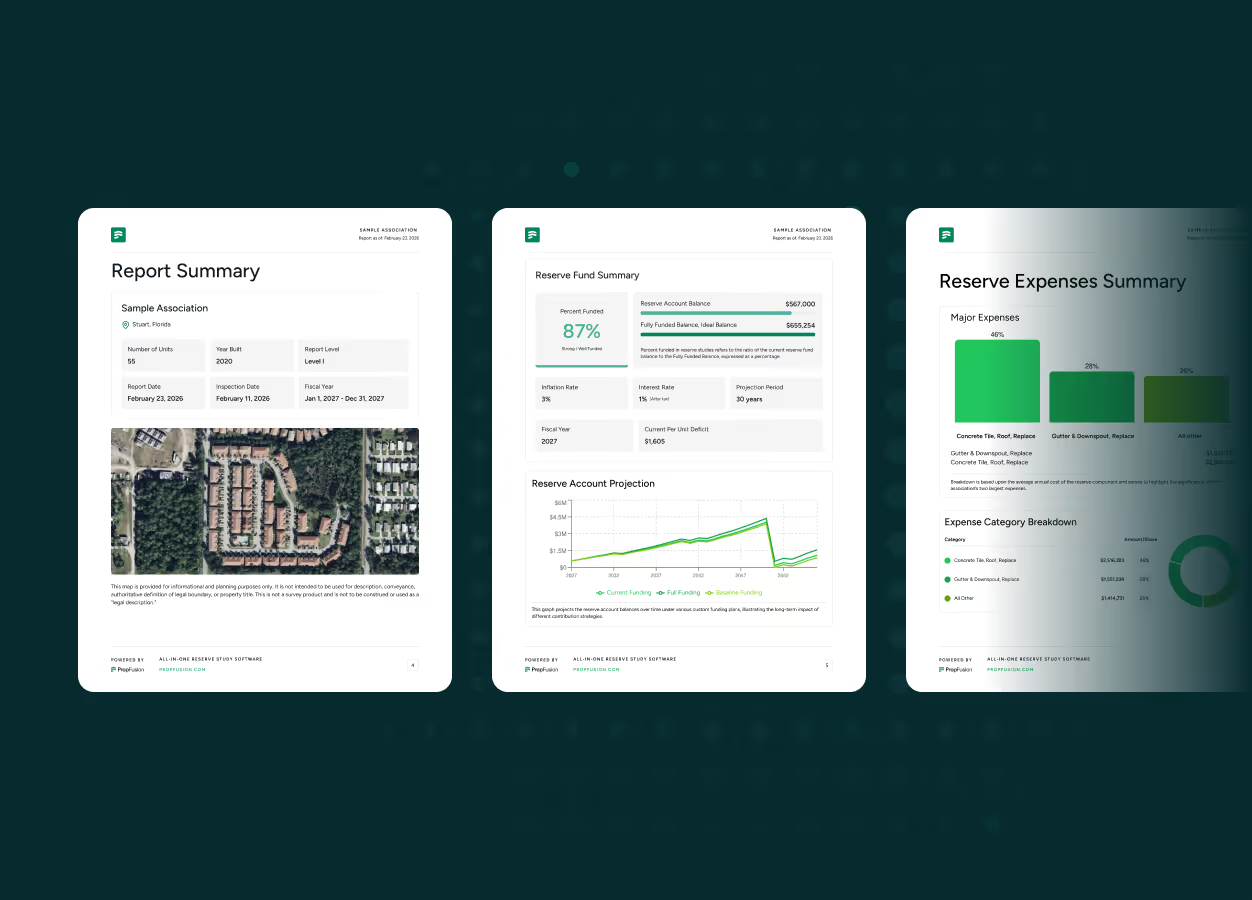
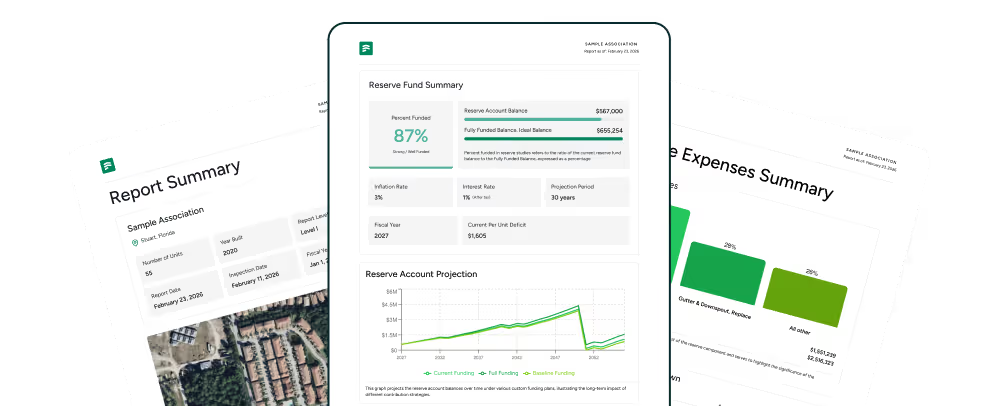
A reserve study converts this analysis into a long-term funding plan that shows contributions, expenditures, and projected reserve balances year by year. While the law does not require this report, it is by far the cleanest way to demonstrate that reserves are “adequate” under MCIOA.
Can Minnesota associations waive or reduce reserve funding?
Under Section 515B.3-1141, the association may, after declarant control ends, choose to fund certain components through special assessments instead of annual reserve contributions, but only with specific approvals:
- The board must approve the approach.
- Unit owners (excluding the declarant and affiliates) holding at least 51 percent of the votes must also approve.
- The approval is only effective for the current fiscal year and the following three fiscal years.
This is not a free pass to ignore reserves entirely. Instead, it is a narrow option for components the community deliberately plans to fund via special assessments.
For most associations, especially those with risk-averse owners or aging infrastructure, maintaining ongoing replacement reserves is safer and more predictable than relying on repeated special assessments.
Best practices for Minnesota reserve studies and updates
Even though not legally mandated, Minnesota associations that want to stay compliant and financially healthy typically:
- Commission a full reserve study every 3-5 years, timed so that at least one comprehensive update occurs within each three-year statutory reevaluation window.
- Perform annual “desktop” updates of the funding plan, adjusting for actual contributions, interest, and any completed projects.
- Use the reserve study as the basis for each year’s budget line item for replacement reserves.
- Share the key results - upcoming projects and reserve sufficiency - in the annual report and at the annual meeting, helping owners understand why dues need to be at a certain level.
This approach aligns legal obligations, good governance, and owner expectations.
Related reserve study resources for Minnesota
Compare reserve study laws in nearby states, or find help running one for your association:
FAQ
Does Minnesota law require my HOA or condo to have a reserve study?
No. Minnesota statutes do not currently require a formal reserve study. They require replacement reserves to be included in annual budgets and require the board to reevaluate the adequacy of those reserves at least every third year. A reserve study is the most common tool to meet those obligations but is not mandated by name.
Which Minnesota communities are covered by MCIOA reserve rules?
MCIOA generally applies to most condominiums, planned communities, and cooperatives created after June 1, 1994, and to older communities that have chosen to opt in. If you are unsure whether your association is subject to Chapter 515B, review your declaration or consult association counsel.
How often should our Minnesota association update its reserve planning?
At a minimum, your board must reevaluate the adequacy of replacement reserves at least every three years. From a best-practice perspective, many communities commission a reserve study every 3-5 years and perform lighter annual updates in between, so budgets always reflect current costs and component conditions.
Can we borrow from our replacement reserves to cover operating shortfalls?
No. Minnesota law requires replacement reserves to be held in an account or accounts separate from operating funds and prohibits using or borrowing from those reserves to pay operating expenses, although they may be pledged as security for a loan.
What happens if our reserves are clearly underfunded?
If reserves are underfunded, the board should increase future reserve contributions, adjust project timing where feasible, and consider whether a special assessment or loan is needed to address near-term projects. Under MCIOA, boards are expected to maintain and periodically reevaluate adequate replacement reserves, so leaving a known shortfall unaddressed can create both financial and governance risk.
Can owners vote to stop funding reserves altogether?
Not for all components. For specific components, the association may plan to fund replacements through special assessments instead of annual reserve contributions, but only with board approval and approval from unit owners holding at least 51 percent of the votes, and only for a limited four-year window each time. Completely abandoning reserve funding would conflict with MCIOA’s replacement reserve requirements.
How can PropFusion help us stay compliant in Minnesota?
PropFusion helps you maintain a current component list, forecast long-term reserve contributions and balances, document annual budgets and reports, and coordinate with professional reserve study providers. That makes it easier to show that your board has taken reasonable steps to maintain “adequate replacement reserves” as required under Minnesota law.
The information contained on this page is provided for informational purposes only, and should not be construed as legal advice on any subject matter. You should not act or refrain from acting on the basis of any content included on this page without seeking legal or other professional advice. The contents of this page contain general information and may not reflect current legal developments or address your situation. We disclaim all liability for actions you take or fail to take based on any content on this report.
Get proposals from vetted reserve study professionals - with 30-year funding plans, powered by modern technology, and compared side by side for free.
Take the guesswork out of your reserve study
From site inspection to 30-year funding plan, PropFusion handles the entire reserve study - accurate, transparent, and built on modern technology that gives you full control over your reserves.