Maryland HOA Reserve Study & Fund Requirements (2026 Guide)

Maryland has moved from “best practice” to “legal requirement” when it comes to reserve planning. Recent legislation - including House Bill 107 and follow-on amendments to the Maryland Condominium Act and Maryland Homeowners Association Act - now requires most condominiums, homeowners associations (HOAs), and cooperative housing corporations to obtain regular reserve studies and to fund reserves in line with those studies.
See the full reserve study requirements by state guide
For boards and managers, this means Maryland HOA reserve requirements and Maryland reserve study law are no longer optional reading. They directly affect your annual budget, your ability to avoid special assessments, and, in many communities, the size of monthly assessments owners pay. This guide summarizes what the law requires, who is covered, how often reserve studies must be updated, and what your association should do next - with a practical focus on HOAs and condominiums across the state.
Legislation Link
Maryland Condominium Act
Maryland Homeowners Association Act
House Bill 107 (Chapter 664, 2022)
Are reserve studies required for all HOAs in Maryland?
Yes. Under House Bill 107 and Real Property § 11B-112.3, most Maryland HOAs that maintain common areas and have at least 10,000 dollars in total initial purchase and installation costs for their reserve components must obtain a reserve study and update it at least every five years.
Do Maryland condominium associations have to complete reserve studies as well?
Yes. Residential condominiums are subject to Real Property § 11-109.4, which requires an independent reserve study and updated studies at least every five years on a statewide basis under HB 107.
How often must a Maryland HOA or condo update its reserve study?
For both condominiums and HOAs, the governing body must update the reserve study at least every five years after the initial study, with specific compliance dates depending on when the community was created and when its last study was completed.
Are Maryland associations now required to fund reserves at the level recommended in the reserve study?
Recent 2025 legislation amending the annual budget provisions requires associations to adopt a funding plan and to fund reserve contributions in accordance with the amounts recommended in the most recent reserve study, with those funds deposited into the reserve account by the end of each fiscal year.
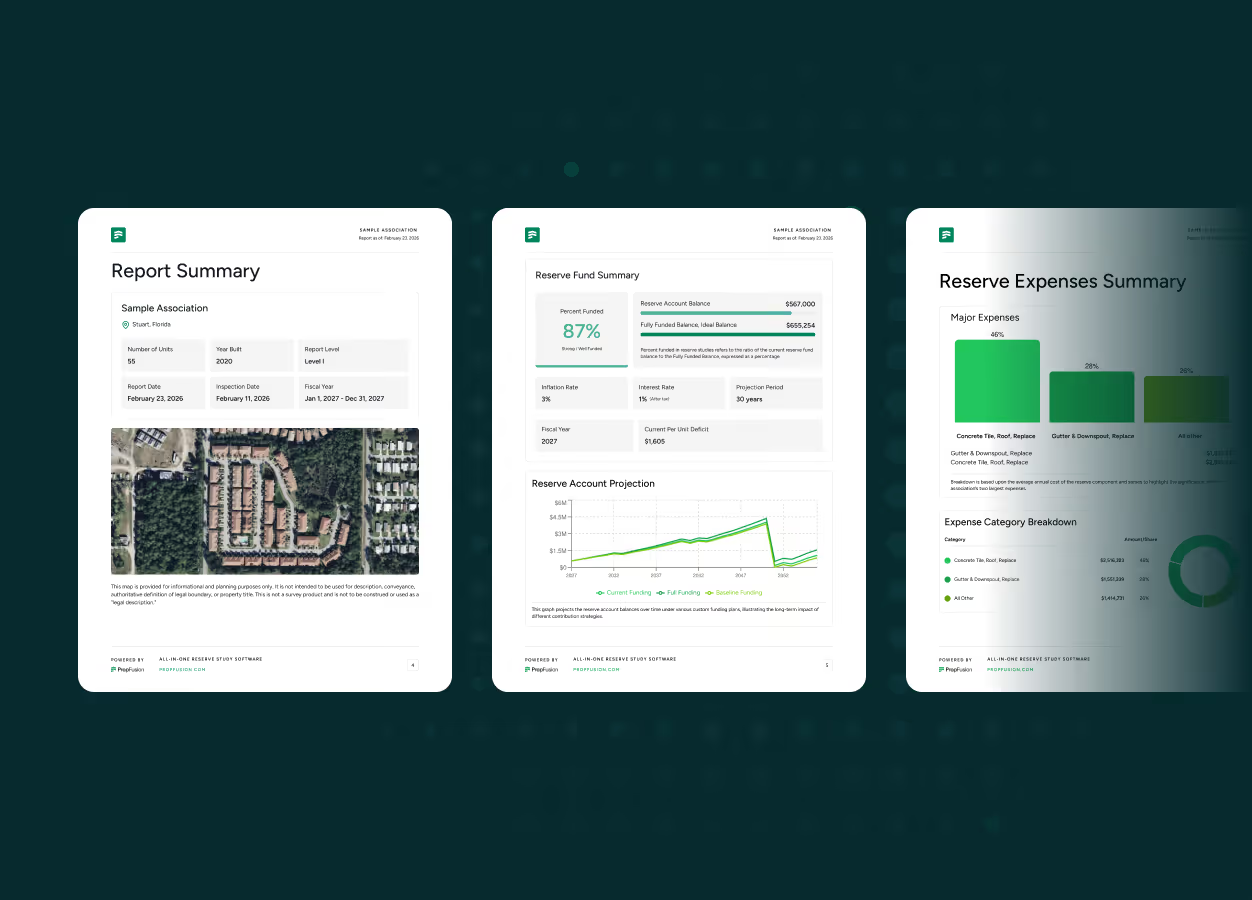
Need a reserve study in Maryland? Compare multiple reserve study proposals for free.
Get proposals from vetted reserve study professionals - with 30-year funding plans, powered by modern technology, and compared side by side for free.
Overview of Maryland reserve study law
Maryland’s reserve study framework is built around three pillars:
- Statewide reserve study mandates for common interest communities under HB 107.
- Detailed condominium requirements in Real Property § 11-109.4.
- Parallel HOA requirements in Real Property § 11B-112.3.
HB 107 expanded earlier county-level rules in Montgomery and Prince George’s Counties to a statewide standard. Condominiums, HOAs, and cooperative housing corporations that meet defined thresholds are now required to obtain reserve studies and to keep them current with updates at least every five years. Later amendments strengthened funding obligations, pushing boards to move beyond simply “having a study on file” toward actually funding reserves in line with professional recommendations. (princegeorgescountymd.gov)
If your community owns significant common elements, Maryland law expects you to understand their long-term replacement costs and budget systematically for them.
Which communities must comply?
Condominiums
Residential condominiums fall under Real Property § 11-109.4. The statute defines a “reserve study” and sets out when studies must be completed, updated, and reviewed. It applies broadly to residential condominiums across Maryland, with specific transition rules depending on when the condominium was established and whether earlier studies were completed.
Homeowners associations (HOAs)
HOAs are covered by Real Property § 11B-112.3. This section applies to any HOA that:
- is responsible under its declaration for maintaining and repairing common areas; and
- has at least 10,000 dollars in total initial purchase and installation costs for all reserve components identified in the study.
In practice, most planned communities with roads, roofs, clubhouses, pools, or similar shared infrastructure will cross this 10,000-dollar threshold easily. Only very small, limited-common-area HOAs might fall outside the law.
Cooperative housing corporations
Cooperatives are covered under Corporations and Associations § 5-6B-26.1, which mirrors the same core requirements: an initial reserve study and updates at least every five years, with different timing rules depending on when the co-op was established.

Deadlines and frequency for reserve studies
Maryland uses a combination of one-time catch-up deadlines and ongoing five-year cycles:
- New condominiums and HOAs formed today must obtain an independent reserve study shortly before the owners’ first major meeting (for condos, at least 30 days before the required turnover meeting; for HOAs, within 90 to 30 days before the first budget meeting described in the statute).
- Existing communities that already had a reserve study on file as of certain dates must get an updated reserve study within five years of that prior study and then every five years thereafter.
- Communities that had not yet obtained a qualifying reserve study were required to do so by dates around October 1, 2021-2023, varying by county and community type, and are now on the same five-year update cycle going forward.
From a practical standpoint, if you are unsure when your last reserve study was completed, assume you may already be close to or past a five-year deadline and plan accordingly.
What a Maryland-compliant reserve study must include
Maryland law defines “reserve study” in detail for both condominiums and HOAs. At a minimum, a Maryland-compliant study must:
- Identify each structural, mechanical, electrical, and plumbing component of the common elements (or common areas for HOAs), plus any other components that are the association’s responsibility to repair and replace.
- State the estimated remaining useful life for each component.
- State the estimated cost of repair or replacement for each component.
- State the estimated annual reserve contribution needed to fund those future repair and replacement costs.
The statutes also impose qualification requirements on the preparer. A compliant study must be prepared by either:
- a professional who has prepared or participated in at least 30 reserve studies in the prior three calendar years;
- a Maryland-licensed architect or professional engineer; or
- an individual holding a recognized reserve specialist designation (such as CAI’s Reserve Specialist or APRA’s Professional Reserve Analyst).
Using an uncertified or inexperienced preparer may leave the association technically non-compliant, even if a document labeled “reserve study” exists.
Reserve funding requirements and budget impacts
Initially, Maryland’s framework focused on disclosure: boards had to obtain reserve studies, review them when preparing the budget, and distribute summaries to owners, but were not explicitly required to fully fund reserves. That changed with 2025 legislation.
New amendments to the annual budget sections now require, for both HOAs and (via parallel changes) many condominiums, that:
- the annual budget include reserve contributions in accordance with the funding amount recommended in the most recent reserve study or updated reserve study; and
- those reserve contributions be deposited into the reserve account on or before the last day of each fiscal year, following a funding plan developed in consultation with the reserve study preparer.
Some bills also contemplate limited hardship or exigent-circumstance relief for associations that genuinely cannot reach the recommended funding level, but the default expectation is now that boards will move toward the study’s recommended funding trajectory rather than ignoring it. (billtrack50.com)
The real-world effect is visible in news coverage: many Maryland communities have increased assessments significantly in recent years to comply with the new reserve study and funding requirements, sometimes leaving homeowners feeling blindsided when communication has been poor. (The Sun)
Consequences of non-compliance
The statutes themselves do not spell out a simple schedule of fines for failing to obtain or update a reserve study. Instead, risk shows up in several areas:
- Governance and enforcement: Not following statutory requirements can be raised in disputes, complaints, or litigation, particularly if structural or financial problems emerge later.
- Disclosure risk: Inadequate reserves or missing reserve studies can affect resale disclosure packages, increasing the risk of buyer disputes or price reductions.
- Financial stability: Without a compliant reserve study and funding plan, an association is far more likely to experience large special assessments or deferred maintenance, which can damage property values and invite regulatory scrutiny.
Given the Surfside collapse in Florida and the nationwide focus on structural safety, Maryland is unlikely to relax these requirements. Boards that ignore reserve obligations are putting both finances and safety credibility at risk. (Wikipedia)
Practical action plan for Maryland boards and managers
For a Maryland HOA or condominium board, a practical compliance plan looks like this:
- Confirm your status: Determine whether your community is a condominium, HOA, or co-op and confirm that you maintain common elements or areas above the 10,000-dollar threshold (for HOAs).
- Locate prior studies: Gather any existing reserve studies and note their completion dates. If your last study is more than five years old - or you have never had one - you should treat obtaining a new study as urgent.
- Hire a qualified preparer: Select a reserve study professional who meets Maryland’s qualification criteria and has experience with similar communities.
- Align your funding plan: Work with the preparer to develop a funding plan that meets statutory expectations while phasing in increases as reasonably as possible. Document your rationale carefully.
- Communicate early and often: Explain to homeowners why assessments may need to increase and how Maryland reserve study law drives those decisions. Clear communication can prevent the “blindsided” reaction seen in some communities.
How PropFusion helps Maryland communities
Maryland’s HOA reserve requirements are not just a legal checklist; they demand ongoing planning, documentation, and communication. PropFusion’s platform is designed to make this easier by:
- centralizing your reserve study documents, funding plans, and board decisions in one place;
- giving boards and managers clear dashboards that show upcoming capital projects and funding gaps;
- helping you model what-if scenarios when funding requirements tighten or projects get more expensive; and
Used together, a compliant reserve study and a robust management platform reduce the risk of surprise assessments, strengthen your legal position, and help protect property values over the long term.
Related reserve study resources for Maryland
Compare reserve study laws in nearby states, or find help running one for your association:
FAQ
Does Maryland reserve study law apply to small HOAs with very limited common areas?
It depends on the value of the components. If your HOA is responsible for maintaining common areas and the total initial purchase and installation cost of all reserve components is at least 10,000 dollars, Real Property § 11B-112.3 applies and a reserve study is required. Very small HOAs with minimal, low-value common property may fall outside the statute, but this is the exception, not the rule.
Our condominium obtained a reserve study six years ago. Are we out of compliance?
Most likely, yes. Both the condominium and HOA statutes require updated reserve studies at least every five years. If your last study is older than that, you should schedule an updated study as soon as possible and adjust your budget in line with the new recommendations.
Are Maryland associations required to follow the exact funding plan recommended in the reserve study?
New 2025 legislation moves the state closer to that standard by requiring reserve contributions in the annual budget to match the funding amounts recommended in the most recent study and directing that those funds be deposited into the reserve account by year-end. Boards still have some discretion in how they phase in changes, but the default expectation is that the study’s funding recommendations are to be implemented, not ignored.
What happens if our HOA simply cannot afford to reach the recommended reserve funding level?
Some pending and recent bills contemplate limited relief for HOAs experiencing exigent financial circumstances, but these are narrow exceptions and often require formal findings or a specific process. Your board should consult legal counsel before assuming any exemption applies and should document efforts to move toward compliance over time, including communicating transparently with owners about constraints and tradeoffs.
Do Maryland reserve study laws affect resale disclosures?
Yes. Buyers and their lenders increasingly expect to see current reserve studies and evidence of adequate funding, especially after the Surfside tragedy and the nationwide focus on structural risk. In Maryland, reserve studies and budgets are part of the association records that may need to be disclosed, and weak reserves can raise red flags that hurt marketability or pricing.
How often should our board review the reserve study outside of the five-year update cycle?
Boards should review the reserve study annually when preparing the budget and whenever a major project, cost overrun, or change in component condition occurs. Maryland law explicitly requires the governing body to review the reserve study in connection with the annual proposed budget, so treating it as a living planning tool - not a five-year binder - is both good practice and part of compliance.
The information contained on this page is provided for informational purposes only, and should not be construed as legal advice on any subject matter. You should not act or refrain from acting on the basis of any content included on this page without seeking legal or other professional advice. The contents of this page contain general information and may not reflect current legal developments or address your situation. We disclaim all liability for actions you take or fail to take based on any content on this report.
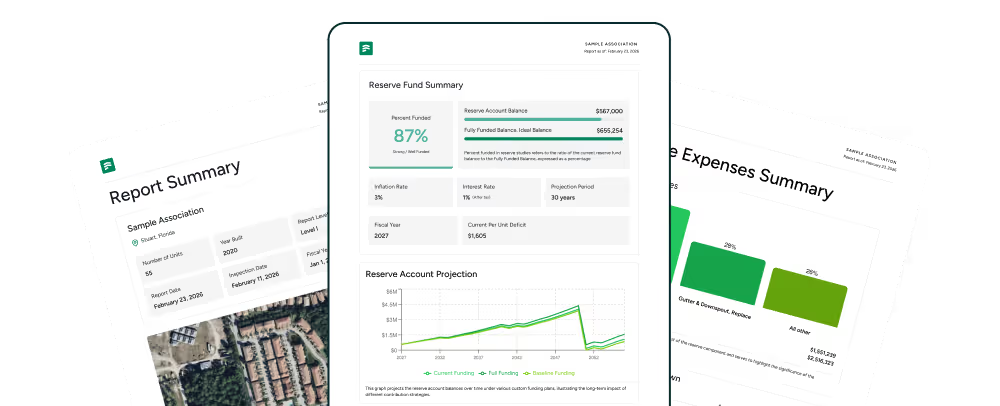
Get proposals from vetted reserve study professionals - with 30-year funding plans, powered by modern technology, and compared side by side for free.
Take the guesswork out of your reserve study
From site inspection to 30-year funding plan, PropFusion handles the entire reserve study - accurate, transparent, and built on modern technology that gives you full control over your reserves.