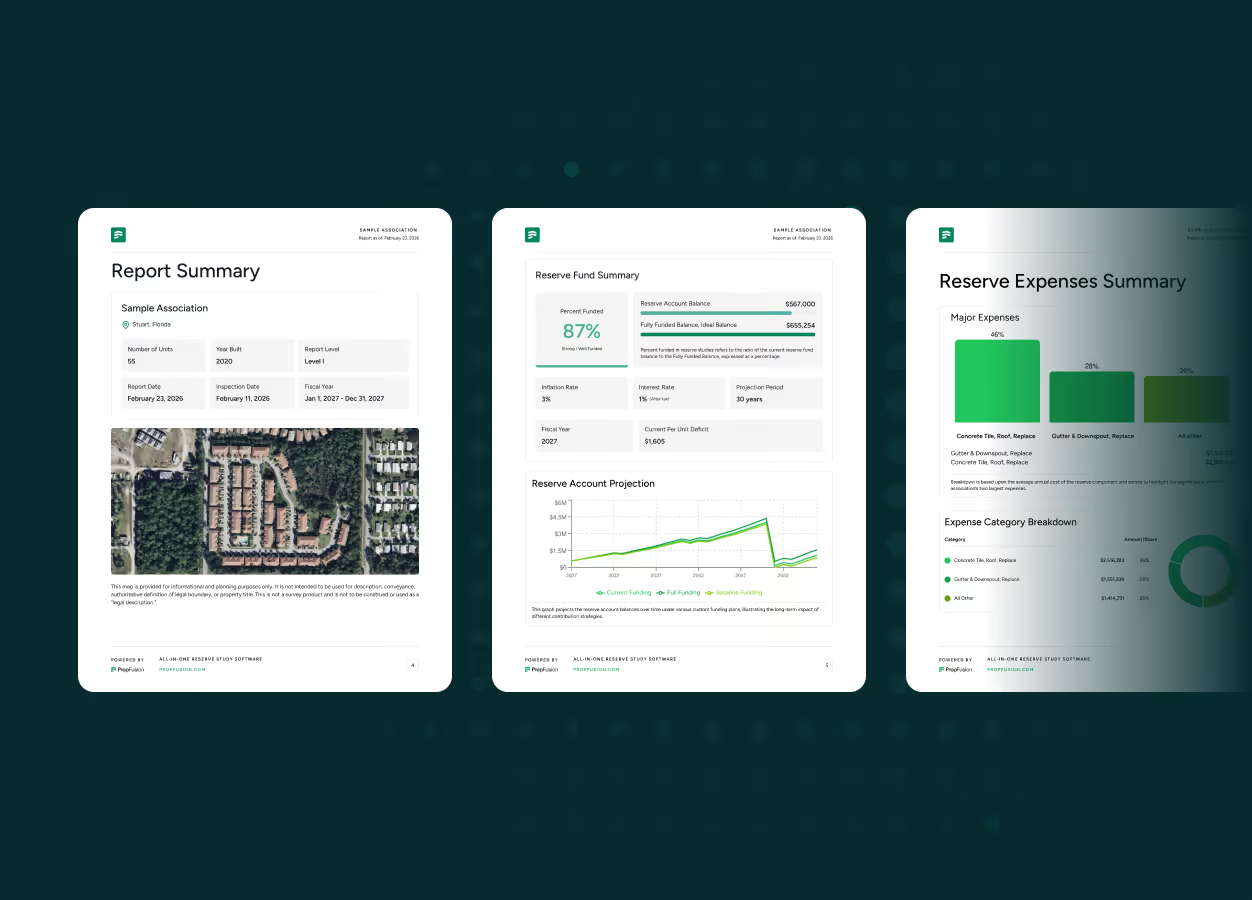
Iowa Reserve Study Requirements (2026)
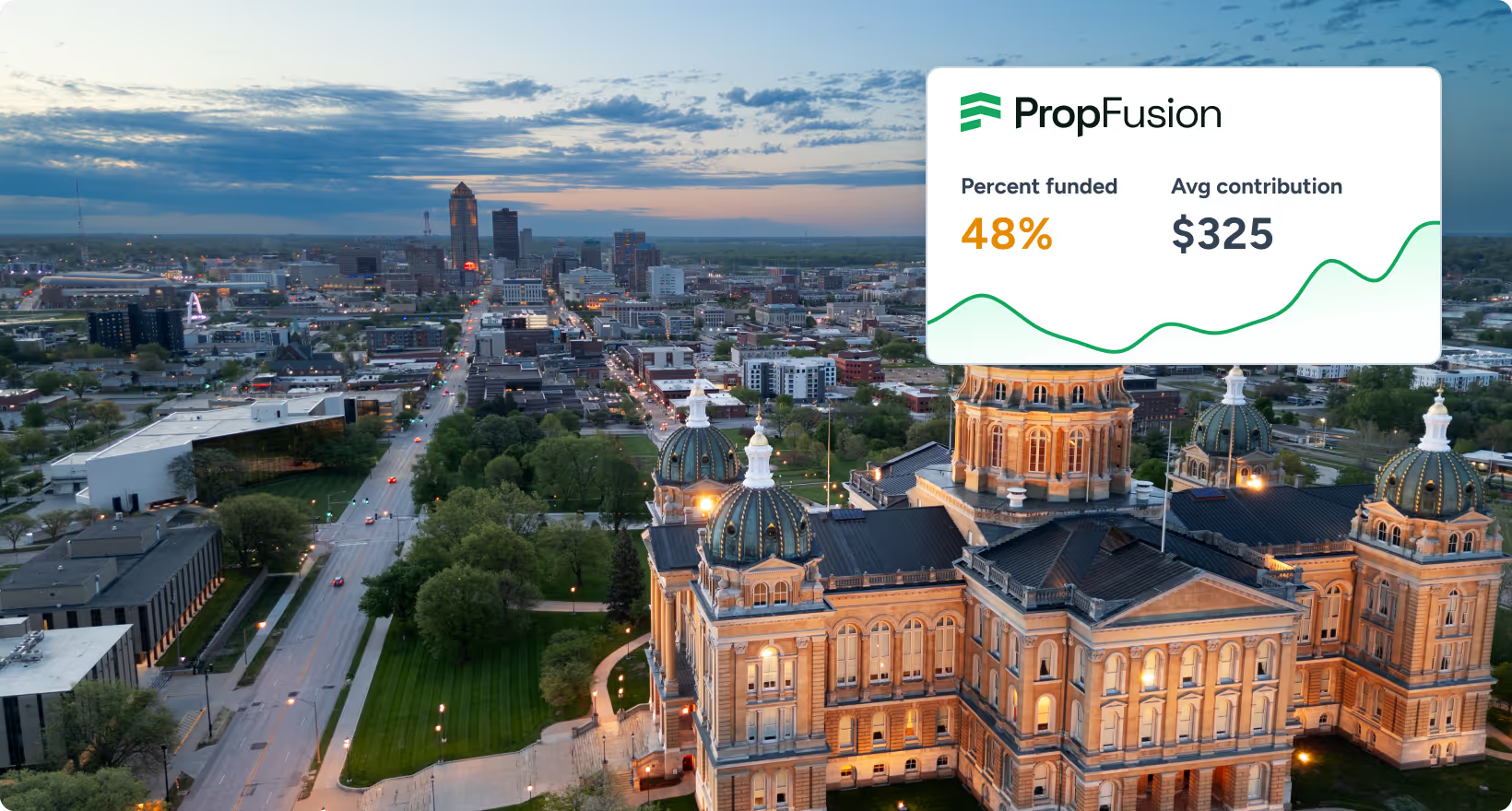
Iowa takes a relatively light-touch approach to regulating HOA and condo reserve funds. Unlike many other states, there is currently no statute that requires common interest communities to perform reserve studies or fund reserves to a specific level. Associations are instead governed primarily by their declarations, bylaws, and general corporate law.
See the full reserve study requirements by state guide
That does not make reserves optional in practice. Well-run Iowa communities still need a structured plan for capital repairs and replacements, clear reserve funding strategies, and transparent budgets so owners understand how their money is being used. This guide explains what Iowa law does and does not require, and outlines best practices so your association can avoid special assessments and long-term underfunding.
Legislation Link
Iowa Horizontal Property Act (Condominiums) - Iowa Code Chapter 499B
Revised Iowa Nonprofit Corporation Act - Iowa Code Chapter 504
Iowa Unit Owners Associations - Iowa Code Chapter 499C
Are reserve studies legally required in Iowa? No. As of 2025, Iowa does not have a statute that requires HOAs or condo associations to conduct reserve studies. State-level guidance from community association organizations confirms there is no statutory requirement to perform a reserve study.
Does Iowa require HOAs or condos to fund reserves to a minimum level? No. Iowa law does not prescribe a minimum percentage of the budget that must be contributed to reserves, nor does it mandate that a separate replacement reserve fund be established. Any requirements will come from the community’s declaration, bylaws, or board policies.
What Iowa laws are most relevant to HOA reserve funds? Condominiums are primarily governed by the Iowa Horizontal Property Act (Iowa Code Chapter 499B), while many HOAs are organized as nonprofit corporations under the Revised Iowa Nonprofit Corporation Act (Chapter 504). Unit owners associations also have statutory rights to access association records, including budgets, under Chapter 499C.
How often should an Iowa association update its reserve study? Because there is no statutory frequency, most Iowa boards follow industry standards: a full reserve study every 3 to 5 years, with interim updates when large projects, cost increases, or membership changes occur.
Need a reserve study in Iowa? Compare multiple reserve study proposals for free.
Get proposals from vetted reserve study professionals - with 30-year funding plans, powered by modern technology, and compared side by side for free.
Iowa HOA and Condo Legal Framework
From a legal standpoint, Iowa regulates community associations through several broad statutes rather than through a targeted “reserve study law.”
Condominiums are governed by the Iowa Horizontal Property Act in Iowa Code Chapter 499B, which establishes how condo regimes are created, how common elements are owned, and how bylaws and assessments function. (Justia)
Most homeowners associations that are not condominiums are organized as nonprofit corporations under the Revised Iowa Nonprofit Corporation Act in Chapter 504, which sets out corporate governance standards, director duties, and recordkeeping obligations. (Iowa General Assembly)
In addition, Chapter 499C (Unit Owners Associations - Access to Records) gives owners rights to inspect association records and documents, which typically include operating budgets, reserve schedules, and financial statements.
None of these statutes, however, currently impose a detailed framework for reserve studies or reserve funding. Instead, they create the governance backbone within which your declaration, bylaws, and board policies will define how your community handles reserves.
Are Reserve Studies Required in Iowa?
According to national summaries of state reserve fund laws, Iowa does not require community associations to conduct reserve studies or to fund reserves at any particular level. There is also no statute that specifies who may prepare a reserve study or how often it must be updated. In other words:
- No Iowa statute requires a reserve study for HOAs or condominiums.
- No Iowa statute sets a minimum funding percentage or “fully funded” standard.
- No Iowa statute mandates that a reserve study be disclosed in resale documents.
This puts Iowa among the more flexible states. Boards have broad discretion, but also full responsibility, for setting reserve policies that align with their community’s risk tolerance and physical needs.
Reserve Fund Requirements and Budget Disclosure in Iowa
There is likewise no Iowa statute that explicitly requires a separate reserve fund or prescribes how reserves must appear in the association’s budget. State summaries explicitly note “no statutory requirement to fund reserves” for Iowa.
That does not mean boards can hide the ball. Two key legal realities still drive transparency:
- Corporate and fiduciary duties. Directors of nonprofit corporations must manage the association in good faith and in the best interests of the corporation, which inherently includes prudent long-term financial planning. Ignoring foreseeable roof replacements or pavement failures is rarely consistent with that duty.
- Records and access rights. Under the Unit Owners Associations records statute, owners have a legal right to access the association’s records and documents, subject to reasonable limitations and fees. In practice, that means budgets, reserve schedules, and financial statements must be kept in an organized, accessible format.
Because of this, best practice in Iowa is to:
- Include a separate line item for reserve contributions in every annual budget.
- Clearly distinguish operating expenses from reserve funding for capital projects.
- Provide owners with a copy or summary of the budget before each fiscal year.
- Make detailed financials and reserve schedules available on request or via a secure portal.
Even though there is no statutory “reserve funding disclosure” mandate, failing to disclose reserve funding in a clear way increases the risk of disputes and erodes trust.
Best Practices for Reserve Funding in Iowa Communities
Search data shows that boards and managers in Iowa are asking questions like “hoa reserve funds,” “homeowners association reserve requirements,” and “how to calculate hoa reserve fund.” The absence of a statute does not mean there is no right answer; it just means you rely on industry standards and your own governing documents.
For typical Iowa HOAs and condominiums:
- Target funding 70-100 percent of your long-term capital needs, based on a professional reserve study or at least a structured analysis of your components.
- As a rough rule of thumb, many associations contribute 10-20 percent of their total annual budget to reserves, adjusted for age, size, and complexity of the property.
- Define which components are funded by reserves (roofs, siding, paving, elevators, pools, mechanical systems) and which remain in the operating budget.
- Establish clear policies on when reserves can be used and how they are replenished after major projects.
How to Calculate Your HOA Reserve Fund in Iowa
You do not need a statute to justify reserve funding. You need a defensible calculation. At minimum, boards should:
- Create an asset inventory - List all major common-area components, including replacement cost and remaining useful life.
- Estimate total long-term cost - Sum the projected replacement cost of all components over a 20-30 year horizon.
- Determine your target funding level - Decide what percentage of those future costs you want to have on hand at any given time, accounting for risk tolerance and lending expectations.
- Translate into annual contributions - Convert your target into a required annual contribution and divide by the number of units to arrive at a per-unit reserve assessment.
Some Iowa boards still use a basic HOA reserve study Excel template. While that is better than nothing, spreadsheets are prone to errors, difficult to keep synchronized across board transitions, and rarely model multiple “what if” scenarios (different contribution levels, timing of projects, interest rates, or inflation). Dedicated reserve planning software lets you build more robust plans and update them quickly as conditions change.
How Often Should Iowa Associations Update a Reserve Study?
With no statutory frequency, Iowa communities should follow industry norms and lender expectations:
- Full study every 3-5 years for most communities.
- Interim updates when major projects are completed, costs spike, or the association’s financial position changes significantly.
- Annual budget reviews that re-validate reserve contributions in light of the latest information.
Associations with aging infrastructure, major building systems, or past underfunding should lean toward the shorter end of that range.
Practical Steps for Iowa Boards and Managers
If you manage or sit on the board of an Iowa HOA or condo, a practical path looks like this:
- Confirm what your declaration and bylaws say about reserve funds, replacement reserves, or capital budgets.
- Decide, at the board level, on a funding philosophy: conservative (high reserves, fewer special assessments) or more aggressive (lower reserves, more risk).
- Commission a professional reserve study if you have never performed one or if your last one is more than 5 years old.
- Communicate openly with owners about reserve funding goals, how you calculated them, and the impact on assessments.
- Build a habit of reviewing reserves at least annually as part of the budget process.
How PropFusion Helps Iowa HOAs, Managers, and Reserve Professionals
PropFusion is designed to make this process easier for Iowa communities:
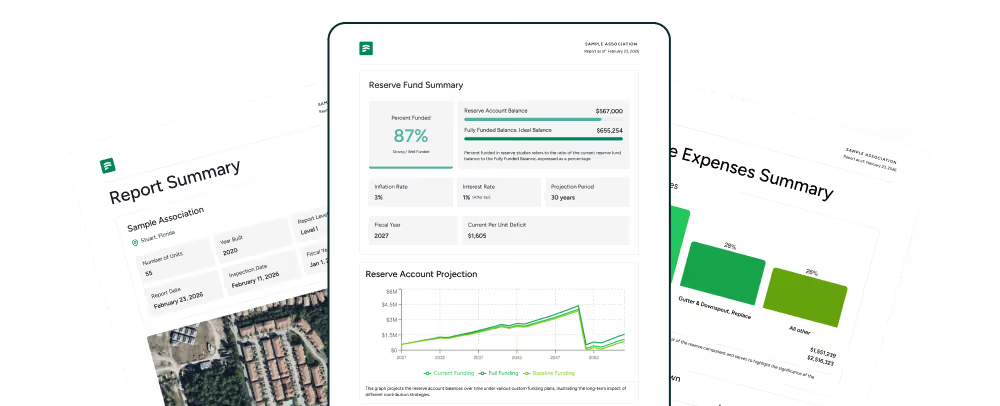
- For boards: visual dashboards show your reserve fund trajectory, upcoming projects, and the impact of different funding scenarios on owner assessments.
- For association managers: portfolio tools let you compare reserve funding health across multiple Iowa communities, spot underfunded associations, and standardize your budgeting process.
- For reserve professionals: Reserve Professional streamlines site data collection, report generation, and funding plan creation, so you can deliver clearer, more actionable studies to your Iowa clients.
Instead of trying to maintain complex reserve projections in a single Excel file, Iowa managers and boards can use PropFusion to centralize their data, model scenarios in a few clicks, and keep a clean audit trail for owners and auditors.
Key Takeaways for Iowa Associations
- Iowa has no statutory requirement to conduct reserve studies or to fund reserves to any particular level.
- Associations are governed by general HOA laws, condominium statutes, and nonprofit corporate governance rules, which still require prudent planning and transparent recordkeeping.
- Boards should treat reserve funding as essential, not optional, and adopt clear budget and disclosure practices even in the absence of a mandate.
Professional reserve studies and modern reserve planning tools help Iowa communities avoid special assessments, stabilize assessments, and protect property values.
Related reserve study resources for Iowa
Compare reserve study laws in nearby states, or find help running one for your association:
FAQ
Are reserve studies mandatory for Iowa HOAs or condo associations?
No. Iowa law does not require reserve studies for HOAs or condos. Whether you perform a study is a governance and risk-management decision, although most professionals strongly recommend having one.
Does Iowa law require a minimum percentage of the budget to go into reserves?
No. There is no Iowa statute that sets a required percentage of the annual budget for reserve contributions. Your declaration, bylaws, and lender expectations will drive what is appropriate for your community.
Is there a legal requirement to disclose reserve funding in the HOA budget in Iowa?
There is no statute that specifically requires a “reserve line item” in the budget. However, Iowa law does give owners rights to access association records and documents, and boards have fiduciary duties under nonprofit corporate law, so budgets and reserve contributions should be recorded and shared transparently.
Can an Iowa association choose not to maintain a reserve fund?
Technically, Iowa law does not forbid an association from operating with minimal or no reserves, unless your governing documents require them. In practice, this approach significantly increases the risk of special assessments, cash-flow crises, and lower property values, and may raise red flags for lenders and buyers.
How much should an Iowa HOA keep in its reserve fund?
There is no one-size-fits-all number, but many associations target funding 70-100 percent of long-term capital needs and contribute roughly 10-20 percent of their annual budget to reserves, adjusting for property age, condition, and risk tolerance.
How often should an Iowa association review reserve funding with homeowners?
At least annually as part of the budget process. Many boards also provide mid-year updates when major projects are completed or when economic conditions (inflation, interest rates, contractor pricing) materially change the funding picture.
How can PropFusion support Iowa communities with reserve planning?
PropFusion provides tools to inventory assets, build funding plans, model multiple scenarios, and share clear outputs with boards and owners. For Iowa reserve professionals, it streamlines report generation and helps standardize funding recommendations across multiple associations.
The information contained on this page is provided for informational purposes only, and should not be construed as legal advice on any subject matter. You should not act or refrain from acting on the basis of any content included on this page without seeking legal or other professional advice. The contents of this page contain general information and may not reflect current legal developments or address your situation. We disclaim all liability for actions you take or fail to take based on any content on this report.
Get proposals from vetted reserve study professionals - with 30-year funding plans, powered by modern technology, and compared side by side for free.
Take the guesswork out of your reserve study
From site inspection to 30-year funding plan, PropFusion handles the entire reserve study - accurate, transparent, and built on modern technology that gives you full control over your reserves.