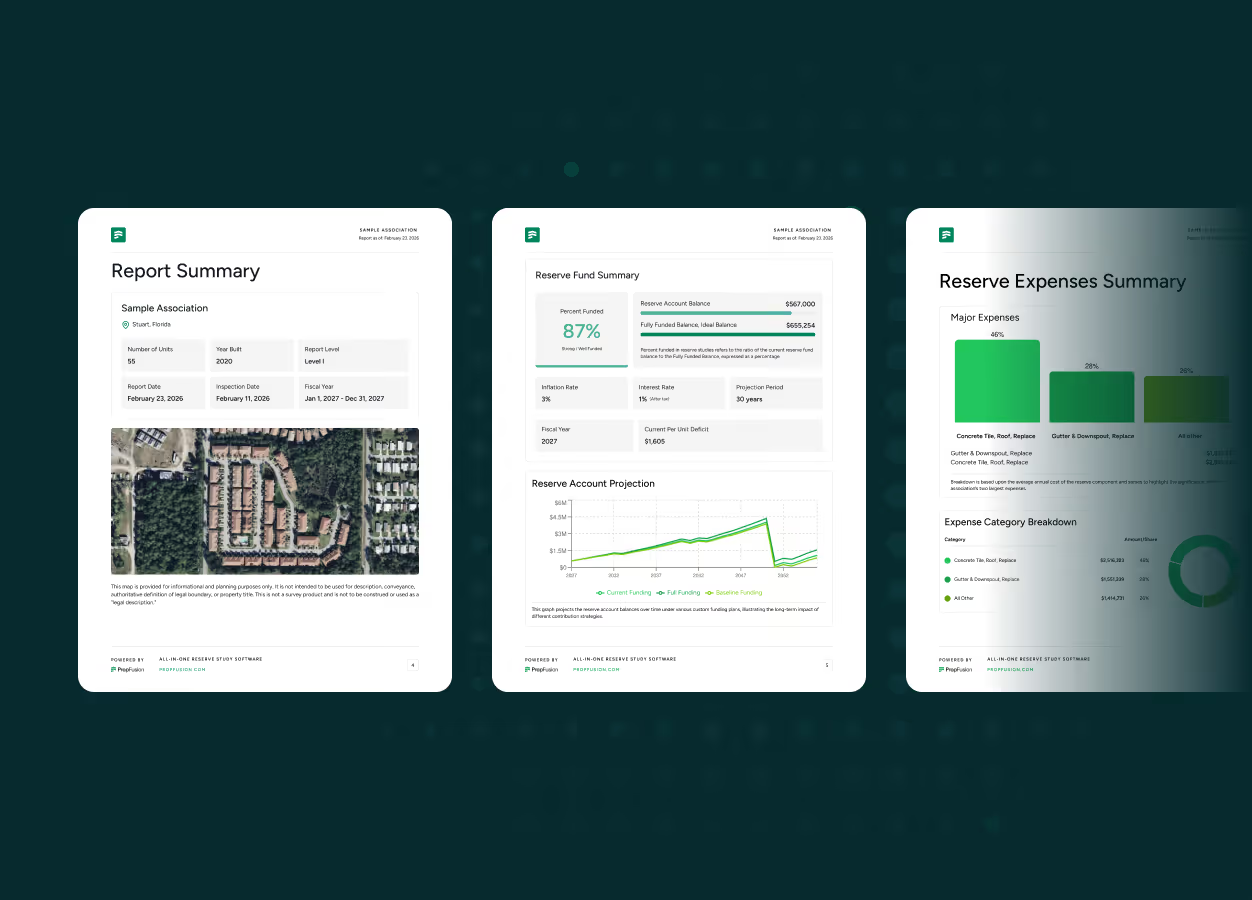
Hawaii HOA Reserve Study Requirements and Reserve Fund Laws (2026 Guide)
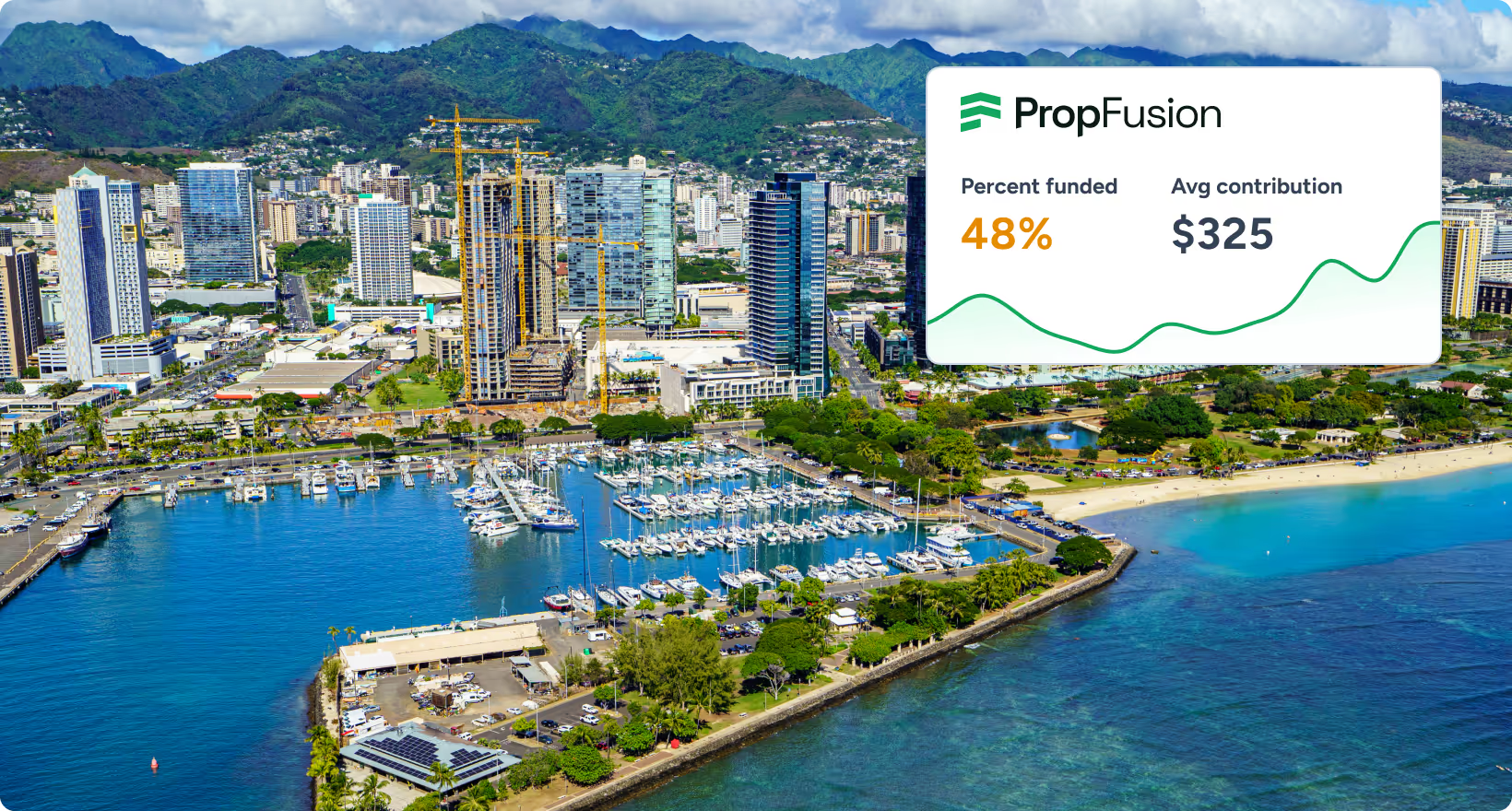
Hawaii has some of the most detailed reserve funding rules in the United States. Condominium associations are required by law to maintain replacement reserves, base their reserve budget on a formal reserve study, and follow specific rules for funding levels and long term cash flow projections. Planned community “HOA” style associations under Chapter 421J do not have the same explicit statutory reserve study mandates, but they still face significant financial and governance risk if they ignore long term repair and replacement costs.
See the full reserve study requirements by state guide
This guide explains how Hawaii condominium reserve study requirements work today, including the effect of Act 62, what HRS 514B-148 expects to see in your annual budget, how to calculate reserve contributions, and how often studies must be updated. It also clarifies what is and is not required for non condominium HOAs and how Hawaii boards can use reserve studies as a practical tool, not just a compliance checkbox.
Legislation Links
Hawaii Revised Statutes Chapter 514B - Condominiums
Budgeting and Reserve Funding - Hawaii Department of Commerce and Consumer Affairs
2022 Legislative Update - Act 62 Reserve Study Changes to HRS §514B-148
What communities in Hawaii are legally required to have a reserve study? In Hawaii, condominium associations governed by HRS Chapter 514B must base their annual budget on a reserve study and maintain adequate replacement reserves. Planned community associations and other homeowner associations under Chapter 421J do not currently have explicit statutory reserve study mandates, but best practice is to follow similar standards.
How much do Hawaii condo associations have to fund into reserves? Hawaii law requires condominium associations to fund at least 50 percent of the replacement reserves estimated in a reserve study, or 100 percent when using a cash flow funding plan, rather than allowing reserves to be waived.
How often must a Hawaii reserve study be updated? Under Act 62, a condominium association’s reserve study must be reviewed or updated at least every three years by an independent reserve study preparer if the study was not originally prepared by one.
Does the law really require a 30 year projection? Yes. When a Hawaii condominium association uses a cash flow plan, the reserve study must be based on a minimum 30 year projection of future reserve income and expenses, replacing the older 20 year projection standard.
Need a reserve study in Hawaii? Compare multiple reserve study proposals for free.
Get proposals from vetted reserve study professionals - with 30-year funding plans, powered by modern technology, and compared side by side for free.
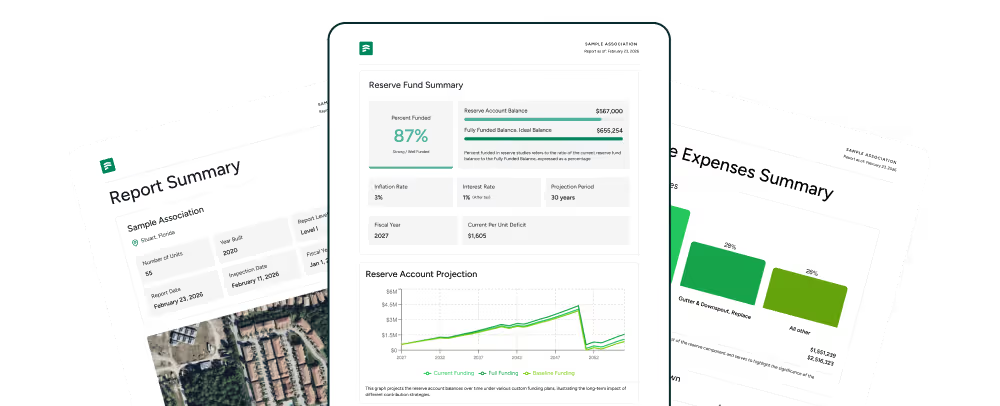
Hawaii’s framework for reserve studies and reserve funding is centered on the condominium statute, HRS Chapter 514B. Within that chapter, §514B-148 sets out detailed requirements for association budgets, replacement reserves, and the reserve study that underpins them. The result is that condominium boards cannot simply guess at their reserve contributions. They must rely on a structured, data driven reserve study and maintain funding at legally defined levels.
Who is covered: condominiums versus HOAs
HRS Chapter 514B governs condominiums created under Hawaii law and obligates boards to adopt an annual budget and establish adequate replacement reserves based on a reserve study.
Other community structures in Hawaii, such as planned community associations and many traditional “HOAs,” are generally organized under HRS Chapter 421J. These associations do not have explicit statutory replacement reserve or reserve study mandates that mirror §514B-148.
That does not mean reserves are optional. It means that for non condominium HOAs, long term funding is a governance decision, not a codified formula.
Many boards still adopt reserve policies that track condominium standards because lenders, auditors, and owners expect disciplined reserve planning.
Is a reserve study mandatory in Hawaii?
For condominiums, the answer is yes. The association’s annual budget must include “the estimated replacement reserves that the association will require to maintain the property, based on a reserve study performed by or on behalf of the association.”
In practical terms, that means a written reserve study that inventories major common elements, estimates remaining useful lives, and projects future repair and replacement costs. Without this study, a condominium board cannot satisfy the statute’s budgeting requirements.
Act 62 tightened this framework further. If the reserve study is not prepared by an independent reserve study preparer, the law now requires it to be reviewed by such a preparer at least once every three years.
An independent preparer must hold recognized reserve study certifications from an industry organization, which prevents boards from using unqualified internal estimates to justify underfunding.

Minimum reserve funding levels
Hawaii stands out by imposing clear minimum funding standards. As summarized by Hawaii counsel and industry guidance, condominium associations must either collect at least 50 percent of the replacement reserves estimated in their reserve study or 100 percent of the amount required under a cash flow plan.
Boards therefore cannot formally waive replacement reserves for covered components. Attempting to keep assessments low by starving reserves will put the association out of compliance and typically leads to special assessments, deferred maintenance, and unhappy owners.
Lenders and buyers increasingly scrutinize whether Hawaii condominium reserve fund calculations follow the statutory formula and funding thresholds.
How reserve fund calculations work in Hawaii
HRS §514B-148 requires associations to compute estimated replacement reserves based on the remaining useful life and estimated replacement cost of each property component. It also distinguishes between larger items with capital expenditures over a statutory dollar threshold and smaller components.
- In practice, a Hawaii condominium reserve study for a condo association will:
- List each major common element that will require capital expenditure.
- Identify those components with replacement costs over the statutory threshold (for example, roofs, elevators, major mechanical systems, parking structures) and assign them separate designated reserves.
- Group lower cost components into an aggregated reserve.
- For every component, estimate useful life, remaining life, and current replacement cost, then calculate the annual reserve contribution needed to be ready when each item is due.
This is the structured condo association reserve fund calculation that owners, auditors, and regulators expect to see, rather than a rough percentage of the operating budget.
Thirty year cash flow plans and funding strategies
When an association uses a cash flow funding plan, Act 62 now requires the reserve study to be based on a minimum thirty year projection of the association’s future income and expense requirements to fund its replacement reserves.
That means the reserve preparer must model reserve contributions, interest, and expenditures year by year across at least three decades, and demonstrate that the plan meets or exceeds the statutory funding targets.
Two main funding approaches dominate in Hawaii:
- Percent funded approach: The association targets a percentage of the fully funded balance. Under Hawaii law, that percentage cannot drop below 50 percent of the estimated replacement reserves.
- Cash flow plan: Contributions are set so that projected cash never falls below required levels over a 30 year horizon. Because the cash flow plan is more dynamic, Hawaii requires that reserves be funded to 100 percent of the amount needed under the plan.
The key in Hawaii is not which method you choose but whether the numbers meet or exceed the legal minimums while keeping contributions stable enough to be politically acceptable.
Frequency of updates and the role of the independent preparer
The association must update its reserve study at least every three years, and the law requires that, where the original study was not prepared by an independent reserve study preparer, that independent professional must review the study on that three year cycle.
In between formal updates, boards should still revisit their reserve assumptions annually when preparing the budget. Construction inflation, unanticipated repairs, and scope changes can quickly make an older reserve study unrealistic.
Many Hawaii associations use a three year cycle with a full site visit and comprehensive update in year one, followed by lighter internal updates in years two and three to keep contribution levels aligned with reality.
What about non condominium HOAs under Chapter 421J?
Planned community associations and many traditional HOAs in Hawaii fall under HRS Chapter 421J. Current guidance from practitioners notes that there are no explicit statutory replacement reserve funding or reserve study requirements for these associations, unlike condominiums under Chapter 514B.
However, owners in these communities face the same real world risks: aging infrastructure, rising construction costs, and the possibility of large special assessments if reserves are not built up steadily over time.
Lenders, insurers, and buyers are increasingly asking HOA boards the same questions they ask condo boards about reserve planning.
That is why many 421J associations voluntarily commission reserve studies and adopt contribution policies patterned on the condominium rules, even though the statute does not force them to do so.
Practical compliance checklist for Hawaii boards and managers
For condominium boards looking for a concrete workflow, the core steps are:
- Confirm that your association is a condominium governed by HRS Chapter 514B and that your governing documents have been updated in line with Act 62.
- Commission a reserve study prepared or reviewed by an independent reserve study preparer with recognized industry certifications.
- Ensure the study covers at least a 30 year horizon when using a cash flow plan and clearly documents your component list, useful lives, and cost assumptions.
Set contributions so that you fund at least 50 percent of estimated replacement reserves, or 100 percent under your cash flow plan, and confirm this in your condo budget reserve requirements summary. - Disclose in the annual budget all items required by §514B-148, including current reserve balances, how the reserve study was prepared, and any components omitted from the study.
- Schedule a formal update or independent review at least every three years, with lighter annual adjustments in between.
Non condominium HOAs should follow a similar pattern as best practice, even without a direct statutory mandate.
Related reserve study resources for Hawaii
Compare reserve study laws in nearby states, or find help running one for your association:
FAQ
How do Hawaii condo reserve requirements affect my annual dues?
Because Hawaii requires condominium associations to fund at least 50 percent of estimated replacement reserves, or 100 percent under a cash flow plan, some portion of every owner’s dues must go into the reserve fund. In practice, this often means slightly higher but more predictable regular assessments instead of sudden special assessments.
Can a Hawaii condominium board decide to suspend reserve contributions for a year?
No. For condominiums governed by HRS Chapter 514B, the board must adopt an annual budget that includes reserve assessments based on a current reserve study and meet the statutory funding minimums. Simply suspending contributions to keep dues flat would put the association out of compliance and increase future financial risk.
What happens if our reserve study is older than three years?
If your reserve study has not been reviewed or updated within the last three years by an independent reserve study preparer, you are not meeting the updated requirements of Act 62. The board should commission a review or new study as soon as practicable and adjust reserve contributions to close any funding gap that has developed.
Are Hawaii HOAs under Chapter 421J allowed to set their own reserve policies?
Yes. Since Chapter 421J does not include explicit reserve study and funding mandates, those associations have more flexibility. However, boards still have fiduciary duties to plan for major repairs, and many adopt reserve studies and policies modeled on condominium standards to satisfy owners, buyers, and lenders.
Does using a 30 year cash flow plan make contributions lower or higher?
A well designed 30 year cash flow plan can smooth contributions over time and avoid short term spikes, but because Hawaii requires cash flow plans to fund 100 percent of the reserve need, underfunded associations may initially see higher contributions as they catch up. Over the long term, consistent funding is usually cheaper than repeated emergency assessments and deferred maintenance.
How can we show owners that we comply with Hawaii reserve laws?
You can provide owners with a concise budget summary that includes the current reserve balance, the estimated replacement reserves based on your reserve study, your chosen funding method, and confirmation that the study has been prepared or reviewed by an independent reserve study preparer within the last three years. Many associations also share a simplified reserve study summary with owners.
The information contained on this page is provided for informational purposes only, and should not be construed as legal advice on any subject matter. You should not act or refrain from acting on the basis of any content included on this page without seeking legal or other professional advice. The contents of this page contain general information and may not reflect current legal developments or address your situation. We disclaim all liability for actions you take or fail to take based on any content on this report.
Get proposals from vetted reserve study professionals - with 30-year funding plans, powered by modern technology, and compared side by side for free.
Take the guesswork out of your reserve study
From site inspection to 30-year funding plan, PropFusion handles the entire reserve study - accurate, transparent, and built on modern technology that gives you full control over your reserves.