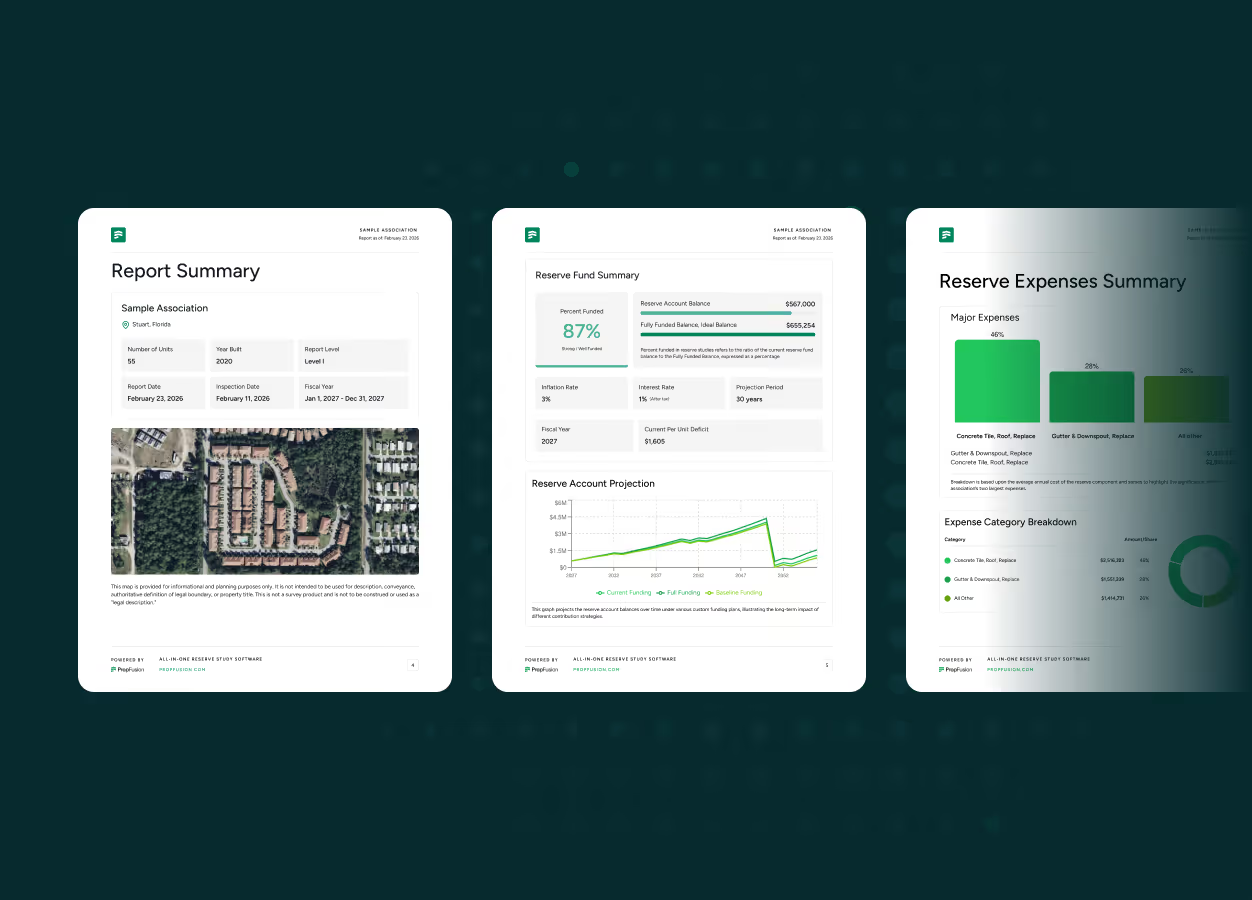
Alaska Reserve Study Requirements (2026)
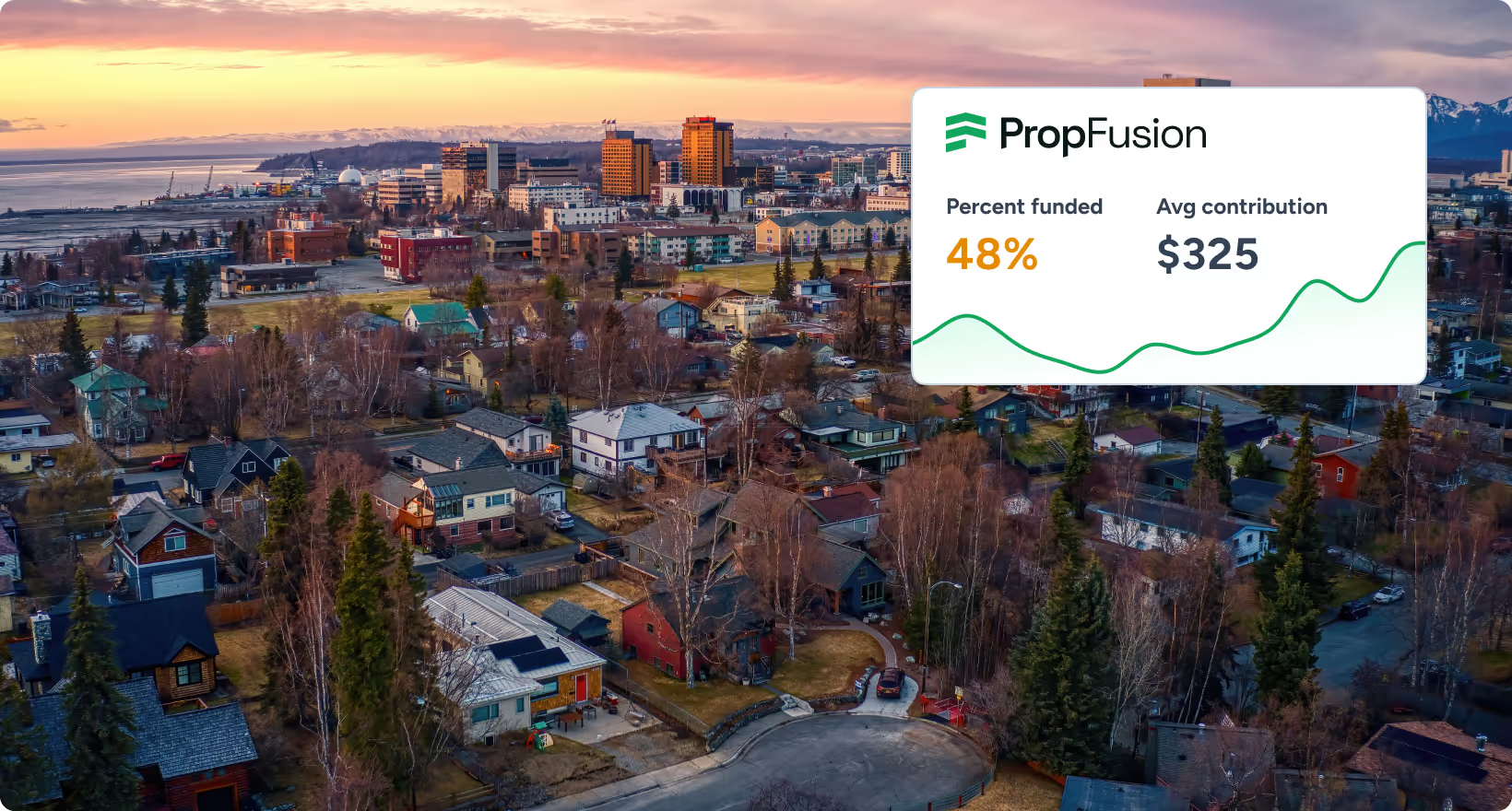
Homeowners association and condominium boards in Alaska often ask the same questions: Are reserve studies required by Alaska law, and do we have to maintain a formal reserve fund? The short answer is that Alaska does not currently have a statute that explicitly requires HOAs or condo associations to complete reserve studies or to fund reserves to a specific minimum level.
See the full reserve study requirements by state guide
However, that does not mean reserve studies and reserve funds are optional in practice. Alaska has adopted a version of the Uniform Common Interest Ownership Act (UCIOA), which gives associations broad authority to adopt budgets that include reserves and to collect assessments for common expenses, and requires new condominium projects to disclose budget and reserve information up front.
On top of that, lenders, insurers, and the Alaska Housing Finance Corporation (AHFC) expect “adequate reserves” when they underwrite mortgages, so underfunded or poorly planned associations can still face serious consequences.
Legislation Links
Alaska Common Interest Ownership Act
Powers of Unit Owners’ Association
Are HOA reserve studies required by law in Alaska?
No. As of 2025, there is no Alaska statute that explicitly requires HOAs or condominium associations to obtain or update a reserve study on any set schedule. Industry summaries from organizations that track state reserve laws consistently agree that Alaska has no statutory reserve study mandate.
Does Alaska law require HOAs or condos to maintain a reserve fund?
No Alaska statute sets a mandatory minimum reserve fund balance or requires associations to contribute a fixed percentage of their budget to reserves. However, Alaska’s Common Interest Ownership Act gives associations explicit power to adopt budgets that include reserves and collect assessments from owners to fund them, so boards still have a legal framework for building reserve funds even without a mandate.
Which Alaska communities are covered by these statutes?
Alaska’s Common Interest Ownership Act primarily applies to common interest communities (condos, planned communities, cooperatives) created after January 1, 1986, with certain sections extending to older communities in specific circumstances.(unicourt.github.io) Older HOAs and small associations may be governed by earlier condo or property regimes and by their own declarations and bylaws, so boards must also review their governing documents and consult local counsel.
If reserve studies are not required, why should an Alaska HOA bother with one?
Reserve studies are still a best-practice tool for long-term financial planning, avoiding special assessments, and satisfying lender and insurer expectations. Lenders following FHA, Fannie Mae, and Freddie Mac guidelines often look for budgets that allocate at least 10% of assessments to replacement reserves or that are supported by a current reserve study.In Alaska’s harsh climate, a well-prepared reserve plan can be the difference between steady fees and repeated emergency assessments.
Need a reserve study in Alaska?
Get proposals from vetted reserve study professionals - with 30-year funding plans, powered by modern technology, and compared side by side for free.
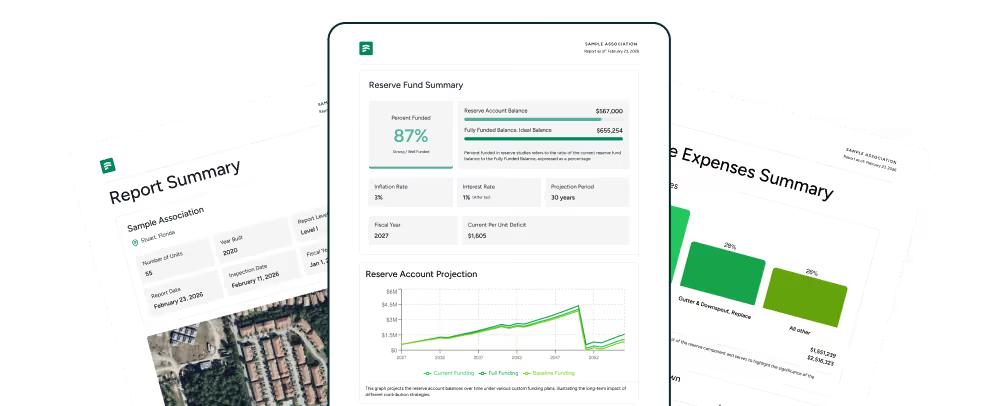
Overview of Alaska HOA and Condo Law on Reserves
Alaska regulates homeowners associations and condominium associations primarily through the Alaska Common Interest Ownership Act, found in Title 34, Chapter 08 of the Alaska Statutes.
This framework defines “common interest communities,” establishes how associations are organized, and outlines the powers of unit owners’ associations, including their authority to raise and manage funds.
Section 34.08.320 is particularly important for reserve planning. It states that, subject to the declaration, an association may adopt and amend budgets for revenues, expenditures, and reserves, and may collect assessments for common expenses from unit owners.
In other words, the law gives boards clear authority to create and fund reserve budgets; it simply stops short of forcing them to do so at a specific level.
For newly created condo projects, public offering statements must also include a projected association budget and information about the budget’s assumptions, including reserves.
This disclosure requirement ensures that buyers in new Alaska communities can see whether the developer is planning to fund reserves and on what assumptions, even though the statute does not dictate exact contribution percentages.
Are Reserve Studies Required in Alaska?
Multiple independent legal and industry compilations of state reserve laws confirm the same conclusion: Alaska does not mandate reserve studies for HOAs or condo associations.
There is no statute that says an association “shall conduct a reserve study every X years” or that ties compliance to a specific inspection or reporting schedule.
From a compliance standpoint, this means there is no direct state-level penalty in Alaska for failing to commission a reserve study. You will not find a section in Title 34 that fines or sanctions an association for operating without one.
That is very different from states like Washington or Nevada, where reserve study cycles are codified into statute.
However, Alaska boards should not confuse the absence of a mandate with the absence of risk. If an association underfunds reserves and ends up relying on repeated special assessments, deferred maintenance, or emergency borrowing, owners can still file claims based on breaches of fiduciary duty or mismanagement.
Case law in Alaska shows that courts are willing to scrutinize how HOA boards manage finances and common property, even when there is no narrow statute on reserve studies.
A well-documented reserve study is one of the most effective ways to show that the board acted prudently.
Reserve Funds: Not Mandated, But Expected
As noted above, Alaska law does not prescribe a minimum reserve fund balance, nor does it require boards to contribute a fixed percentage of their budget to reserves.Yet lenders and housing agencies almost treat reserves as mandatory in practice.
To maintain eligibility for FHA, Fannie Mae, Freddie Mac, and similar loan programs, condos generally must allocate at least 10% of their annual budget to replacement reserves or support a lower allocation with a current reserve study.
Real estate professionals in Alaska have highlighted that HOAs which fail to meet these reserve expectations risk losing AHFC and FHA approval, making it harder for buyers to obtain financing in those communities.
For Alaska associations, this dynamic creates a two-layer reality:
- State law does not compel specific reserve funding levels.
- The lending and insurance ecosystem functionally compels adequate reserves if you want a healthy resale market and stable property values.
Layered on top of that is Alaska’s climate. Harsh winters, wide temperature swings, and remote logistics mean roofs, siding, roads, and building systems can deteriorate faster and cost more to repair than in milder states.
An underfunded reserve in Alaska is more dangerous than an underfunded reserve in a temperate region.
How Often Should an Alaska HOA Commission a Reserve Study?
Because the statutes are silent on reserve study frequency, the best guide for Alaska is industry practice rather than law. Nationally, many reserve professionals recommend:
- A full, baseline reserve study every 3 to 5 years.
- Annual updates of the financial plan, with a lighter physical review when nothing major has changed.
For Alaska HOAs and condos, a 3-year cycle is often more realistic than a 5-year cycle because:
- Extreme weather accelerates wear on roofs, siding, parking surfaces, and mechanical systems.
- Construction and logistics costs can move quickly in remote or smaller markets.
- Small projects can become large if deferred even a few seasons.
Even without a legal requirement, a board that follows a 3-5 year reserve study cycle is far better positioned to defend its decisions if owners challenge assessments or claim mismanagement later.
Which Alaska Communities Are Most Affected?
The Common Interest Ownership Act applies directly to most common interest communities created after January 1, 1986, with certain provisions extended to older communities as needed.
Practically, that means the following types of communities in Alaska should pay close attention to reserve planning:
- Condominium associations (urban and suburban buildings, townhouse-style condos, and mixed-use projects).
- Planned communities and subdivisions with shared roads, utilities, or facilities.
- Resort and vacation communities with high exposure to weather and seasonal traffic.
Older associations that predate the Act or that operate under more limited governing documents might not be explicitly tied to the same statutory language, but they still face maintenance, financial, and lender-approval challenges.
For them, reserve studies and consistent reserve funding are still a best practice, even though the legal hook is more about fiduciary duty than specific statutory text.
Alaska HOA Laws vs. Governing Documents
Many Alaska associations are surprised to discover that, even though the state does not mandate reserve funds or reserve studies, their own declarations or bylaws effectively do. It is common to see language that:
- Requires the association to maintain “adequate reserves” for common elements.
- Authorizes or obligates the board to commission engineering or reserve studies as needed.
- Limits the board’s ability to defer maintenance beyond a certain period.
Best Practices for Alaska Reserve Planning
Given this context, an Alaska HOA or condo association that wants to stay ahead of risk should:
- Commission a professional reserve study that includes a physical inspection of common elements and a long-range funding plan tailored to Alaska’s climate and construction costs.
- Adopt a budget that either allocates at least 10% of assessments to reserves or clearly documents why a different contribution is appropriate, supported by the reserve study.
- Update the reserve study and funding plan at least every 3-5 years, with annual financial check-ins.
- Communicate transparently with owners about reserve funding goals, trade-offs, and long-term capital projects.
How PropFusion Helps Alaska HOAs with Reserve Compliance and Planning
Even without a state statute forcing your hand, managing reserves with spreadsheets and static PDFs is a recipe for surprises.
For an Alaska HOA or condo association, this means you can:
- Store your reserve study, component inventory, and funding plans online instead of in a binder.
- Run what-if scenarios to see the impact of different contribution levels, timing of major projects, and inflation assumptions.
- Share clear, board-ready reports with owners, lenders, and auditors when questions about “HOA reserve fund laws” or “Alaska HOA compliance” arise.
By pairing a strong understanding of Alaska’s legal landscape with professional reserve studies and modern planning tools, your association can move beyond minimum compliance and toward long-term financial stability, even in the absence of a strict statutory mandate.
Related reserve study resources for Alaska
Compare reserve study laws in nearby states, or find help running one for your association:
Frequently Asked Questions
Does Alaska require HOA reserve studies by statute?
No. There is currently no Alaska statute that explicitly requires HOA or condo boards to conduct reserve studies on a fixed schedule. State-level summaries and legal-reference compilations are consistent on this point.
Are Alaska HOAs legally required to keep a minimum reserve balance?
No. Alaska law does not prescribe a minimum percentage or dollar amount that must be held in reserves. Associations decide their own reserve targets, guided by their declarations, bylaws, and professional advice.
If reserves are not mandated, can our HOA still get into legal trouble for underfunding them?
Yes. Even without a specific “reserve fund law,” Alaska boards owe a fiduciary duty to maintain common elements and manage finances prudently. Chronic underfunding, repeated special assessments, and deferred maintenance can expose the association to disputes or claims that the board failed to act responsibly.
How do lender and AHFC rules affect Alaska HOA reserve planning?
Lenders following FHA, Fannie Mae, and Freddie Mac guidelines typically expect condos to allocate at least 10% of their budget to reserves or rely on a current reserve study that justifies a lower rate. Alaska professionals have noted that associations which fail these financial tests risk losing AHFC and FHA approvals, which can directly hurt resale values and limit buyer financing options.
How often should an Alaska HOA or condo update its reserve study?
Because there is no statute, frequency is driven by best practice. For most Alaska communities, updating the reserve study every 3-5 years, with annual financial reviews, strikes the right balance between cost and accuracy in a fast-changing cost environment.
The information contained on this page is provided for informational purposes only, and should not be construed as legal advice on any subject matter. You should not act or refrain from acting on the basis of any content included on this page without seeking legal or other professional advice. The contents of this page contain general information and may not reflect current legal developments or address your situation. We disclaim all liability for actions you take or fail to take based on any content on this report.
Get proposals from vetted reserve study professionals - with 30-year funding plans, powered by modern technology, and compared side by side for free.
Take the guesswork out of your reserve study
From site inspection to 30-year funding plan, PropFusion handles the entire reserve study - accurate, transparent, and built on modern technology that gives you full control over your reserves.