Alabama Reserve Study Requirements (2026)

Alabama does not currently require HOAs or condominium associations to perform a formal reserve study or to fund a reserve account at a specific minimum level. Instead, the state’s laws focus on how associations are organized, how budgets and common expenses are managed, and what financial records must be available to owners.
See the full reserve study requirements by state guide
For boards, that can create confusion. This guide explains what Alabama’s statutes say about budgets, reserves, and records, and where your declaration and bylaws fill in the details. It then outlines practical best practices so your community can avoid special assessments, maintain property values, and demonstrate sound financial stewardship even in the absence of strict reserve study mandates.
Legislation Links
Alabama Homeowners’ Association Act - Act 2015-292
Alabama Uniform Condominium Act of 1991
Are reserve studies required by law in Alabama for HOAs or condominiums?
No. Alabama does not have a statute that mandates HOAs or condominium associations to commission a reserve study. Reserve planning is considered a best practice rather than a legal requirement.
Does Alabama law require associations to maintain a reserve fund or fund it to a specific level?
No. Alabama statutes allow associations to adopt budgets that include reserves, but they do not prescribe a minimum reserve balance or funding formula. The level of reserve funding is driven by your governing documents and board policy.
What do Alabama HOA laws say about financial records and reserve fund transparency?
The Alabama Homeowners’ Association Act requires HOAs to maintain records that include the current operating budget and any reserve funds, and to make these records available for owner inspection on request.
How often should an Alabama association update its reserve study if it chooses to have one?
Since there is no legal frequency, most communities follow industry best practice and update their reserve study every 3 to 5 years or after major projects, material cost changes, or significant shifts in the community’s condition.
Get proposals from vetted reserve study professionals - with 30-year funding plans, powered by modern technology, and compared side by side for free.
Overview of Alabama HOA and condo laws that touch reserves
Alabama's legal framework for HOAs and condominiums is lighter than in many other states when it comes to reserve studies and reserve funds. There is no statute that forces your board to commission a reserve study or to fund reserves to a particular percentage.
However, boards still have clear responsibilities around budgeting, common expenses, and financial transparency. Understanding those responsibilities is the first step toward building a strong reserve funding strategy.
Three bodies of law are especially relevant for reserve planning in Alabama:
- Alabama Homeowners' Association Act (Ala. Code §§ 35-20-1 et seq.) governs most residential HOAs created on or after January 1, 2016, and older associations that opt in. It sets requirements for organizational structure, board powers, assessments, liens, and records. (DoorLoop)
- Alabama Uniform Condominium Act of 1991 (Ala. Code §§ 35-8A-101 et seq.) governs condominiums created after January 1, 1991 and regulates budgeting, assessments, common expenses, and association records. (Homeowners Protection Bureau, LLC)
- Alabama Condominium Act (Ala. Code §§ 35-8-1 et seq.) applies to older condominium projects created before 1991.
None of these laws use the phrase “reserve study” in the way industry professionals do. Instead, they speak in terms of common expenses, assessments, surplus funds, and association records.
Reserves fit inside those concepts as allocations of funds intended for future repair and replacement of common elements, rather than as a separate, highly regulated category.
What the statutes say about budgets, reserves, and records

For condominiums under the Alabama Uniform Condominium Act, the unit owners' association has explicit power to adopt and amend budgets for revenues, expenditures, and reserves, and to collect assessments to pay common expenses. (Justia)
Common expenses are defined broadly and include allocations to reserves. Surplus funds remaining after paying common expenses can be credited against future assessments, paid to owners, or held in reserve, depending on what the declaration or bylaws provide.
For HOAs governed by the Alabama Homeowners' Association Act, the law focuses more on transparency than on prescribing how much to save. Section 35-20-13 requires associations to keep records that include the current operating budget and “reserve funds, if any,” and to make those records reasonably available to members who request access.
This means that if your HOA has a reserve account, owners have a statutory right to see its balance and related financial information.
In short:
- Alabama law allows associations to create and maintain reserve funds through their budgeting and assessment powers.
- It does not mandate that reserves exist or set a target funding level.
- It does require HOAs (and, through separate provisions, condo associations) to keep financial records available to owners, which naturally includes reserve funds if they are maintained. (cedarmanagementgroup.com)
Are reserve studies or reserve funds required in Alabama?
Independent summaries of state laws from the Community Associations Institute and other legal resources confirm that Alabama does not currently require HOAs or condo associations to conduct a reserve study or to fund reserves by statute.
There is also no statutory schedule such as “every three years” or “every five years” for updating a study.
Practically, that leaves three main drivers for whether your community is required to have reserves or a study:
- Your declaration and bylaws - Some governing documents explicitly require a reserve account, specify minimum annual contributions, or mandate periodic capital reserve evaluations. If so, those contract-like obligations are enforceable, even if state law is silent.
- Lender and buyer expectations - Many mortgage lenders and buyers now expect a community to have a reserve study and a healthy reserve balance. Fannie Mae and Freddie Mac guidance, for example, emphasize reserve contributions as part of project-eligibility reviews in condo lending. Communities that ignore reserves can see reduced marketability and more failed sales.
- Board fiduciary duty - Even without explicit statutory mandates, boards have a general duty to act prudently and in the best interests of the association. Allowing common elements to deteriorate or relying repeatedly on emergency special assessments can be hard to reconcile with that duty.
Recommended reserve study practices for Alabama communities
Because Alabama’s statutes leave so much discretion to the association, boards that want to demonstrate sound financial management should follow established industry standards. A practical baseline for Alabama HOAs and condos is:
- Commission a full reserve study (with on-site component inventory and condition assessment) at least once every 5 years.
- Update the study’s financial analysis and funding plan every 3 years or sooner after major projects, cost shocks, or significant community changes.
- Aim over time to keep reserves within a “strong” to “fair” funding range, often interpreted as roughly 70 to 100 percent of the amount recommended by your reserve study.
A good reserve study in Alabama will typically include:
- A component list of all major common elements with a remaining useful life under 30 years.
- Current replacement cost estimates for each component.
- A schedule of anticipated replacement years across a 20 to 30 year projection.
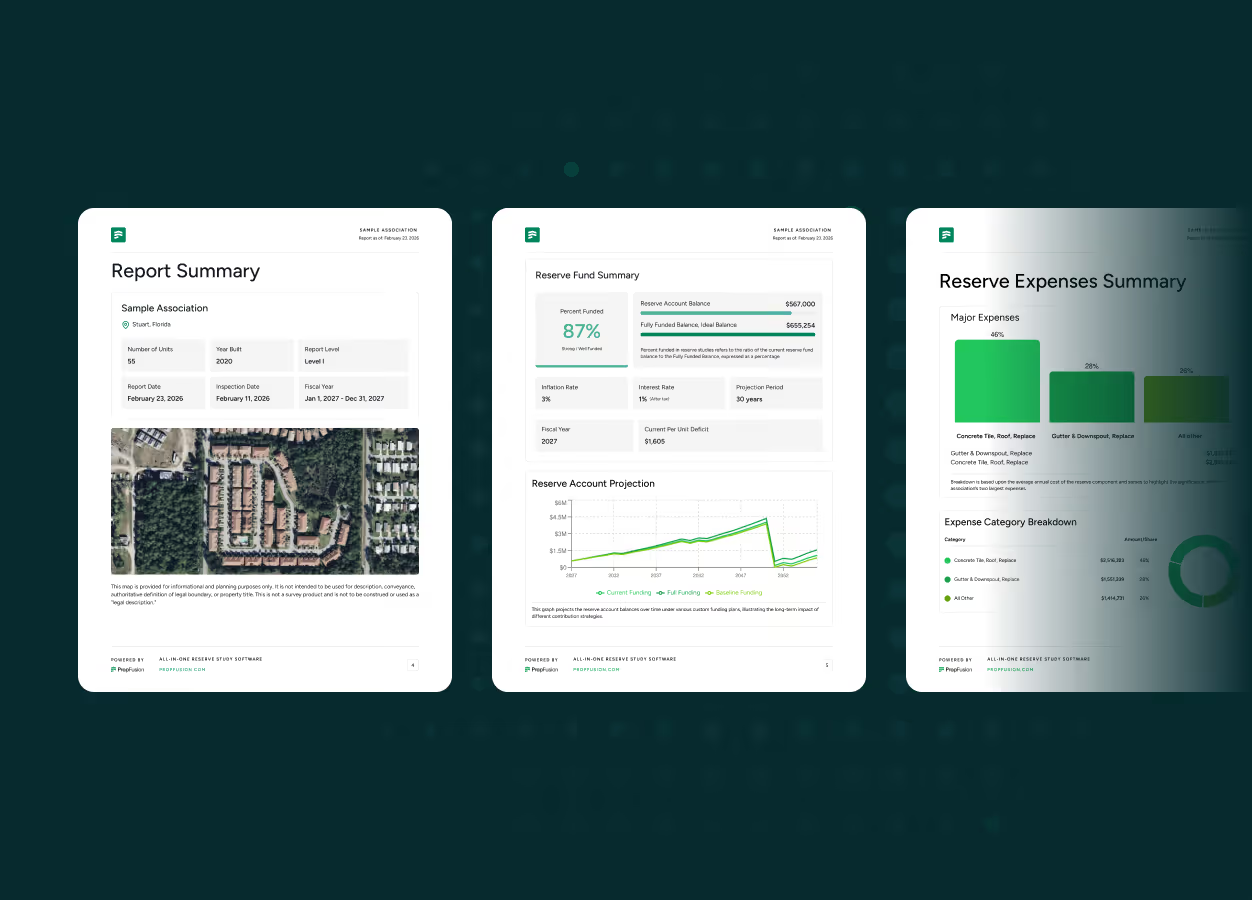
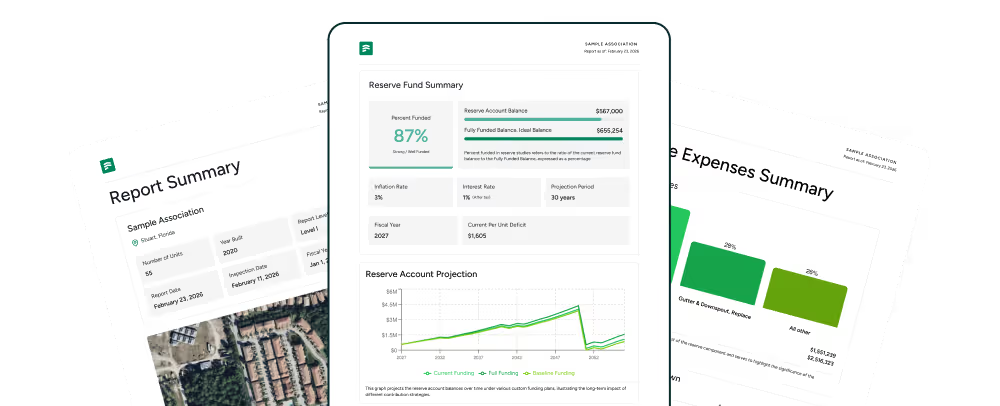
- A funding plan that shows projected reserve balances, owner contributions, and percent funded year by year.
Following this approach positions your association as professional and forward-looking even though Alabama law does not force you to do it.
How reserve funding decisions impact Alabama HOAs and condos
Because Alabama statutes do not lock you into a particular reserve funding formula, there is a wide gap between communities that manage reserves proactively and those that do not.
If your board underfunds reserves:
- You are more likely to resort to special assessments or emergency increases when roofs, pavement, elevators, or mechanical systems fail.
- Owners face sudden, often large, unplanned bills, creating financial hardship and tension within the community.
- Deferred maintenance can drag down property values and make units harder to finance or sell.
If your board commits to structured reserve funding:
- Annual assessments are more predictable. Small, well-planned increases can replace painful spikes.
- Owners and buyers gain confidence that the association is planning for the long term.
- The board has a clear roadmap for timing major projects, obtaining bids, and coordinating with vendors.
Because Alabama law treats prepayments into reserves as part of common expenses, any surplus funds after paying those expenses can, by default, be held in reserves or applied against future assessments unless your declaration directs otherwise.
That gives boards flexibility to gradually build reserves without overcomplicating the budget.
The role of governing documents in Alabama reserve planning
Given the statutory flexibility, your governing documents carry more weight in Alabama than in some other states. Boards should carefully review:
- Whether the declaration requires a reserve account.
- Whether there is any stated minimum contribution or balance.
- How surplus funds and budget surpluses are to be handled.
- Whether owner approval is required to change reserve contribution levels or to reallocate reserves.
If your documents are silent or vague, you may wish to work with association counsel to amend them. Many Alabama communities choose to add language that:
- Affirms a commitment to long-term capital planning and reserve funding.
- Clarifies the purposes for which reserve funds can be used.
- Sets a baseline annual contribution or ties contributions to a percentage of the total budget.
- Defines when owner approval is needed to borrow from reserves or reduce contributions.
Law firms that focus on condominium and HOA issues in Alabama regularly advise boards on how the Alabama Homeowners’ Association Act and the Alabama Uniform Condominium Act interact with declarations and bylaws in practice. (Patrick Collins, LLC)
Best practices for Alabama boards planning reserves
For both HOAs and condos in Alabama, a practical step-by-step approach looks like this:
- Inventory assets - Work with an engineer or reserve study professional to list all significant common elements: roofs, siding, paving, retaining walls, drainage systems, clubhouses, pools, elevators, mechanical systems, and more.
- Assess condition and remaining life - Document age, observable condition, and estimated remaining useful life. This is where a physical reserve study adds real value compared with a simple spreadsheet estimate.
- Model long-term costs - Forecast major repair and replacement costs over at least 20 to 30 years, incorporating inflation and realistic unit pricing based on Alabama market conditions.
- Choose a funding strategy - Decide whether your association prefers a more conservative “full funding” approach, a threshold model, or a hybrid that balances risk, assessment stability, and owner affordability.
- Integrate reserves into the annual budget - Translate the recommended reserve contribution into the annual budget and assessment structure. Explain the rationale clearly to owners.
- Communicate and update - Provide owners with a high-level summary of the reserve study and funding plan. Revisit the numbers regularly, adjusting contributions as project costs, inflation, and community conditions change.
How PropFusion supports Alabama associations
Although Alabama law does not compel reserve studies, boards that treat reserve planning as optional are taking a gamble. PropFusion helps Alabama HOAs, condo boards, and association managers turn reserves into a core part of their financial strategy rather than an afterthought.
With PropFusion, you can:
- Store your reserve study online, track components, and monitor funding status over time.
- Build what-if scenarios to understand how different assessment levels, project timings, or cost assumptions affect your reserve health.
- Export clear reports and charts that make it easier to communicate reserve decisions to owners and lenders.
By combining a modern reserve study platform with access to experienced professionals, PropFusion gives Alabama boards a practical way to meet their fiduciary obligations and avoid the cycle of deferred maintenance and surprise special assessments.
Need a reserve study in Alabama? Compare multiple reserve study proposals for free.
Related reserve study resources for Alabama
Compare reserve study laws in nearby states, or find help running one for your association:
Frequently Asked Questions
Are reserve funds required for HOAs or condos in Alabama?
No. Alabama statutes give associations the authority to adopt budgets that include reserves but do not require them to maintain a reserve fund or to fund it to any specific level. Your governing documents and board policies determine whether reserves are mandatory in your community.
Does Alabama law specify how often we must perform a reserve study?
No. Alabama law does not reference reserve studies or set a required schedule. Most boards that choose to invest in a study follow best practice and update it every 3 to 5 years or after major capital projects.
Are Alabama HOAs regulated by a state agency when it comes to reserves?
There is no dedicated state regulator overseeing the day-to-day operations or reserve funding decisions of Alabama HOAs. The Secretary of State maintains certain filings, and statutes govern structure and records, but reserve policies are largely left to each association’s board and governing documents.
Can our association in Alabama decide to waive reserve contributions altogether?
In many communities, yes, but you need to check your declaration and bylaws. If your governing documents require reserves, the board generally must follow those provisions or formally amend the documents. Even where reserves are optional, completely waiving contributions increases the risk of special assessments and deferred maintenance, which can hurt property values.
How do Alabama reserve practices compare with stricter states?
States like Florida, Nevada, and Washington have detailed statutes mandating reserve studies or funding for certain types of common interest communities. Alabama does not. That gives Alabama boards more flexibility but also places more responsibility on them to proactively plan for long-term capital needs without a statutory safety net.
How can PropFusion help Alabama HOAs and condos with reserves if there is no legal requirement?
PropFusion provides the tools and professional connections Alabama associations need to treat reserve planning as a strategic choice rather than a legal checkbox. You can commission studies, model funding strategies, and communicate clearly with owners, which reduces financial shocks and improves confidence in the board’s management even in a light-regulation environment.
The information contained on this page is provided for informational purposes only, and should not be construed as legal advice on any subject matter. You should not act or refrain from acting on the basis of any content included on this page without seeking legal or other professional advice. The contents of this page contain general information and may not reflect current legal developments or address your situation. We disclaim all liability for actions you take or fail to take based on any content on this report.
Get proposals from vetted reserve study professionals - with 30-year funding plans, powered by modern technology, and compared side by side for free.
Take the guesswork out of your reserve study
From site inspection to 30-year funding plan, PropFusion handles the entire reserve study - accurate, transparent, and built on modern technology that gives you full control over your reserves.